The Three Decisions Behind Almost Every Cookie Recipe
Texture, temperature, and timing do more to shape a cookie than any single ingredient. A chewy chocolate chip cookie and a crisp sugar cookie often share the same butter, sugar, flour, and egg. What changes is how you treat them.
Decide on the cookie you want first, then let three decisions follow.
- How you handle the butter. Melted butter produces a chewier, denser cookie with more spread. Softened butter creamed with sugar traps air and gives you a lighter, cakier crumb. Cold butter, rubbed into flour, builds the flaky structure you want in short dough.
- How long the dough rests. A thirty-minute chill firms the butter so cookies spread less and brown more evenly. It also gives the flour time to hydrate and the flavors time to settle. Doughs that are already firm, like shortbread and most cut-outs, need the rest mostly to make shaping easier.
- Where you stop the bake. Pull the tray when the edges have set but the centers still look soft and slightly glossy. Cookies finish setting on the hot pan, and that last minute is the difference between a chewy center and a dry one.
For drop cookies, a workable starting ratio by weight is roughly 100 parts flour, 65 parts butter, 80 parts sugar, 20 parts egg, 1 part baking soda or powder, and half a part salt. It is a baseline, not a rule. From there, an extra yolk adds richness, a spoonful of milk loosens a stiff dough, and more brown sugar keeps the middle soft for longer.
A simple table can help you steer a batch:
Goal | Butter | Sugar | Chill | Pull point |
|---|---|---|---|---|
Chewy | Melted | Mostly brown | 30 minutes | Centers soft, edges set |
Crisp | Creamed, softened | Mostly white | 15–30 minutes | Edges golden, centers barely set |
Cakey | Creamed, softened | Less sugar, more flour | None needed | Domed tops spring back |
Flaky (short dough) | Cold, cut in | Moderate | 1–2 hours | Pale gold, firm to the touch |
Keep that grid in mind and most recipes become adjustable instead of fixed.
Drop Cookies: Chocolate Chip, Oatmeal, and Everything Scooped
Drop cookies are the broadest family and the best place to build confidence. You cream or melt the butter, beat it with the sugars, add egg and vanilla, fold in the dry ingredients, then scoop.
What you need: two heavy sheet pans, parchment, a 1½-tablespoon scoop, and a cooling rack. Working in grams pays off here. A cup of flour can weigh anywhere from 120 to 150 grams depending on how it was scooped, and that difference alone changes how much a cookie spreads.
The method: beat the butter and sugars for two to three minutes, until the mixture looks lighter. Add the egg and vanilla, scrape the bowl, then mix the flour, baking soda, and salt in a separate bowl and fold it in just until the last streaks disappear. Stir in chocolate, nuts, or oats by hand. Overmixing at this stage develops gluten and gives you a tough, bready cookie.
Chill the dough for about thirty minutes, scoop onto parchment two inches apart, and bake at 350°F for 10 to 12 minutes. For oatmeal, use rolled oats rather than instant, keep the brown sugar generous, and add a tablespoon or two of milk if the dough feels dry. Oats keep absorbing liquid as the dough rests.
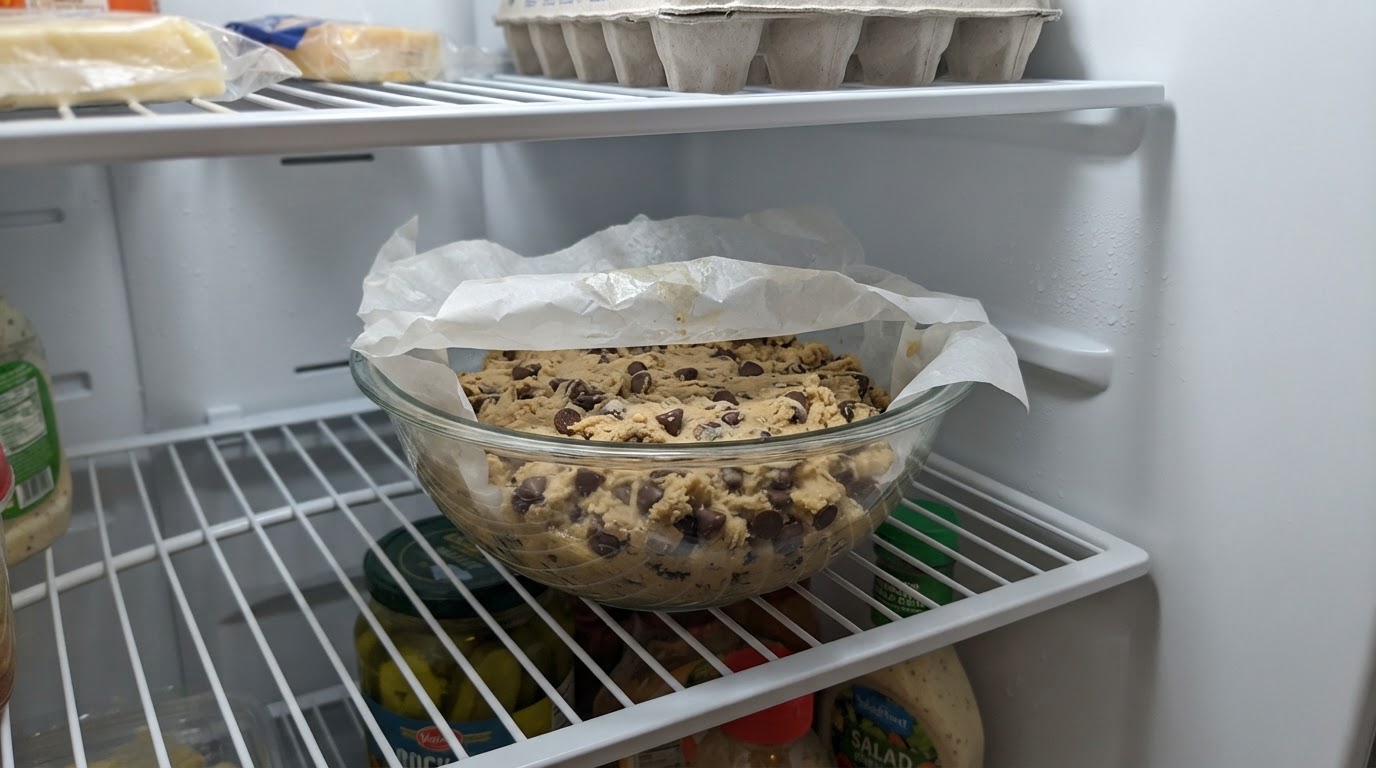
How you know they are done: the edges are set and lightly golden, and the centers look puffy, matte, and a shade underdone. Leave them on the pan for five minutes, then move them to a rack.
Sugar Cookies, Rolled and Cut Out
Cut-out cookies demand a dough that holds an edge. Cream softened butter with sugar, add egg and vanilla, then flour and a pinch of salt. Skip the baking powder if you want sharp shapes. A little is fine if you prefer a softer bite.
Chill the dough for at least an hour, or thirty minutes in the freezer. Roll it between two sheets of parchment to about a quarter inch thick. The parchment trick keeps you from working extra flour into the dough, which is what makes cut-outs taste dusty. Cut your shapes, lift the scraps away, and slide the whole sheet of parchment onto a pan.
If the shapes soften while you re-roll scraps, chill the cut cookies for ten minutes before baking. Bake at 350°F for 8 to 10 minutes, until the edges are barely colored and the tops look dry. Cool completely before icing, or the glaze will slide off.
Completion standard: the cookie keeps its outline, snaps cleanly at the edge, and stays tender in the middle. If the shapes blur, the butter was too warm when the dough went in.
Icebox and Slice-and-Bake Cookies
Slice-and-bake dough is rolled into a log, chilled until firm, and cut into rounds. It is the most forgiving method for beginners because the dough can wait in the refrigerator for days or in the freezer for weeks.
Shape the dough into a log about two inches across, wrap it tightly, and chill for at least two hours. To keep the log round, set it in a paper towel tube, or roll it on the counter every twenty minutes for the first hour. When you are ready to bake, slice a quarter inch thick with a sharp knife, rotating the log a quarter turn after every few slices so the bottom does not flatten.
Roll the log in coarse sugar, chopped nuts, or cocoa before chilling if you want a finished edge. Bake at 350°F for 10 to 12 minutes. Slices go into the oven cold, because warm dough smears under the knife.
How you know they are done: the rounds are firm at the edge with no shiny raw patch in the middle. Let them cool on the pan. Short dough is fragile while hot.
Shaped Cookies: Snickerdoodles, Thumbprints, and Spritz
Shaped cookies are rolled, pressed, or piped by hand, so the dough needs to be soft enough to hold a shape but firm enough not to slump.
Snickerdoodles get their crackled tops from cream of tartar and a roll in cinnamon sugar. Cream the butter and sugar, add egg, then flour, cream of tartar, baking soda, and salt. Roll the dough into balls, coat them well, and bake at 350°F for 10 to 11 minutes. The surface should look cracked and set, with the centers still tender.
Thumbprints need a dough that will not spread much. Roll balls, press a well into each with your thumb or the back of a small spoon, and bake for about 10 minutes. Press the indent again while the cookies are warm, then fill with jam. If you add the jam before baking, use a thick preserve and expect it to bubble.
Spritz cookies rely on a soft, buttery dough piped through a press. They need more butter and less egg than a drop cookie, and they should go straight from the mixing bowl into the press, because chilling makes the dough too stiff to pipe. Bake at 350°F for 8 to 10 minutes and leave them on the pan until they firm up.
How you know they are done: the shape is intact, the surface is set, and the underside is evenly golden.
When Cookies Spread, Crumble, or Taste Flat
Most failures are fixable, and the fix usually belongs in the next batch rather than the current one.
Cookies spread into one another. The butter was too warm, the dough was not chilled, or the pan was greased when it should have been lined with parchment. Chill the scooped dough for fifteen minutes, cool your pans between batches, and check your flour measurement. A dough that is warm to the touch will always spread more than one that is cold.
Cookies are dry and crumbly. Too much flour is the usual cause. Spoon flour into the cup and level it, or weigh 120 grams per cup. Overmixing does the same damage by developing gluten. If the dough cracks when you roll it, work in a teaspoon of milk or water.
Cookies taste flat. Check your baking soda or powder by dropping a pinch into vinegar or hot water. It should fizz. Add the full measure of salt the recipe calls for, use fresh vanilla, and toast spices before mixing them in. A pinch of flaky salt on top of a sweet cookie does more for flavor than extra sugar.
Cookies are cakey when you wanted chewy. Use melted butter, increase the brown sugar, leave out one egg white, and pull the tray a minute earlier. Each change moves the cookie toward a softer middle.
Cookies harden after cooling. Store them with a slice of bread or a piece of apple in the container. The cookies draw moisture from the fruit and stay soft for another day or two.
Freezing, Storing, and Baking a Small Batch
Scoop dough onto a parchment-lined pan, freeze until solid, then move the scoops into a freezer bag. Baked straight from frozen, they need an extra minute or two. A log of slice-and-bake dough can be cut and baked without thawing at all.
Baked cookies keep best in an airtight container at room temperature. Add parchment between layers so the tops do not stick, and keep crisp cookies separate from soft ones, because the two textures trade moisture and both suffer.
For a small batch, halve the recipe and beat the egg in a small bowl before measuring out half. A large egg is about three tablespoons, so half is one and a half tablespoons. Baking one tray at a time in the center of the oven gives you the most even color, and the second tray can wait in the refrigerator while the first bakes.
A From-Scratch Example to Bake Next
If you want a tested recipe to put the chill-and-scoop method into practice, The Rustic Bakehouse keeps a Cookies collection of from-scratch bakes. One of them, a matcha white chocolate cookie, is built from eight ingredients and is written with the kind of detail that makes the method click: a yield of about 24 cookies, a 10 to 12 minute bake, and a thirty-minute chill to limit spread. The recipe notes also explain what each ingredient is doing, and they include color-preserving tips for the matcha along with variations such as espresso powder or almond extract.

Felo product screenshot.
New bakers will find the ingredient roles helpful. Experienced bakers can borrow the chill time and the doneness cue and apply them to their own dough.
A Checklist for Your Next Tray
Before the dough goes in, run through this list.
- The oven has been preheated for at least twenty minutes, and a rack sits in the center.
- The dough is cool to the touch and holds the shape of the scoop.
- Cookies are spaced two inches apart, with one tray in the oven at a time.
- The timer is set two minutes before the low end of the range so you can check.
- The edges are set and the centers still look soft when the tray comes out.
- The cookies rest on the pan for five minutes before moving to a rack.
Follow those six points and most cookie recipes will land the way the recipe promised. The rest is repetition, and repetition is where a baker's instincts come from.