How Ripe Should Bananas Be for Banana Bread?
You've got bananas on the counter and banana bread on the mind. But glance at those bananas and suddenly you're second-guessing yourself — are they ripe enough? Too ripe? Still okay? Let's sort this out once and for all, because the ripeness of your bananas is one of the biggest factors in how your banana bread turns out.
The Ripeness Spectrum: What to Look For
Banana ripeness isn't a single moment — it's a sliding scale, and where your bananas land on that scale directly affects the sweetness, moisture, and banana flavor in your finished loaf. Here's how to read them.
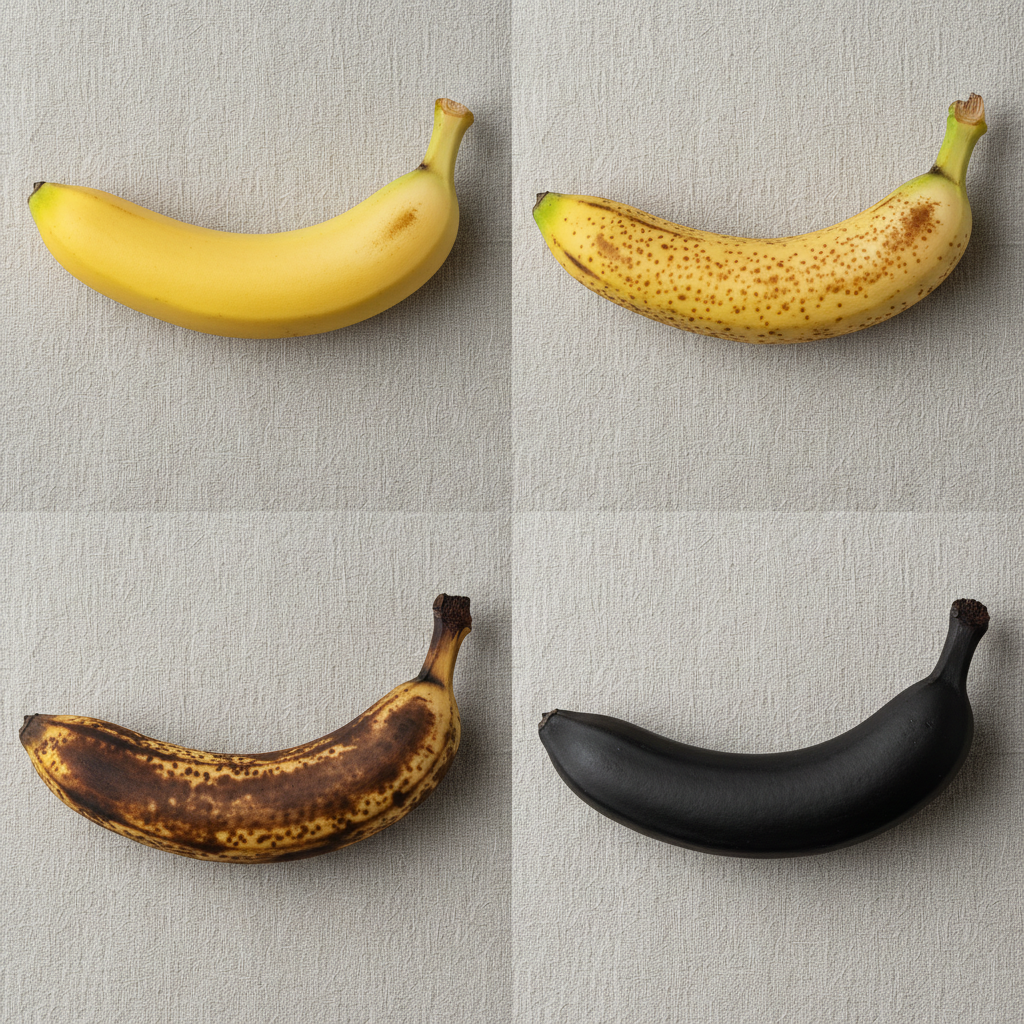
All yellow, firm
Bright yellow peel with no brown spots. Low sugar content means your loaf will taste bland and lack that deep banana flavor. Texture tends to be drier.
Yellow with spots
Peel is mostly yellow with scattered brown specks. Better than all-yellow, but you'll get a milder and less moist loaf than you'd ideally want.
Heavily spotted
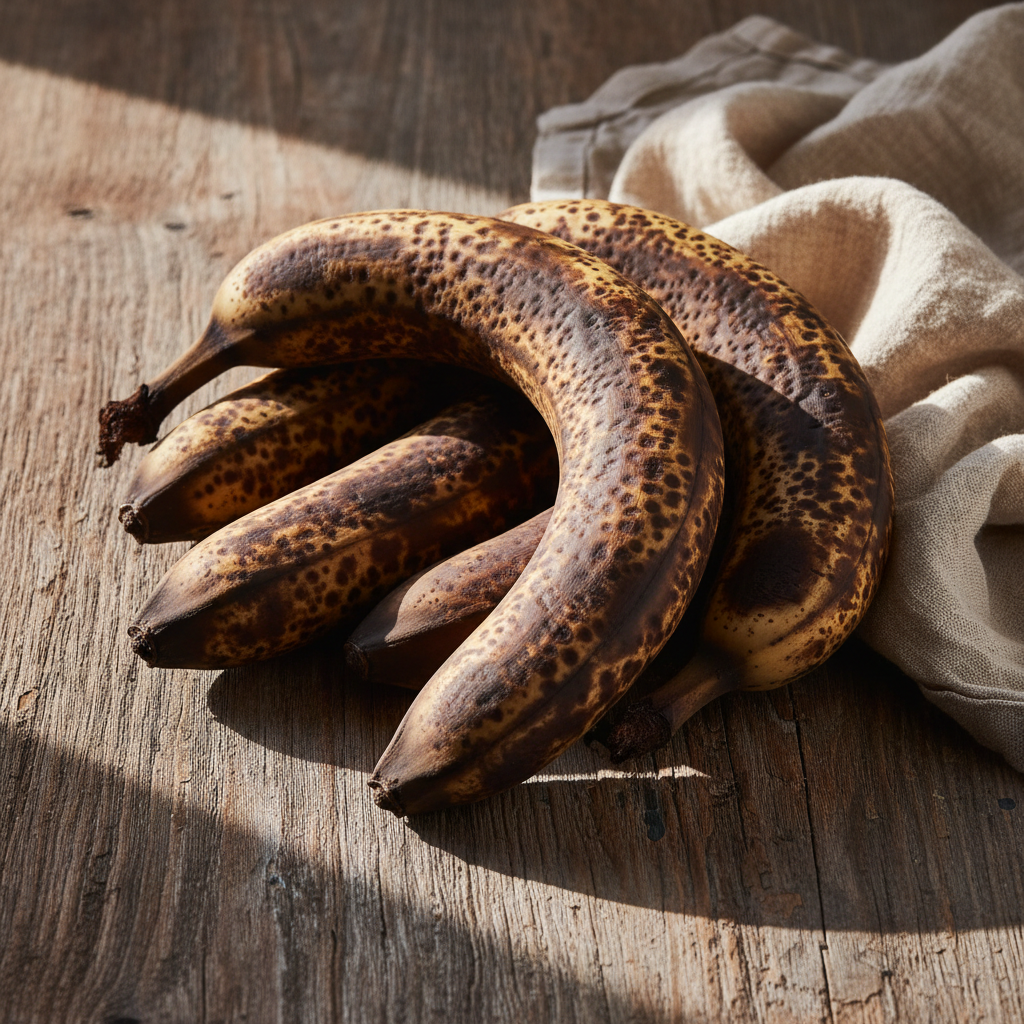
Peel is covered in brown-to-black spots; flesh is jammy. Natural sugars are fully developed for deep flavor and a moist, tender crumb.
All black, very soft
Peel is entirely black; intensely sweet aroma. Exceptional for bread as long as it smells sweet and fruity, not fermented or off.
Why Riper Bananas Make Better Banana Bread
As a banana ripens, enzymes break starch down into simple sugars: glucose, fructose, and sucrose. By the time the peel is mostly brown, the banana has gone from starchy and bland to sweet, soft, and deeply fragrant.
Those converted sugars do three things:
- 01.They sweeten the batter naturally, reducing the need for added sugar in your recipe.
- 02.They add moisture — ripe banana flesh holds far more water content than firm banana, keeping your crumb tender.
- 03.They intensify the banana flavor by releasing aromatic compounds not present in underripe fruit.
A quick note on baking powder: Most recipes rely on baking powder and soda for lift. While ripeness affects flavor and moisture, use the amount of leavener your specific recipe calls for.
What to Do When Your Bananas Aren't Ripe Enough
Option 1: Speed-ripen in the oven
Place unpeeled bananas on a baking sheet at 300°F (150°C) for 15–20 minutes until the peel turns black. Let them cool completely before using.
Option 2: Freeze and thaw
Put bananas (peel on) in the freezer overnight. When thawed at room temperature, the flesh becomes very soft and releases flavorful liquid—don't discard it!
Option 3: Adjust your recipe slightly
- Add extra brown sugar: 1–2 tablespoons to offset mild sweetness.
- Add vanilla extract: A small amount can round out a blander banana flavor.
Making the Right Call
If you only remember one thing: heavily spotted to fully black is the target zone.
| What you see | What it means | Use it? |
|---|---|---|
| All yellow, firm | Underripe — starchy, low sweetness | Better to wait |
| Yellow with a few spots | Starting to ripen | Usable, milder result |
| Heavily spotted/brown | Peak ripeness — sweet, soft, fragrant | Yes — ideal |
| Fully black | Maximum flavor and sweetness | Yes — excellent |
| Black peel, smells sour | Overfermented | Compost it |
Trust your nose: if it smells sour, alcoholic, or musty, skip it.
Keep Notes So Your Next Loaf Is Even Better
The free Baker Recipe Notes Template is a simple printable designed to help home bakers track ingredients, ripeness notes, and results across bakes.
Keep Baking
What to Do With Overripe Bananas
A deeper look at maximizing flavor from the most overripe specimens.
Read More →How to Make Sourdough Bread
Ready for naturally leavened bread? Start your sourdough journey here.
Read More →Cups to Grams Converter
Convert your banana bread recipe measurements instantly for precision baking.
Open Tool →