Start With the Formula, Not the Recipe
Every cookie has four jobs: fat for tenderness, sugar for sweetness and browning, something for structure, and a little lift so it doesn't bake into a puddle. Few-ingredient cookies work because one ingredient often covers two jobs at once. Peanut butter is fat and structure. Sweetened condensed milk is sugar and moisture. An egg white is lift and a crisp finish.
So the real question isn't which recipe has the shortest list. It's which formula gives you the cookie you actually want to eat. Here's the map:
Formula | Core ingredients | Texture | Hands-on time |
|---|---|---|---|
Nut-butter drop cookies | Peanut butter, sugar, egg | Soft and chewy | About 10 minutes |
Shortbread | Butter, sugar, flour | Crisp and sandy | About 15 minutes |
Coconut macaroons | Shredded coconut, condensed milk, egg whites | Chewy and moist | About 10 minutes |
Meringue kisses | Egg whites, sugar | Airy and crisp | About 15 minutes |
Banana-oat cookies | Ripe bananas, rolled oats | Soft, breakfast-style | About 10 minutes |
If you want a classic crosshatched cookie in half an hour, start with nut butter. If you want something for a tea tin, choose shortbread. If you want a cookie that tastes rich without a grain of flour, go coconut. If you want a cookie that looks like it came from a bakery case, make meringues.
3-Ingredient Peanut Butter Cookies
This is the formula I reach for when someone asks for cookies right now. There's no flour, no baking soda, and no mixer — just a bowl and a spoon.
Ingredients
- 1 cup creamy peanut butter (about 250 g) — conventional or natural both work, but stir natural peanut butter until it's smooth
- 1 cup granulated sugar (200 g)
- 1 large egg
- Optional, and worth it: 1 teaspoon vanilla extract and 1/4 teaspoon fine salt
Method
- Heat the oven to 350°F (175°C) and line two baking sheets with parchment paper.
- Stir the peanut butter, sugar, egg, and the optional vanilla and salt together until the mixture is smooth. It will be soft and a little oily — that's exactly right.
- Scoop rounded tablespoons of dough (about 25 g each) and roll them into balls. Space them 2 inches apart.
- Press each ball with a fork, first one way and then the other, to leave a crosshatch pattern.
- Bake for 10 to 12 minutes, until the edges are set and the tops look dry. The centers should still feel soft.
- Leave the cookies on the sheet for 5 minutes, then move them to a rack. They firm up as they cool.
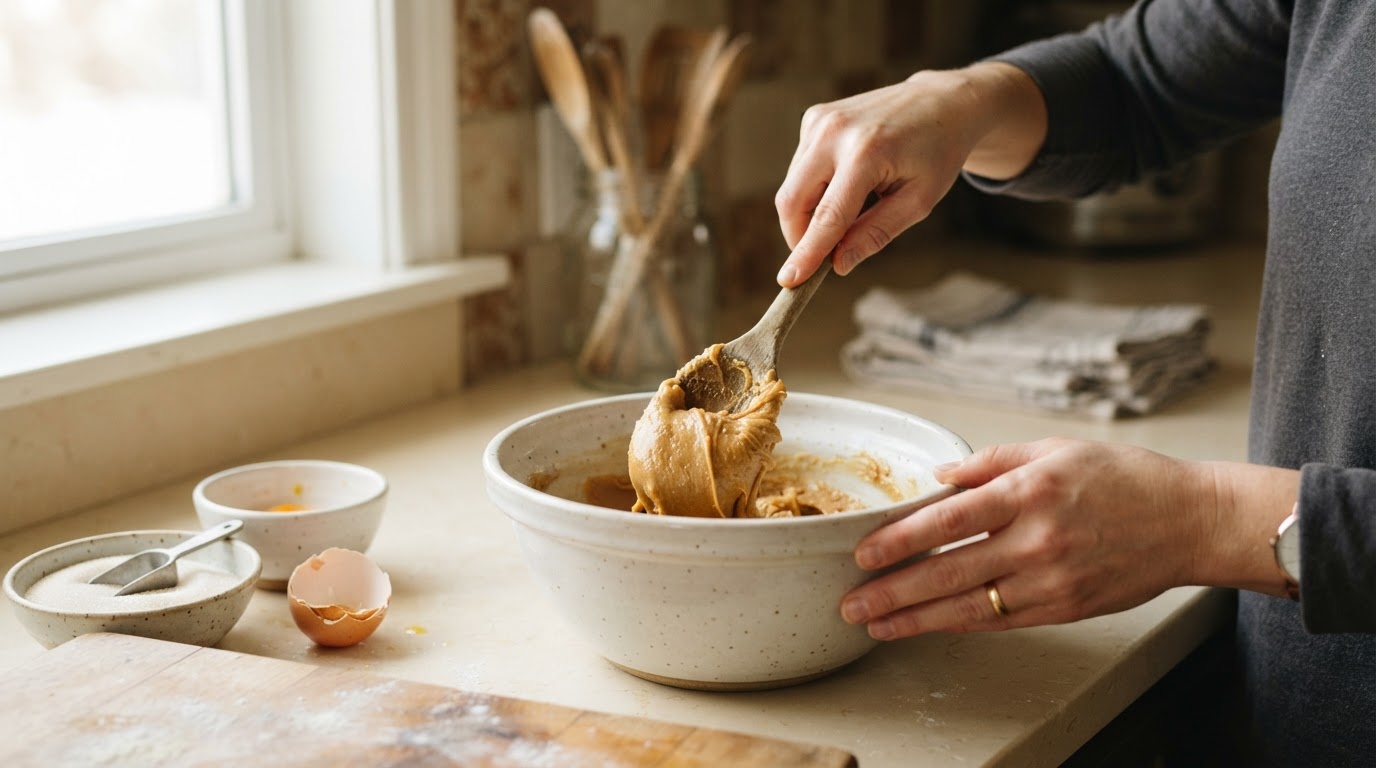
Makes about 16 cookies. You'll know they're done when the edges are set, the centers are pale, and there's no wet sheen on top. If they crumble when you pick one up, they spent a minute or two too long in the oven.
3-Ingredient Shortbread
Shortbread is the opposite of a drop cookie: no egg, no rush, and a short rest in the fridge before baking. The reward is a cookie with a clean snap and a buttery finish.
Ingredients
- 1/2 cup unsalted butter, softened (113 g, or 1 stick)
- 1/4 cup granulated sugar (50 g)
- 1 1/4 cups all-purpose flour (150 g)
- Optional: 1/4 teaspoon fine salt and 1/2 teaspoon vanilla extract
Method
- Beat the butter and sugar until pale and fluffy, about 2 to 3 minutes.
- Add the flour and salt and mix on low just until the dough comes together. Stop as soon as it does — overworked shortbread turns tough.
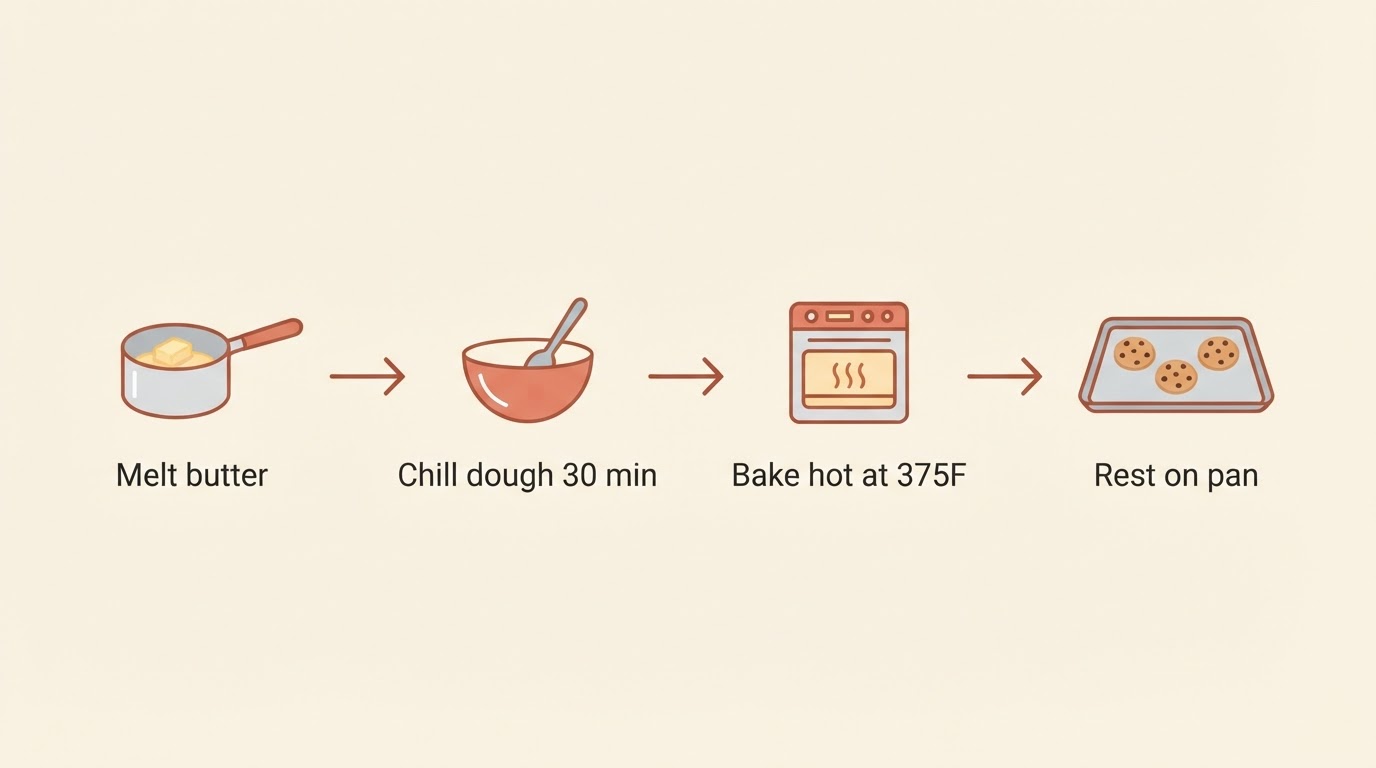
- Pat the dough into a disk, wrap it, and chill for 30 minutes. Cold dough cuts cleanly and holds its shape.
- Heat the oven to 325°F (165°C). Roll the dough about 1/4 inch thick, cut it into fingers or rounds, and place them 1 inch apart on parchment.
- Prick each cookie twice with a fork, then bake for 18 to 22 minutes, until the edges are barely golden and the centers are still pale.
- Cool on the sheet for 10 minutes — shortbread is fragile while warm — then move to a rack.
Makes about 18 small cookies. You'll know they're done when the edges are pale gold and the middle hasn't browned at all. Shortbread pulled too late tastes dry and floury instead of buttery.
Coconut Macaroons That Stay Chewy
These are the most forgiving cookies on the list, and the only ones where a ten-minute rest makes a real difference. The coconut drinks in some of the condensed milk, and that moisture is what keeps the middle soft.
Ingredients
- 4 cups sweetened shredded coconut (about 14 oz / 400 g)
- 1 can sweetened condensed milk (14 oz / 397 g)
- 2 large egg whites
- 1 teaspoon vanilla extract and 1/4 teaspoon fine salt
Method
- Heat the oven to 325°F (165°C) and line two baking sheets with parchment.
- Whisk the condensed milk, egg whites, vanilla, and salt in a large bowl until smooth.
- Fold in the coconut until every strand is coated. Let the mixture sit for 10 minutes so the coconut absorbs some of the liquid; that rest is what keeps the centers chewy.
- Scoop 2-tablespoon mounds onto the sheets, 1 1/2 inches apart.
- Bake for 20 to 25 minutes, until the edges and the tips of the coconut are golden.
- Cool on the sheet for 5 minutes, then move to a rack.
Makes about 18 macaroons. You'll know they're done when the tips are toasted and the centers still give slightly when pressed. If they feel hollow and crisp all the way through, they've dried past chewy.
Meringue Kisses
Meringues are the lightest formula here and the most patient: most of their time is oven time, not work time.
Ingredients
- 2 large egg whites (about 70 g), at room temperature
- 1/2 cup granulated sugar (100 g)
- A pinch of fine salt
- Optional: 1/2 teaspoon vanilla extract
Method
- Heat the oven to 225°F (110°C) and line two baking sheets with parchment.
- Wipe the bowl and whisk with a little vinegar or lemon juice. Any trace of fat keeps egg whites from whipping up.
- Whip the egg whites and salt on medium until foamy, then add the sugar a spoonful at a time. Keep whipping until the meringue holds a stiff, glossy peak and doesn't slide when you tilt the bowl.
- Fold in the vanilla, if you're using it.
- Pipe or spoon 1-inch kisses onto the sheets, 1 inch apart.
- Bake for 90 minutes, then turn the oven off and leave the meringues inside for 1 hour. They should feel light and lift off the parchment without sticking.
Makes about 30 small kisses. You'll know they're done when they sound hollow tapped on the bottom. Damp air is the enemy here, so on a humid day leave them in the turned-off oven a little longer.
What Fewer Ingredients Change
Short formulas aren't automatically better — they're just less forgiving, because every ingredient you remove takes a job with it:
- Sugar is structure as well as sweetness. It holds moisture and helps cookies brown. Cut too much and you get a pale, dry cookie that spreads differently.
- Fat decides spread. Butter melts early, so butter-heavy dough relaxes in the oven; that's why shortbread likes a chill. Oil makes a softer, cakier cookie, and nut butter lands between the two.
- Eggs bind. Take the egg out and you need another binder, or the cookie turns into crumbs.
- Baking soda and powder are optional here. They add lift, but none of the formulas above need them.
- Salt is the smallest addition with the biggest effect. A quarter teaspoon makes peanut butter cookies and shortbread taste sweeter and more finished.
- Vanilla does the same job for aroma: one teaspoon is enough to make a three-ingredient cookie taste deliberate.
The rule worth remembering: when you remove an ingredient, replace its job, not just its flavor. Cutting sugar? Expect more spread, so chill the dough. Skipping the egg? Use a flax egg and expect a slightly denser crumb.
That's the same thinking behind our own Cookies collection at The Rustic Bakehouse. Each from-scratch recipe keeps its ingredient list countable — the matcha white chocolate cookies use eight ingredients — and the notes explain what each ingredient is doing in the dough, including the 30-minute chill that keeps the cookies from spreading too wide.

Felo product screenshot.
Why Few-Ingredient Cookies Spread, and How to Stop It
Spread is almost never a mystery. It happens when the fat in the dough melts before the structure sets. Five usual suspects, and the fix for each:
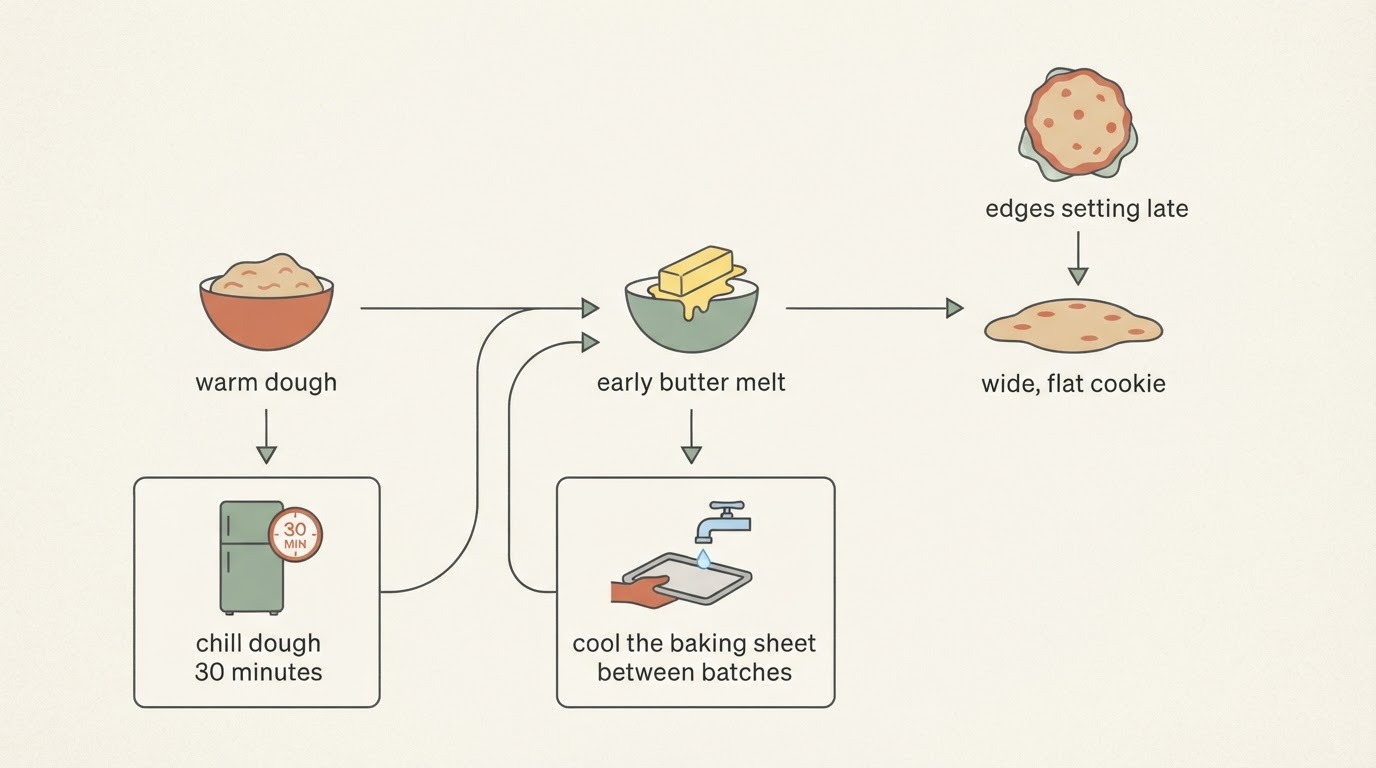
- The dough is warm. Butter starts softening the moment it leaves the fridge. Chill drop-cookie dough for 30 minutes before scooping, and let shortbread have its rest.
- There's too little flour. Scooping flour straight from the bag packs it into the cup, so you add less than the recipe means. Spoon flour into the cup and level it off; a cup of all-purpose flour should weigh about 125 g.
- The baking sheet is warm. A sheet that just came out of the oven keeps melting the next batch from below. Rotate between two sheets, or cool the hot one under the tap and dry it.
- The sugar or fat is out of balance. When you trim a recipe, keep the ratios intact; cutting an egg or a few tablespoons of flour changes how the dough sets.
- The cookies are crowded. Give them 2 inches. Steam and heat between close cookies make them slump.
If a batch still spreads wider than you'd like, chill the remaining dough for another 15 minutes, stir in 1 to 2 tablespoons of flour, and check your oven with a thermometer, since an oven that runs cool keeps butter melting longer.
Flavor Changes That Don't Add Much
You can build a lot of variety on top of a short formula without turning it into a long one:
- Swap the nut butter. Almond, cashew, and sunflower seed butter all work in the peanut butter formula. Sunflower butter can taste slightly green, so a pinch of salt helps.
- Add citrus zest. One teaspoon of orange or lemon zest brightens shortbread and macaroons.
- Use extracts. Almond, peppermint, and orange extracts each bring a new personality in half a teaspoon.
- Add a warm spice. Cinnamon, cardamom, or ginger suits banana-oat cookies and macaroons especially well.
- Finish on top. Flaky salt, a drizzle of melted chocolate, or finely chopped nuts pressed into the dough before baking add texture without changing the crumb.
- Keep mix-ins modest. About 1/2 cup of chocolate chips or dried fruit per batch keeps the dough strong enough to hold together.
Common Questions
How do I know when few-ingredient cookies are done?
Look at the edges first. They should be set and just barely golden, while the centers still look slightly underdone. Cookies keep cooking on the hot sheet for a few minutes after they come out, which is what leaves a soft middle. If the centers look fully baked in the oven, the cookies will be crisp by the time they cool.
Can I cut the sugar?
You can, but sugar is doing more than sweetening. Reduce it by a quarter at most the first time, chill the dough well, and expect a paler cookie with a drier crumb. Below about half the original amount, most of these formulas stop behaving like cookies at all.
Can I make them gluten free?
Shortbread works with a 1-to-1 gluten-free flour blend; add an extra 1 to 2 teaspoons of liquid if the dough feels dry. Coconut macaroons and meringues are naturally gluten free. For banana-oat cookies, use oats labeled gluten free, and check that your peanut butter doesn't contain a wheat-based additive.
What can I use instead of eggs?
For peanut butter cookies, one tablespoon of ground flaxseed mixed with three tablespoons of water replaces one egg; let it sit for five minutes before mixing. Shortbread has no egg to replace. Macaroons and meringues depend on egg whites for structure, so there's no clean substitute.
How should I store and freeze them?
Keep crisp cookies like shortbread and meringues in an airtight container at room temperature for three to five days; a slice of bread in the container keeps softer cookies from drying out. Baked cookies freeze well for up to three months. You can also freeze scooped dough balls and bake them from frozen, adding one to two minutes to the bake time.
Why are my cookies dry?
Overbaking is almost always the reason, especially with short formulas that have little fat to spare. Pull them at the low end of the time range, cool them on the sheet rather than right on a rack, and store them airtight. If the dough itself felt stiff, you probably added too much flour; weigh it next time, or spoon and level it.