Why Discard Works in a Muffin
Muffins are quick breads, which means they rise from chemical leaveners instead of yeast. There is no proof, no kneading, and no waiting for dough to double. The batter goes into a hot oven, and the lift happens there.
Sourdough discard is the starter you pour off before a feed: thin, tangy, and full of wild yeast that is no longer strong enough to raise a loaf on its own. In a muffin batter it is not the leavener. It is there for flavor, moisture, and tenderness, and it happens to be acidic, which is exactly what baking soda needs to make bubbles.
That acidity is the useful part. Baking powder works on its own, but baking soda only lifts when it meets an acid, and discard supplies it. The two leaveners split the job: baking powder carries the steady rise, while baking soda reacts straight away to tenderize the crumb and brown the crust.
There is a limit to how much discard a muffin can take, though. Too little and you taste nothing. Too much and the batter turns slack, the middle goes gummy, and the tang reads raw instead of bright. For a standard 12-cup pan, about 1 cup (240 g) of 100% hydration discard is the sweet spot.
One honest note before you start: these are a same-day bake. They are at their best while the crust still has some crispness to it, which is why the freezer instructions further down matter more than any "keeps for a week" promise.
A Discard Muffin Ratio Worth Memorizing
Once you know the proportions, you can build a batch without looking anything up. This is a 12-muffin formula that leans on the discard instead of working around it.
Ingredient | Amount | What it does |
|---|---|---|
Sourdough discard, 100% hydration | 1 cup (240 g) | Moisture, tang, and the acid that activates the baking soda |
All-purpose flour | 2 cups (240 g) | Structure for the crumb |
Baking powder | 2 teaspoons | The main, steady lift |
Baking soda | 1/2 teaspoon | Fast reaction with the discard; helps browning |
Granulated sugar | 3/4 cup (150 g) | Tenderness, browning, and balance for the tang |
Fine salt | 1/2 teaspoon | Keeps the flavor from tasting flat |
Neutral oil or melted butter | 1/2 cup (100 g oil or 113 g butter) | Tenderness and a moist crumb |
Large eggs | 2 | Richness and structure |
Milk | 1/4 to 1/2 cup (60–120 ml) | Thins the batter; the exact amount depends on your discard |
The milk is deliberately open-ended because discard is not a standardized ingredient. A starter fed equal weights of flour and water is close to pourable; one fed by eye and kept in a cold fridge can be closer to a thick paste. Either works. Start with 1/4 cup of milk, then add more a tablespoon at a time until the batter slowly ribbons off the spatula and the flour has disappeared.
Straight-from-the-fridge discard is fine, but room-temperature discard blends into the batter more evenly and bakes a touch more predictably. Cold batter can also need another minute or two in the oven, so if you are baking in a hurry, that is the variable to watch.
Mixing: The Part That Decides the Crumb
Muffin batter rewards a light hand and punishes enthusiasm.
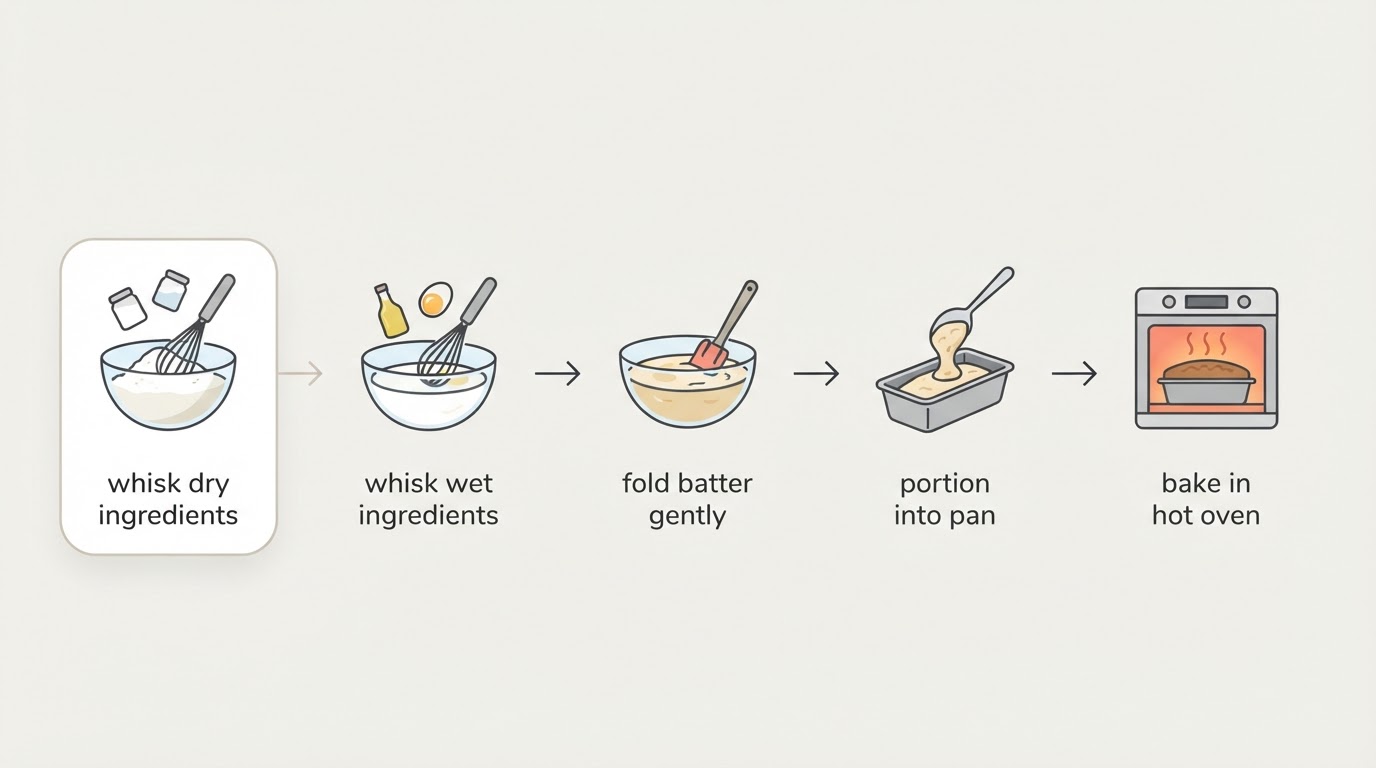
Whisk the flour, sugar, baking powder, baking soda, and salt together in a large bowl. In a second bowl, whisk the discard, oil or butter, eggs, and the first 1/4 cup of milk until the mixture is smooth and glossy.
Pour the wet into the dry, then fold with a spatula. Ten to twelve strokes is usually enough: drag the spatula down the side, across the bottom, and up through the middle, turning the bowl a quarter turn each time. Stop while a few dry streaks and lumps are still visible. Those lumps disappear during baking, and the streaks will hydrate in the oven.
Every extra stir develops gluten, the protein that makes bread chewy. Muffins want just enough gluten to hold the crumb together, so overmixing is what turns a tender muffin into a tough one with tunnels running through it. If there is one instruction in this recipe to take literally, it is that one.
There is a genuine trade-off in resting the batter, and it is worth understanding rather than following blindly. A rest of 15 to 20 minutes on the counter lets the flour hydrate fully and softens the sharpest edge of the tang, which gives you a more even crumb. But the baking soda has already met the acid and started reacting, so a long rest costs you lift. Keep any rest to about 20 minutes, or skip it entirely when tall domes matter most to you.
When it is time to scoop, use a trigger ice cream scoop or two spoons and fill each cup about three-quarters full. Leave the tops uneven. Smoothing the batter presses out the air you just spent the last five minutes protecting.
Baking for Tall Tops
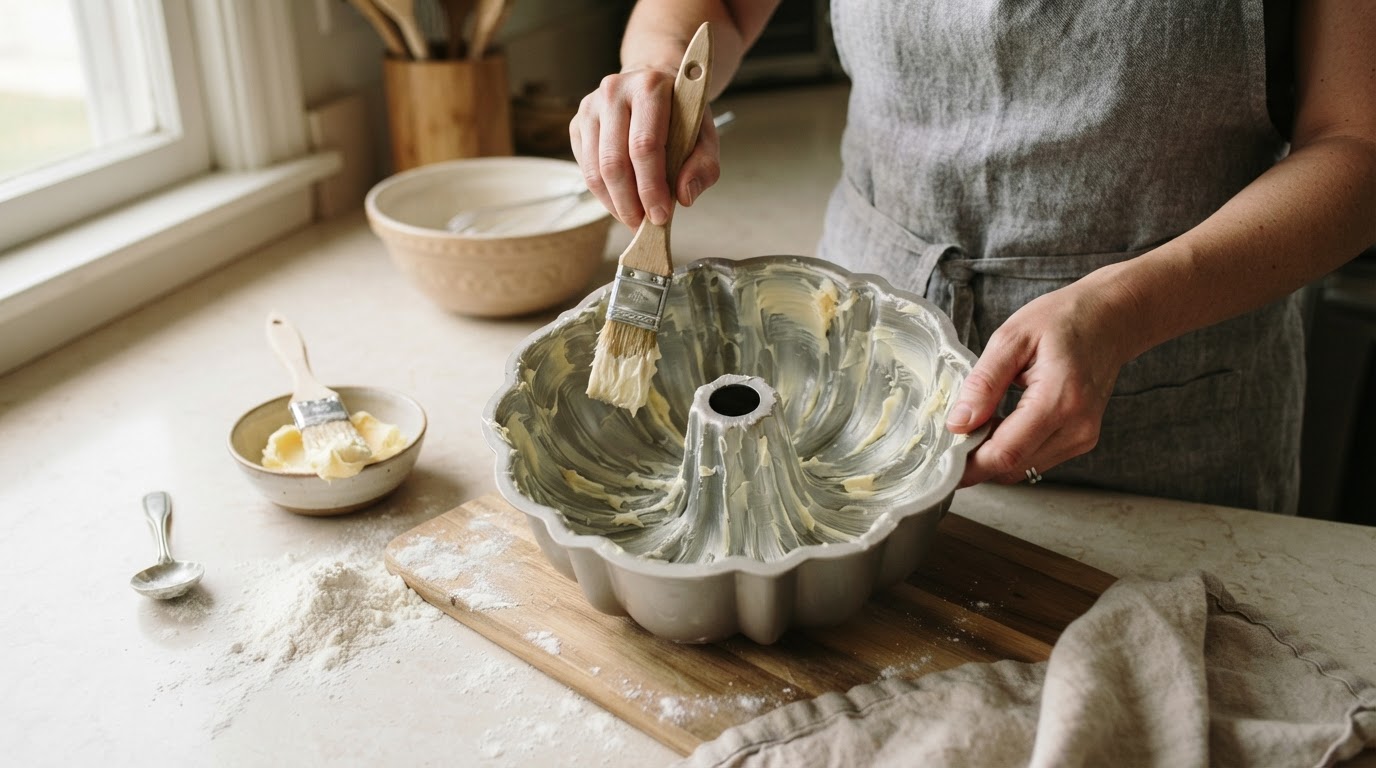
Heat the oven to 425°F with a rack in the middle position. Line the pan with paper liners or grease the cups well.
Fill the pan, then bake for 7 minutes at 425°F. Without pulling the pan out, drop the oven temperature to 350°F and bake for another 12 to 15 minutes. The initial blast of heat sets the edges and pushes the centers upward, and the lower finish bakes them through without drying them out. If you would rather set one temperature and forget it, 400°F for 18 to 22 minutes works too; the domes will be slightly more modest.
Muffins are ready when the tops spring back under a light press, the edges have pulled away from the liners a little, and a toothpick inserted into the center comes out with moist crumbs rather than wet batter. If the tops are browning faster than the centers are baking, lay a piece of foil loosely over the pan.
Let the pan sit on a rack for 5 minutes, then lift the muffins out and cool them directly on the rack. Leaving them in the cups steams the sides and softens that crisp edge.
Variations That Hold the Ratio Together
The formula above is a base, not a rulebook. Each of these changes stays inside the same proportions so the muffins still rise.
Blueberry. Fold in 1 1/2 cups (about 200 g) of berries at the very end, after the batter is already mixed. Toss them in a spoonful of flour first so they stay suspended. Frozen berries go in unthawed and will add 2 to 3 minutes to the bake.
Chocolate chip. Add 1 cup (170 g) of chips with the last few folds. Drop the sugar to 2/3 cup if you like a less sweet muffin.
Banana. Replace the milk with 1/2 cup of mashed ripe banana and lower the sugar to 1/2 cup. The batter will be thicker; that is expected.
Savory. Cut the sugar to 1 tablespoon, skip nothing else, and fold in 1 cup of grated sharp cheddar with 2 tablespoons of chopped chives or scallion.
Spice and citrus. Add 1 teaspoon of cinnamon, or a teaspoon of zest rubbed into the sugar before it meets the flour. Rubbing releases the oils and carries the flavor further.
If you want a comparison point for how this style of bake behaves in grams, The Rustic Bakehouse keeps its Quick Breads recipes together in one category, where the chemically leavened bakes sit alongside the sourdough ones. That shelf is home to a sourdough discard chocolate chip muffin and a vanilla muffin recipe built on nine ingredients, which is a useful place to check your own crumb against a second formula.

All Recipes listing first screen: 4-column recipe card grid with photos, tags, titles, excerpts and pagination.
Freezing and Reviving the Extras
Muffins freeze better than most people expect, and a batch of twelve is exactly the size that makes freezing worthwhile.
Cool them completely on the rack first. A warm muffin will steam inside the bag, and that moisture turns the crust soft and the crumb heavy. Once they are cool, freeze them in a single layer on a sheet pan for about an hour, then move them into a freezer bag with a sheet of parchment between the layers. Press the air out, label the bag with the date, and they will hold for about 2 to 3 months.
To serve them, you have three good options:
- From frozen in the oven. 300°F for 8 to 10 minutes. This is the one that comes closest to a fresh muffin, especially if the tops had a crisp edge.
- Thawed at room temperature. An hour or two on the counter, uncovered, keeps the outside from getting damp.
- Microwave. 30 to 45 seconds from frozen. Fast and soft, but the texture is steamy rather than tender, so use it for a week-morning muffin rather than a weekend one.
Sugar-topped and crumb-topped muffins are the one exception worth knowing about: the topping softens in the freezer. They still taste good, but the crunch does not come back.
When Something Goes Wrong
Most discard muffin problems trace back to one of five causes. Here is how to read the signs.
What you see | What happened | What to change next time |
|---|---|---|
Flat, pale tops | Leaveners past their prime, an oven that never reached temperature, or more discard than the flour could carry | Check the baking powder and baking soda dates, use an oven thermometer, hold the discard to 1 cup |
Tunnels and a chewy, tough crumb | Overmixing | Fold only until the last dry streaks disappear and leave the lumps alone |
A gummy, wet middle | Too much liquid for the flour, an underbaked center, or muffins left cooling in the pan | Hold the milk back and add it by the tablespoon, bake until the toothpick shows crumbs, cool 5 minutes in the pan and no longer |
A tang that tastes raw rather than bright | Old discard, or simply too much of it | Use fresher discard, drop to 3/4 cup, and add a tablespoon or two more sugar |
Muffins that stick or tear | Worn liners, or a pan that was greased but not floured | Use fresh paper liners or grease and flour the cups, and never skip the 5-minute rest before lifting them out |
Questions That Come Up Every Time
Do I need to feed the starter before making these?
No. Discard is unfed by definition, and this recipe is built around it. If you only have active, bubbly starter, it works too; expect a milder tang and a slightly livelier rise.
Can I mix the batter the night before?
No. Baking soda starts working the moment it meets the discard, and the longer the batter sits, the more lift you lose. Mix it, rest it for at most 20 minutes if you want a more even crumb, and bake it.
Do these taste sour?
Only mildly. Baking knocks back a lot of the tang, so most people taste a gentle background note rather than sourdough. If you want more of it, use discard that has been sitting in the fridge for a week or more.
Can I use whole wheat flour?
Yes, up to half of it. Replace 1 cup of the all-purpose flour with whole wheat and add an extra splash of milk, since whole wheat absorbs more liquid. All whole wheat will give you a heavier muffin.
Can I bake this as a loaf instead of muffins?
Yes, and the batter fits a standard 9-by-5-inch loaf pan. Bake at 350°F for 45 to 55 minutes, tenting the top with foil if it browns early. The slice will be denser than a muffin, because a loaf has less surface area for the edges to set against.
Keep the Jar in Rotation
A jar of discard is only a chore if the only thing you do with it is feed it. Muffins are one of the quickest ways to keep it moving: no proof, no shaping, and a batter that forgives a beginner's hand. Bake one batch, watch how your particular discard behaves in the milk range, and write down what you did. That note is worth more than any ratio, including this one.