What you need before you mix
Bundt cakes look fancy, but the method is ordinary cake baking with one extra rule: the pan must be greased like you mean it. The ridges that make the cake beautiful are the same ridges that grab batter and tear the crumb if you rush the prep.
For a classic 10- to 12-cup vanilla bundt (about 12–16 slices)
Dry ingredients
- 3 cups (360 g) all-purpose flour
- 1 teaspoon baking powder
- 1/2 teaspoon baking soda
- 1 teaspoon fine salt
Wet ingredients
- 1 cup (226 g) unsalted butter, room temperature
- 2 cups (400 g) granulated sugar
- 4 large eggs, room temperature
- 1 tablespoon pure vanilla extract
- 1 cup (240 g) full-fat sour cream, room temperature
- 1/2 cup (120 ml) whole milk, room temperature
Simple glaze (optional)
- 1 1/2 cups (180 g) powdered sugar
- 2–3 tablespoons milk or cream
- 1/2 teaspoon vanilla extract
- Pinch of salt
Equipment that actually matters
- 10- to 12-cup bundt pan (or one of the no-bundt options below)
- Two mixing bowls and a whisk or hand mixer
- Rubber spatula
- Cooling rack
- Instant-read thermometer (helpful, not required)
Room-temperature butter, eggs, sour cream, and milk mix more evenly and give you a finer crumb. Cold dairy can leave streaks of unmixed fat that bake into dense bands.
How to bake a bundt without a bundt pan
You do not need specialty gear to make this cake.
If you have… | Do this | Bake note |
|---|---|---|
Tube pan (angel-food style with a center tube) | Grease well; fill no more than 2/3 full | Time is close to a bundt; start checking early |
Two 8.5×4.5-inch loaf pans | Divide batter evenly | Often 40–50 minutes |
9×13-inch rectangular pan | Pour in a single layer | Often 30–40 minutes; serve as squares |
Standard muffin tin | Fill cups 2/3 full for “mini bundts” in spirit | About 18–22 minutes |
Oven-safe bowl + ramekin trick | Set a greased oven-safe ramekin or metal cup in the center of a deep round cake pan, then pour batter around it | Mimics the tube; watch for hot spots |
The center tube is what helps thick batter bake through before the edges dry out. When you skip it, reduce the pan depth (loaves, sheet, muffins) or accept a slightly longer bake and a more careful doneness check.
Get the pan ready so the cake actually comes out
This step decides whether you get a clean ring or a half-cake stuck in the pan.
- Choose fat that sticks. Softened butter or a thick baking spray with flour works better than a thin oil mist alone. For deep ridges, butter is more reliable because you can see where you missed.
- Coat every crease. Use a pastry brush or a crumpled paper towel and push fat into the inner tube, outer wall, and every valley. Missed spots are where cake welds itself to the pan.
- Add a light flour or cocoa dusting. Spoon in 1–2 tablespoons flour (or cocoa for chocolate cakes), tilt and tap until the fat is evenly coated, then knock out the excess over the sink. A pasty, wet flour layer is too much; you want a thin, even veil.
- Skip parchment tricks that fight the shape. Unlike layer cakes, you usually cannot line a bundt. Prep is the liner.
- Set the pan aside while you mix. A greased pan sitting 10 minutes is fine; do not refrigerate it so hard that the butter firms into thick ridges of fat.
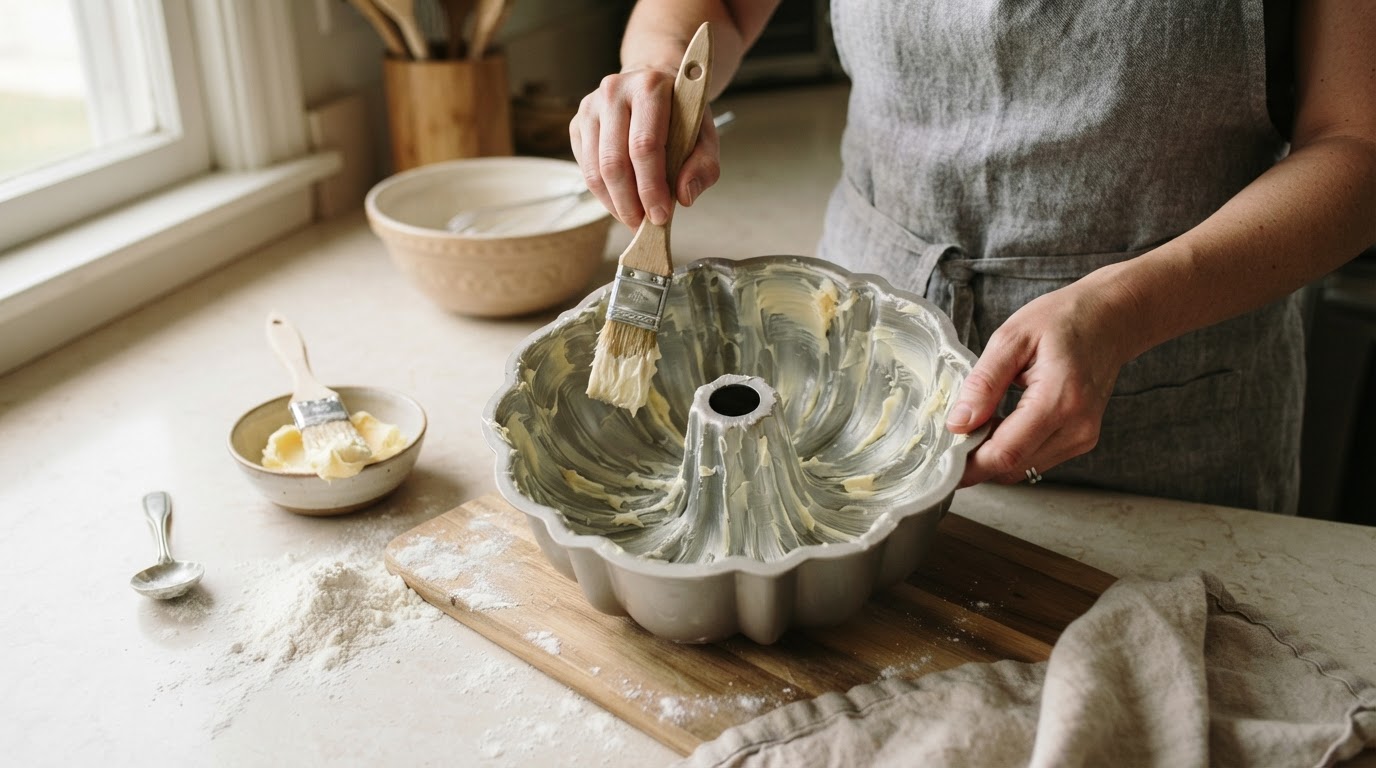
If you have had release failures before, a paste of 1 part flour + 1 part oil + 1 part shortening brushed on is a home-baker workhorse. Keep the coat thin so it does not bake into a crusty shell.
Mix a sturdy, moist batter
This is a reverse-creamed-adjacent classic: cream the butter and sugar well, then build a batter that can climb the pan walls without collapsing.
- Heat the oven to 350°F (175°C). Place a rack in the center. If your oven runs hot, verify with an oven thermometer; bundt edges brown fast.
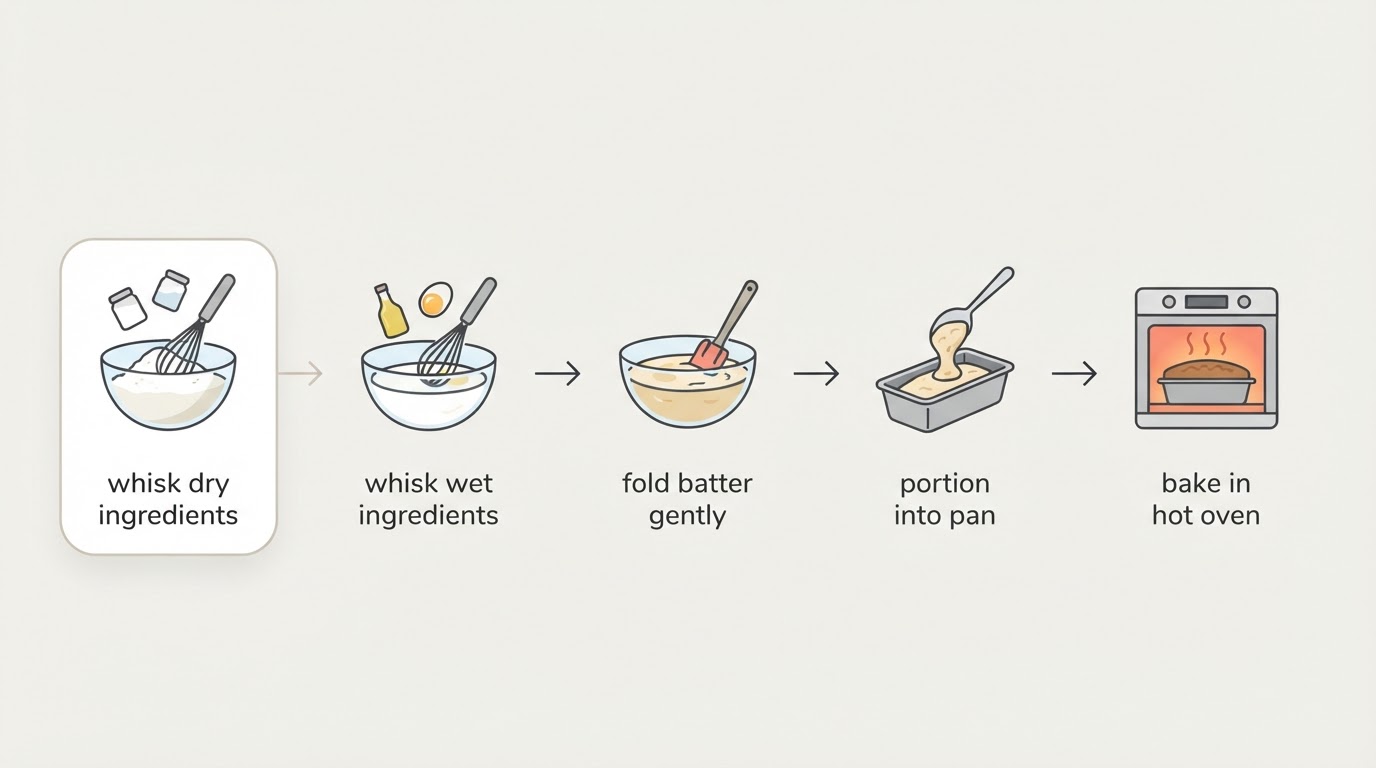
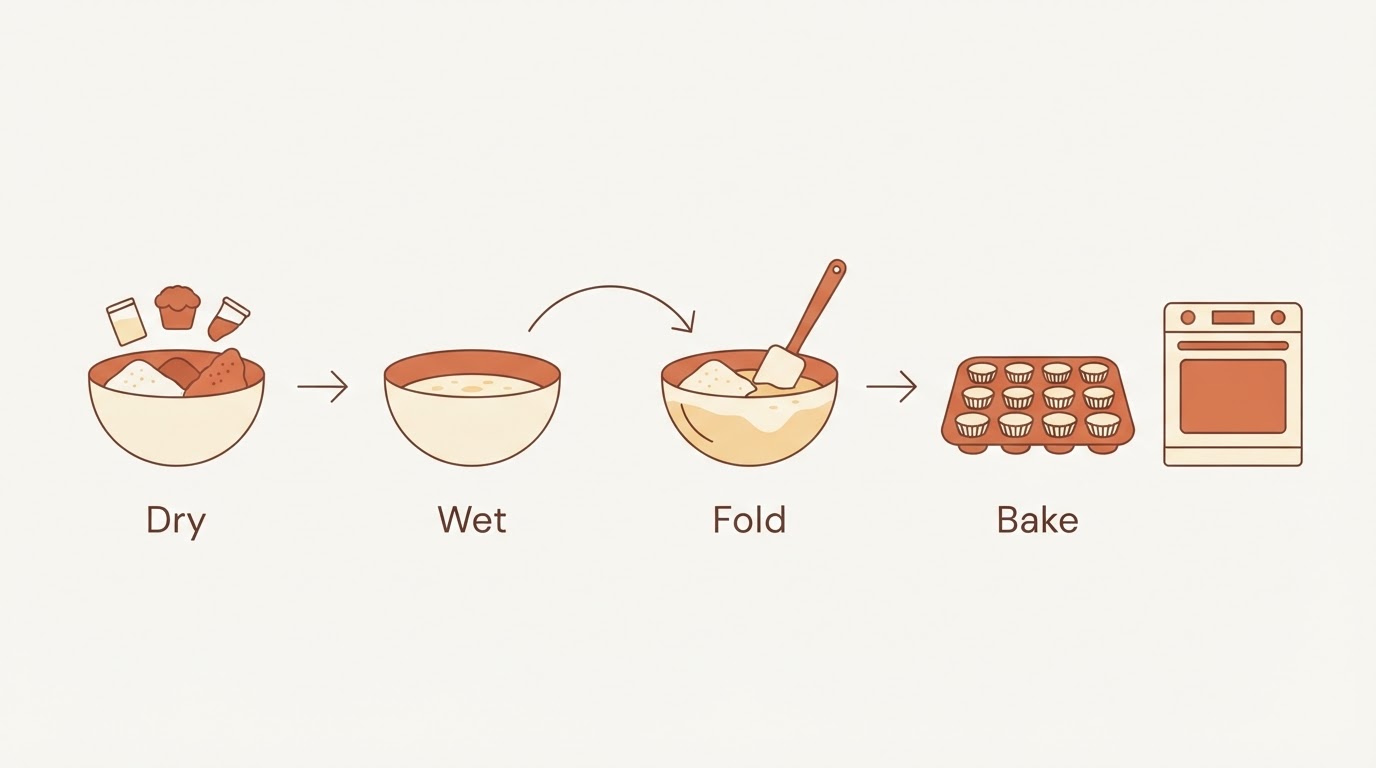
- Whisk the dry ingredients. Flour, baking powder, baking soda, and salt in one bowl. Whisking distributes the leaveners so you do not get bitter baking-soda pockets.
- Cream butter and sugar. Beat on medium until the mixture looks lightened and slightly fluffy, about 3–4 minutes with a hand mixer. Scrape the bowl. Under-creamed butter leaves a greasy, coarse crumb.
- Add eggs one at a time. Beat each egg in fully before the next. Then beat in the vanilla. If the mixture looks slightly curdled, it usually smooths out when the flour goes in.
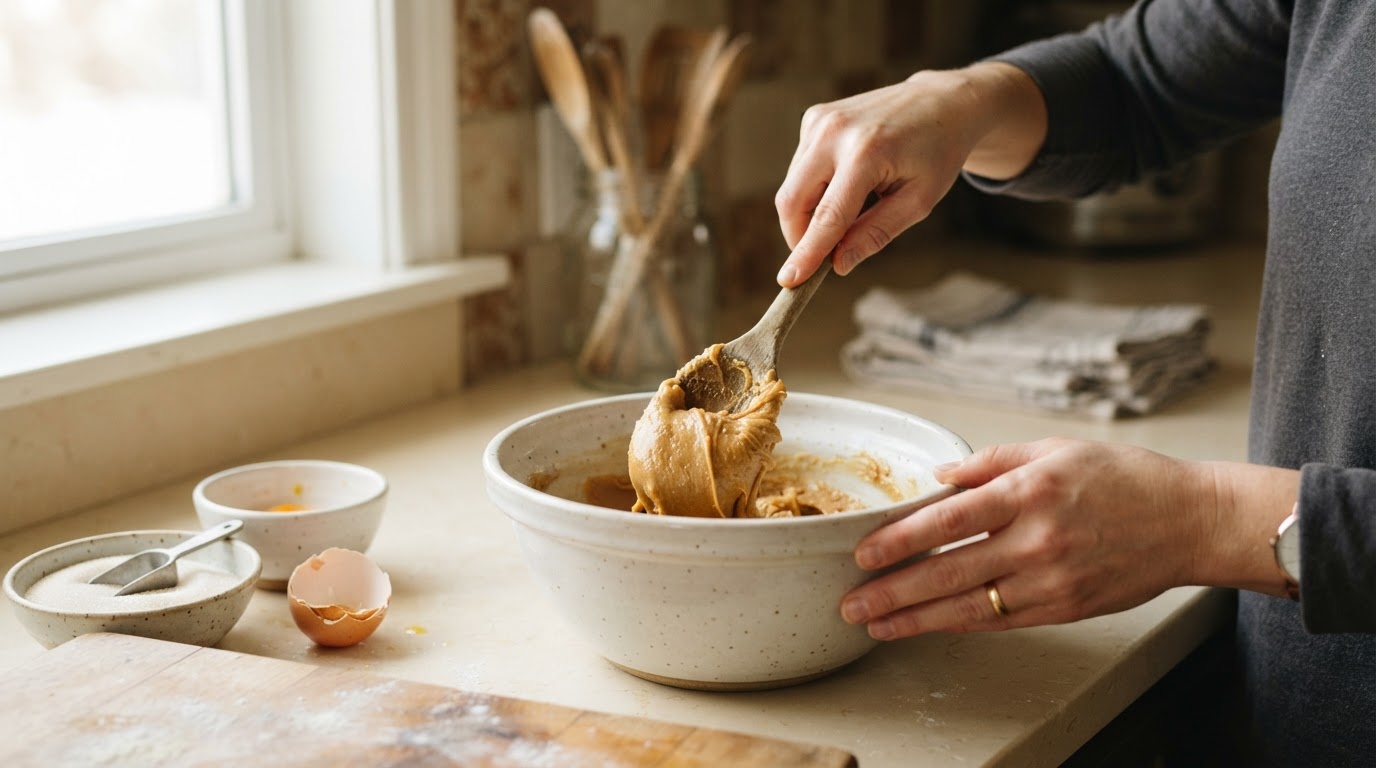
- Alternate dry ingredients with sour cream and milk. On low speed or by hand, add the flour mixture in three additions and the sour cream/milk in two, beginning and ending with flour. Stop as soon as you stop seeing dry streaks.
- Finish by hand. A few spatula folds catch flour hiding at the bottom without knocking out all the air. The batter should be thick, smooth, and scoopable—not pourable like pancake batter.
- Fill the pan. Spoon batter in gently, then smooth the top. Fill only about 2/3 to 3/4 full so the cake has room to rise into the design. Tap the pan firmly on the counter 2–3 times to release large air bubbles trapped in the ridges.
Why sour cream helps. The fat and acidity tenderize the crumb and keep a tall cake from tasting dry two days later. Plain full-fat Greek yogurt can stand in at the same weight if that is what you have.
Bake, test, and cool without tearing the crust
- Bake 45–60 minutes for a full 10- to 12-cup pan. Start checking at 45 minutes. Loaf and muffin versions finish sooner; use the table above as a first guess, not a promise.
- Doneness checks that work on a deep cake
- A skewer in the deepest part of the ring comes out clean or with a few moist crumbs, not wet batter.
- The top springs back when lightly pressed.
- Internal temperature in the center of the cake mass is about 200–205°F (93–96°C) if you use a thermometer.
- Cool in the pan 10–15 minutes—not longer. This window lets the crumb set so it can move as one piece. Cool much longer and sugar in the crust can glue itself to the pan; flip too early and the center may sag or split.
- Release with patience. Place a rack over the pan, invert in one motion, and lift the pan straight up. If it resists, return it upright, loosen the outer and inner edges with a thin offset spatula or nylon knife, and wait 2 more minutes before trying again. Avoid aggressive shaking that cracks a warm cake.
- Cool completely before glazing. Warm cake melts glaze into a transparent smear. Give it at least an hour on the rack.
Finish with a glaze that clings
Whisk powdered sugar, vanilla, salt, and enough milk to make a thick ribbon that disappears into the surface in a few seconds. For a white glaze that stays opaque, keep it thicker; for a sheer drizzle, thin it a teaspoon at a time.
Set the rack over a sheet pan, spoon glaze around the crown, and let gravity paint the ridges. Add toasted nuts, citrus zest, or a second drizzle of melted chocolate only after the first layer sets for a few minutes.
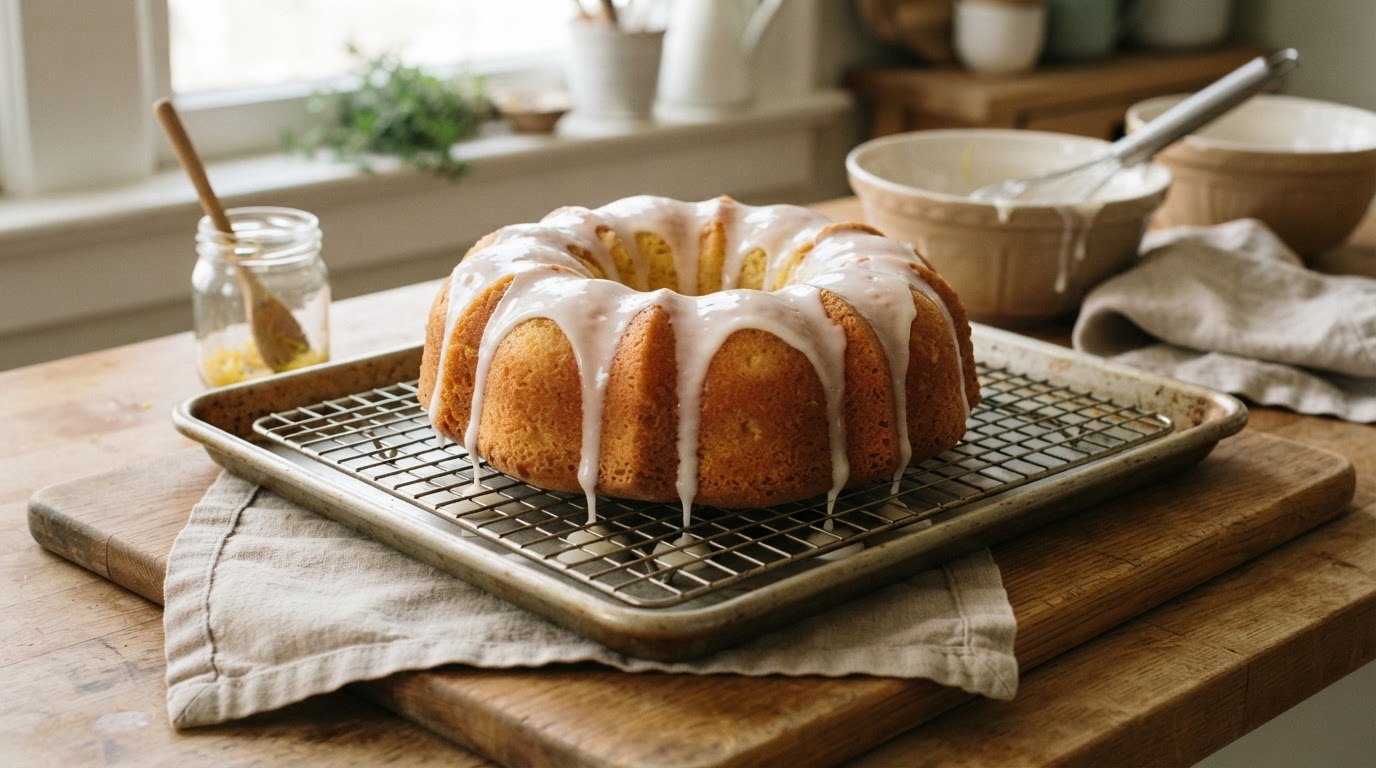
If you prefer a plain cake, a light dusting of powdered sugar right before serving is enough. Bundt cakes often need less frosting than layer cakes because the shape already looks finished.
Fixes for the problems that show up most
Cake stuck in the pan
Next time, more thorough fat + flour in every ridge, and stick to the 10–15 minute cool window. For this bake, loosen gently, invert again, and accept that a few patches can be glazed over.
Dense or gummy band near the bottom
Usually underbaked center or batter that sat too long before baking after the leaveners were wet. Check doneness deeper in the ring, and get the pan into the oven once mixed.
Dry edges, wet middle
Oven too hot or pan too dark. Lower the rack slightly, verify oven temperature, and tent foil loosely if the top browns before the center sets.
Cake slumped or overflowed
Pan overfilled, or leaveners expired. Fill to 2/3–3/4 only, and replace baking powder every 6–12 months once opened.
Flavor feels flat
Salt and vanilla do more work than people expect in a simple vanilla cake. Measure salt carefully and use real vanilla if you can. A teaspoon of citrus zest brightens the crumb without turning it into a lemon cake.
Want chocolate, citrus, or spice instead
Keep the same method. For chocolate, replace 3/4 cup (90 g) flour with unsweetened cocoa and add 1–2 extra tablespoons milk if the batter turns stiff. For lemon, add 2 tablespoons zest and swap 2 tablespoons milk for lemon juice. For spice, add 2 teaspoons cinnamon plus 1/2 teaspoon nutmeg or cardamom with the dry ingredients. Change one variable at a time the first round so you can taste what shifted.
When you want a tested from-scratch card next
Once you are comfortable with pan prep, mixing, and release, a written recipe card with timing, yield, and equipment listed in one place saves repeat bakes. On The Rustic Bakehouse, the cakes and pastries recipes are set up that way, including a made-from-scratch caramel bundt cake aimed at a family-sized occasion dessert. Use this method when you want full control in your own kitchen; reach for a complete card when you want the ratios and timeline already gathered for you.
All Recipes listing first screen: 4-column recipe card grid with photos, tags, titles, excerpts and pagination.
Either path stays in the same lane: real ingredients, a clear sequence, and a cake you can judge with your eyes, a skewer, and your own oven—not with guesswork.
Quick reference you can stick on the fridge
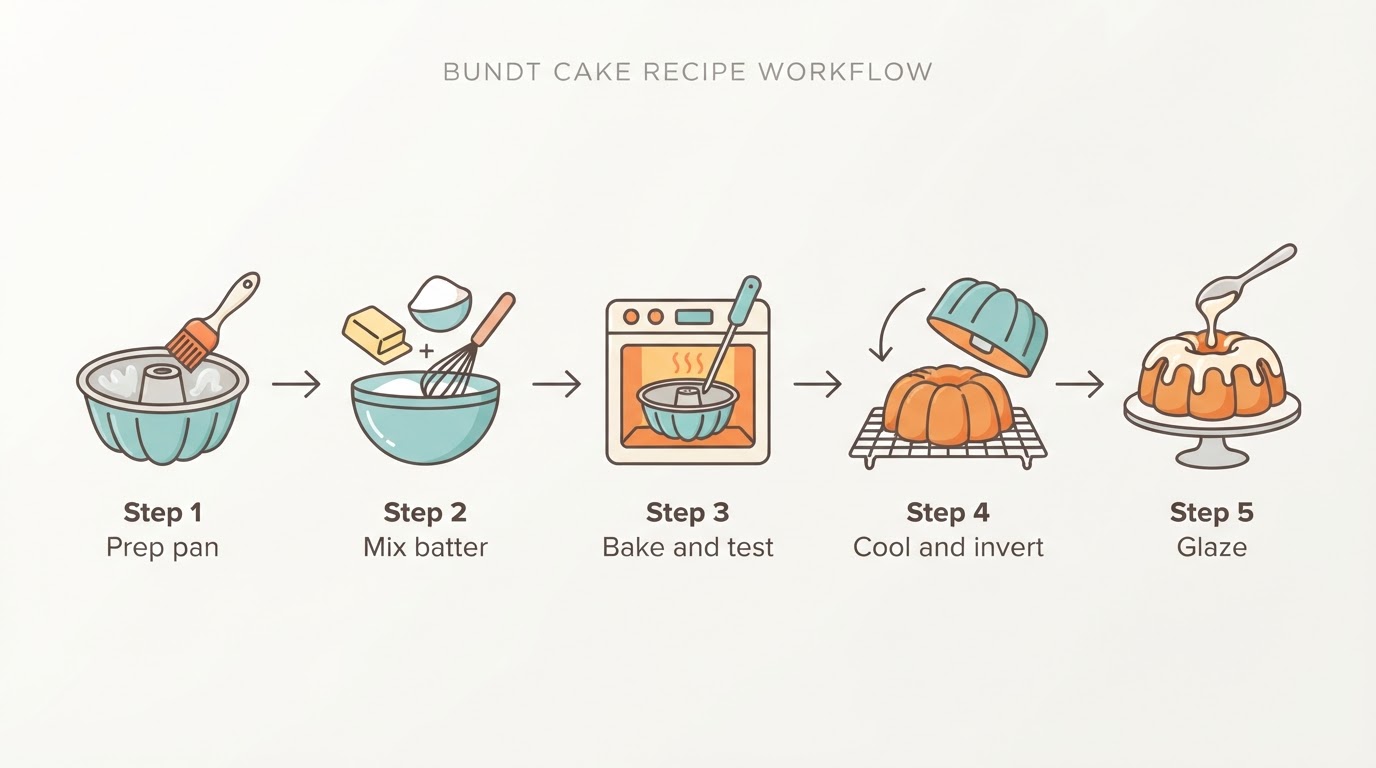
- Heat oven to 350°F (175°C). Grease and flour every ridge of a 10–12-cup pan (or choose a no-bundt swap).
- Whisk dry ingredients. Cream butter and sugar. Beat in eggs and vanilla.
- Alternate flour with sour cream and milk. Do not overmix.
- Fill pan 2/3–3/4 full. Tap out bubbles. Bake until a deep skewer is clean (often 45–60 minutes).
- Cool 10–15 minutes in the pan, invert onto a rack, cool fully, then glaze.
Bake it once as written. Next time, change only the flavor add-in or the pan shape. That is how a bundt stops being a special-occasion gamble and becomes a cake you trust on a weeknight or a holiday table.