What Counts as a Quick Bread
A quick bread is any batter or soft dough that rises from baking powder, baking soda, or both — not from yeast. Banana bread, muffins, cornbread, soda bread, and many savory cheese loaves all sit in this family. There is no bulk ferment, no kneading marathon, and no waiting for dough to double. You mix, portion, and bake.
That speed is the point, and it is also the constraint. Once liquid meets the leaveners, the chemical reaction starts. The oven should already be hot, the pan should already be greased or lined, and the batter should go in before the bubbles fade. Treat the mix as a short window of work, not a dough you can leave on the counter while you answer email.
Chemical leaveners do different jobs:
- Baking powder is the workhorse. Most home boxes are double-acting: a little gas on contact with liquid, more gas in the heat of the oven.
- Baking soda needs acid — buttermilk, yogurt, brown sugar, cocoa, citrus, or sourdough discard — or it leaves a soapy taste and a weak rise.
- Both together show up when the batter is acidic enough to wake the soda and still wants the insurance of powder.
Flour is the other half of the story. Stirring builds gluten. A little gluten holds the crumb around the bubbles; too much makes tunnels, toughness, and a dense middle. That is why every honest quick-bread method ends with the same line: stop folding as soon as the dry flour disappears.
Gear You Actually Need
You do not need a mixer. A bowl, a whisk, a spatula, a loaf pan or muffin tin, and a way to measure flour carefully are enough.
- 8 1/2 x 4 1/2-inch or 9 x 5-inch loaf pan for standard loaves
- 12-cup muffin tin with paper liners for muffins
- Two bowls so dry and wet stay separate until the final fold
- Scale if you have one — a cup of all-purpose flour is about 120 g; spoon-and-level if you are using cups
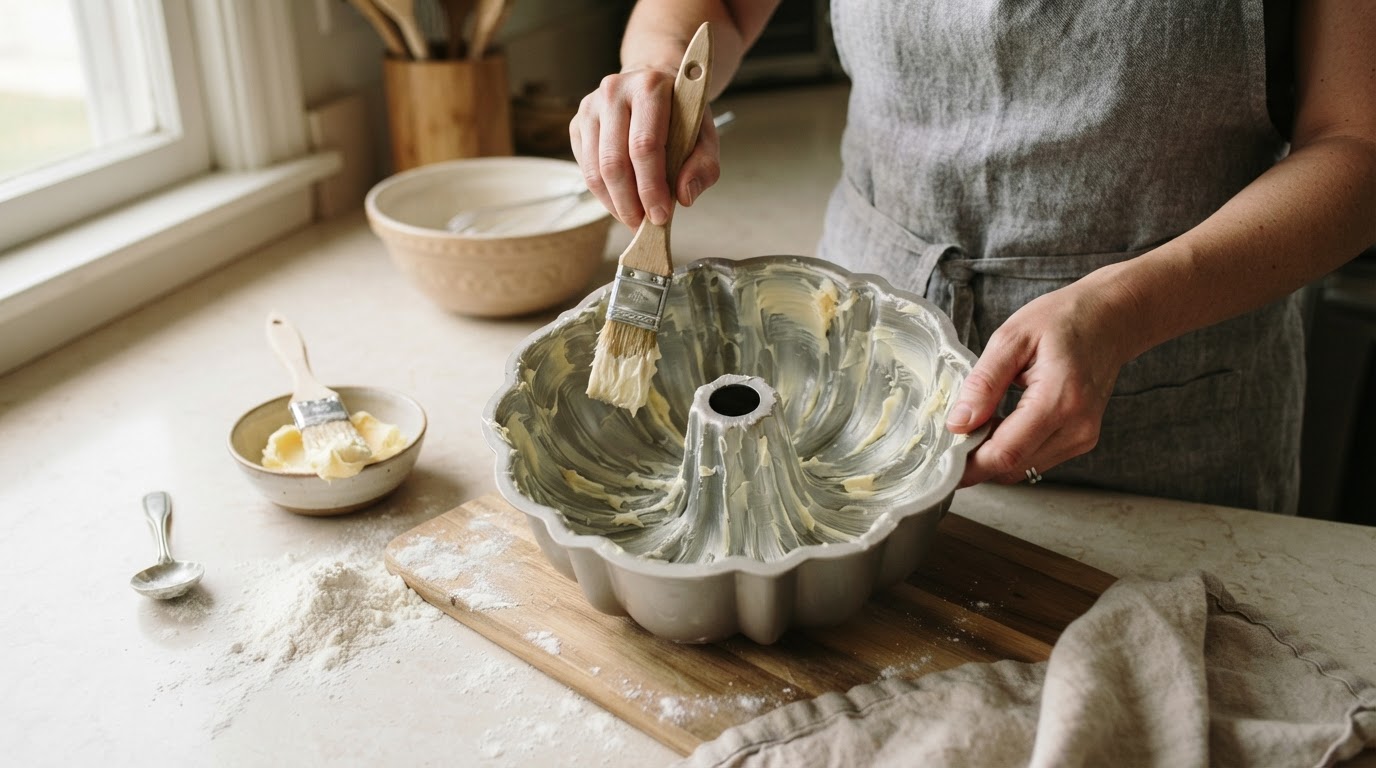
Grease the pan well, or line the long sides with a parchment sling so the loaf lifts out clean. For muffins, liners beat greasing every cup.
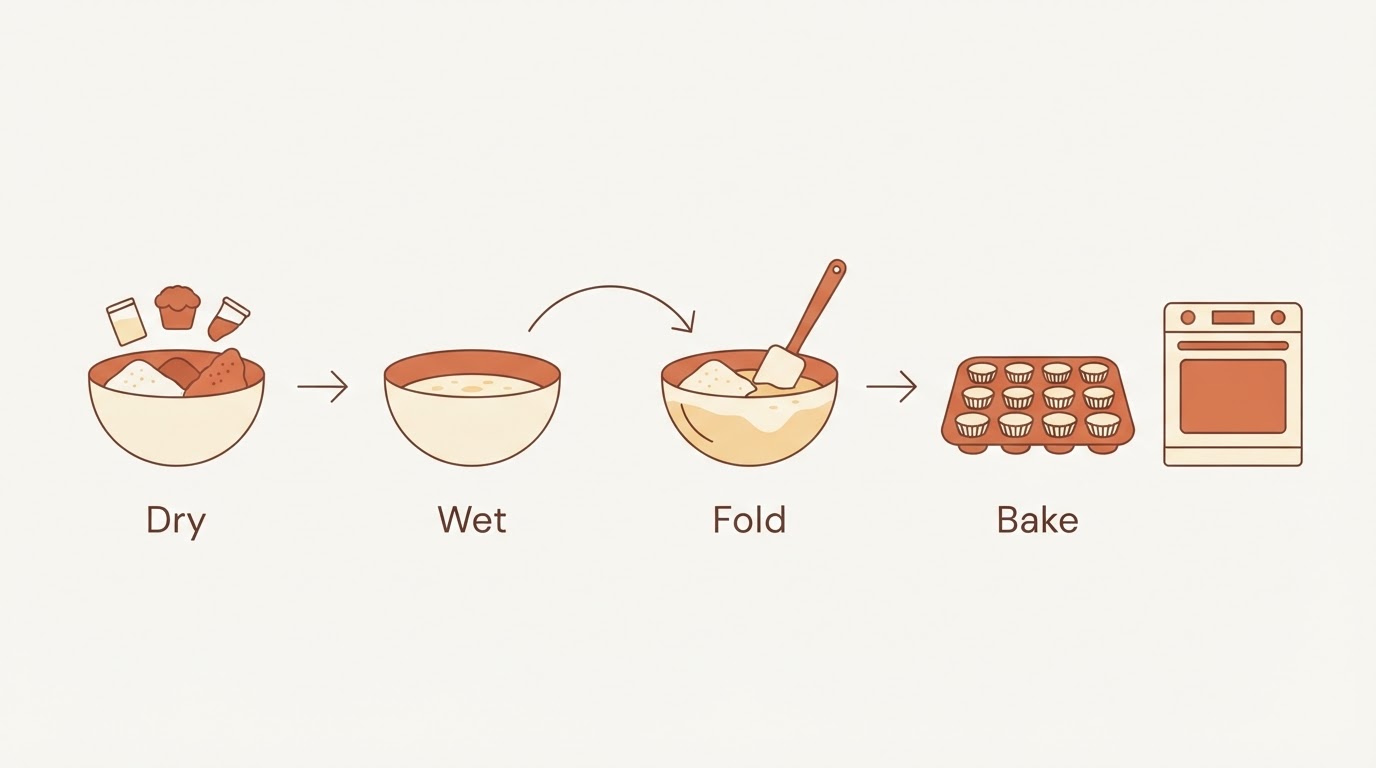
The Shared Method: Dry, Wet, Fold, Bake
Almost every from-scratch quick bread follows the same sequence. Learn it once and the recipes below become variations instead of separate mysteries.
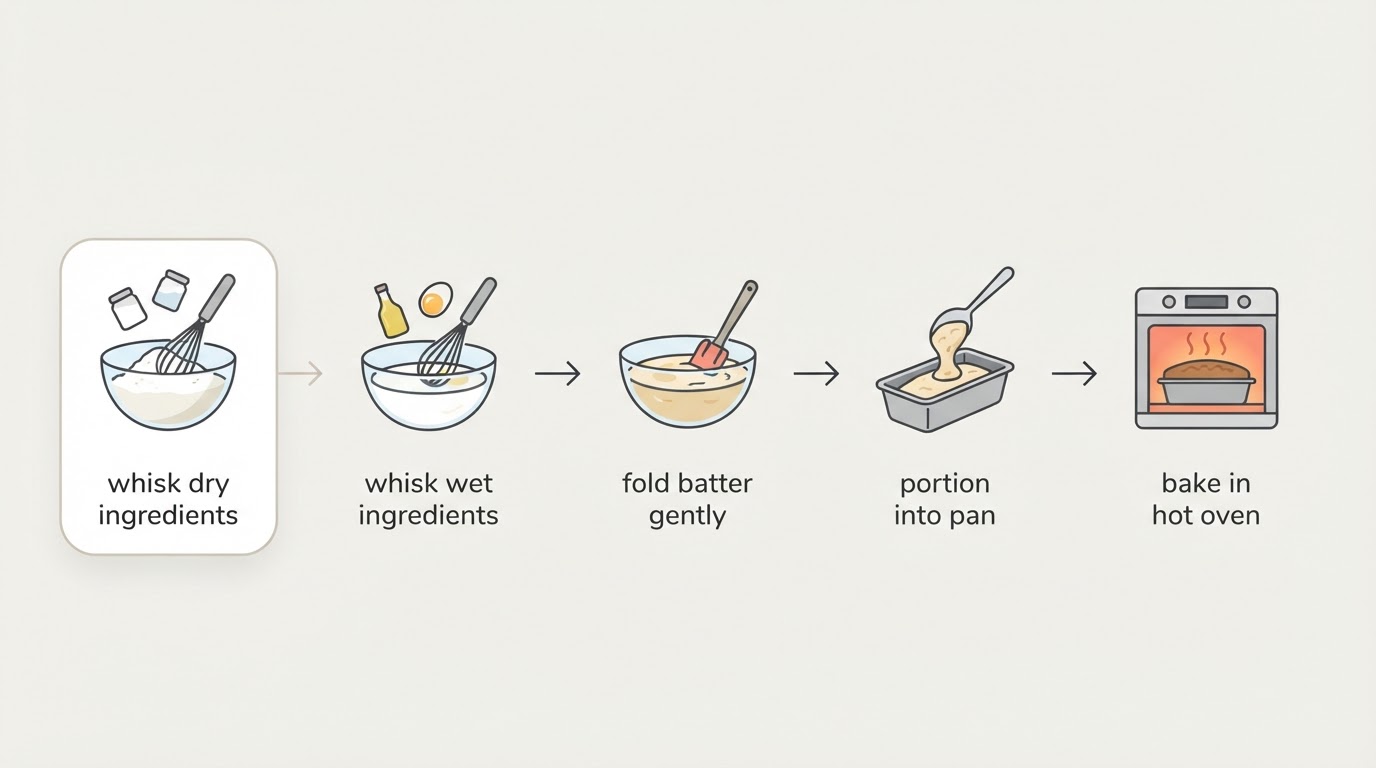
- Preheat fully. Loaves usually want 350°F. Muffins often start hotter, around 375–400°F, for a taller dome. Give the oven a real 15 to 20 minutes.
- Whisk the dry ingredients. Flour, leaveners, salt, sugar, spices. Thirty seconds of whisking spreads the baking powder so you do not get one metallic bite and eleven flat ones.
- Whisk the wet ingredients. Eggs first, then milk or buttermilk, oil or melted butter (cooled), vanilla, mashed fruit, or discard.
- Pour wet into dry and fold. Cut down the center, sweep the bowl, turn the batter over. Ten to fifteen folds is usually enough. Stop while a few flour streaks remain — they finish in the oven.
- Add mix-ins last. Berries, chocolate chips, nuts, herbs, cheese. Two or three turns only. Toss juicy fruit or chips in a spoonful of flour if you want them suspended.
- Portion immediately and bake. Fill loaf pans about two-thirds full and muffin cups about three-quarters full.
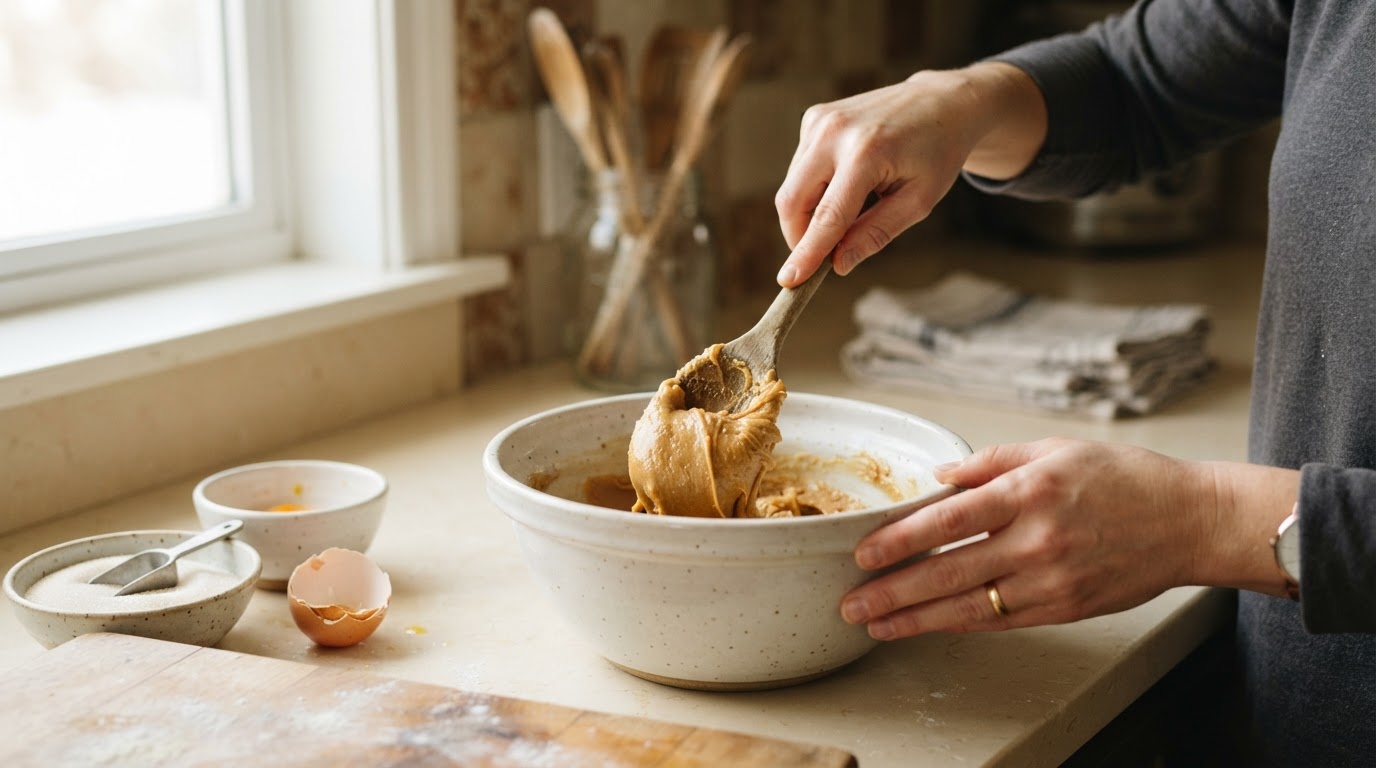
Lumps are fine. A smooth, beaten batter is usually an overmixed batter.
Done cues that beat the clock alone: a loaf springs back when pressed in the center, pulls slightly from the pan sides, and a toothpick shows moist crumbs rather than wet batter. Many banana and zucchini loaves need 50 to 65 minutes; muffins often finish in 17 to 22 minutes. Cool in the pan 10 minutes for a loaf (5 for muffins), then finish on a rack so steam does not sog the bottom.
Sweet Quick Bread Recipes to Bake First
Classic banana bread loaf
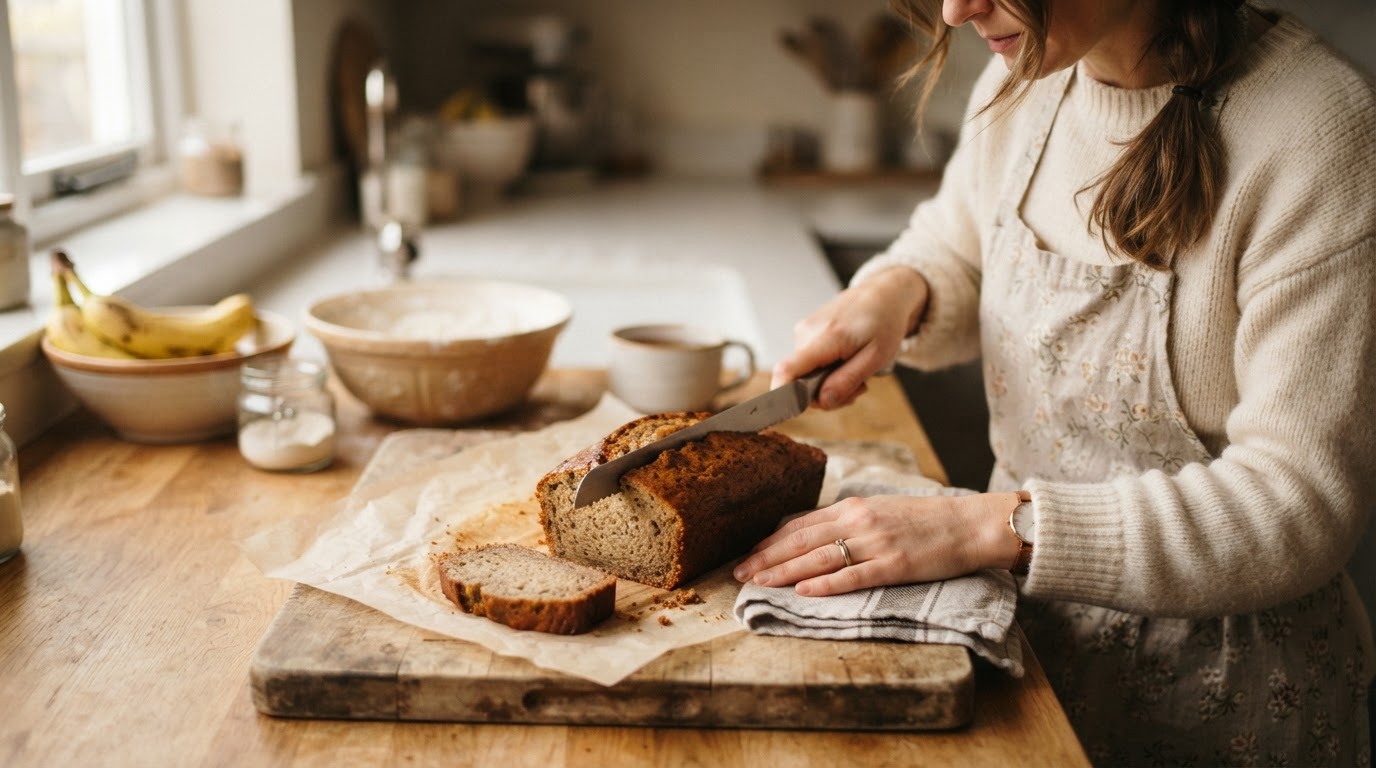
Use bananas that are soft and heavily speckled. Underripe fruit gives a pale loaf with less flavor.
Dry
- 2 cups (240 g) all-purpose flour
- 1 teaspoon baking soda
- 1/2 teaspoon fine salt
- 1 teaspoon ground cinnamon (optional)
Wet
- 3 large very ripe bananas, mashed (about 1 1/4 cups / 300 g)
- 1/2 cup (100 g) neutral oil or melted butter, cooled
- 2 large eggs
- 3/4 cup (150 g) packed light brown sugar
- 1 teaspoon vanilla extract
- 1/4 cup (60 ml) milk or buttermilk
Optional fold-ins: 3/4 cup chocolate chips, walnuts, or pecans
Mash the bananas until mostly smooth with a few small chunks left. Whisk wet, fold into dry, add nuts or chips, and scrape into a greased 9 x 5-inch pan. Bake at 350°F for 55 to 65 minutes. If the top browns early, tent loosely with foil for the last 15 minutes. Cool before slicing — a hot loaf compresses into gummy slabs.
Easy vanilla muffins (12 standard)
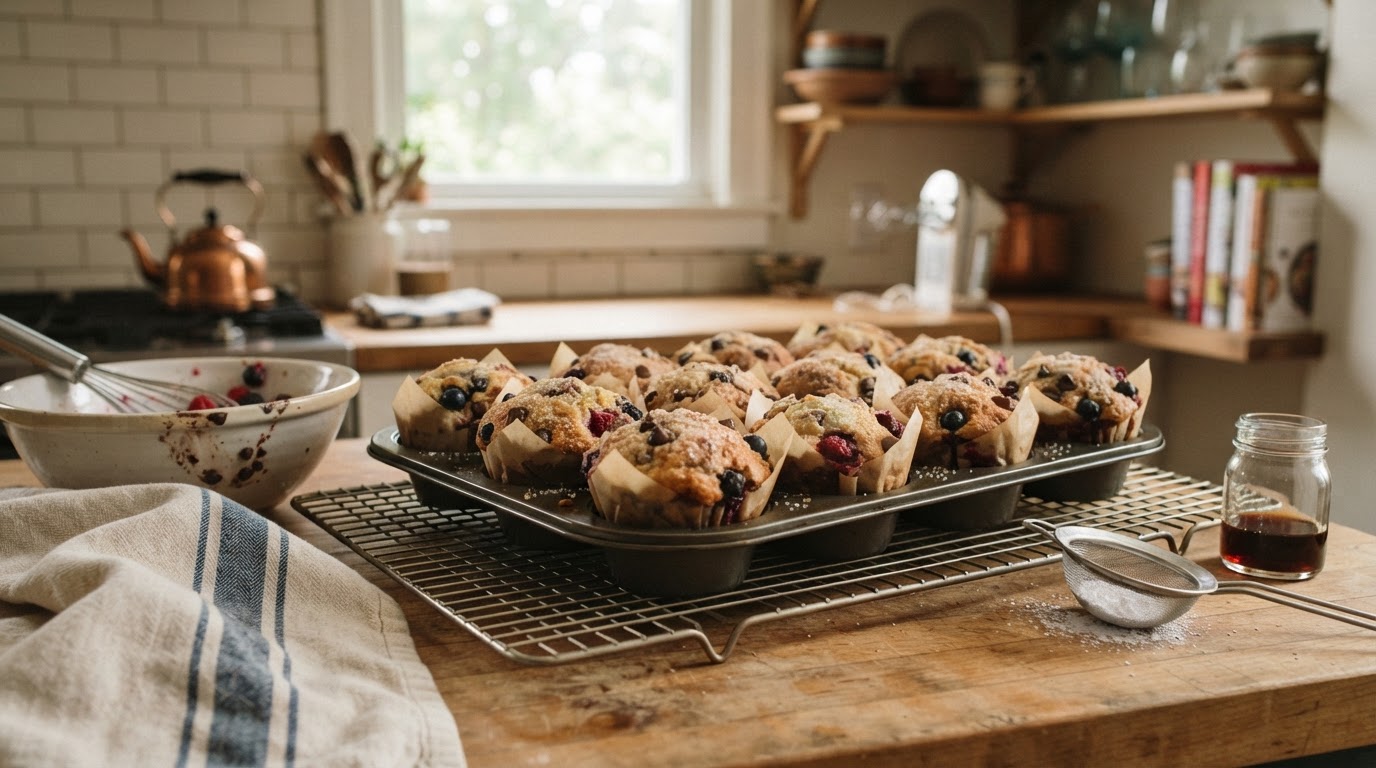
This is a blank canvas for berries, chips, citrus zest, or spice.
Dry
- 2 cups (240 g) all-purpose flour
- 1 tablespoon (about 12–14 g) baking powder
- 1/2 teaspoon fine salt
- 3/4 cup (150–175 g) granulated sugar
Wet
- 1 cup (240 ml) milk
- 2 large eggs
- 1/2 cup (100 g) neutral oil or melted butter, cooled
- 1 teaspoon vanilla extract
Add-ins: up to 1 1/2 cups berries, chocolate chips, chopped nuts, or zest
Whisk dry, whisk wet, fold together, fold in add-ins, and divide among 12 lined cups. Bake at 400°F for 17 to 20 minutes, until the tops are domed and springy. The high heat sets the exterior fast so the middle can push upward.
If your kitchen already keeps a written vanilla muffin formula nearby — something in the neighborhood of 240 g flour, a full tablespoon-scale hit of baking powder, and about 175 g sugar — use those exact numbers when you want a batch that matches a tested card instead of improvising from cups.
Mix-in ideas that stay inside one batter
Keep the base the same and change only the last fold:
- Blueberry + lemon zest
- Chocolate chip + a pinch of espresso powder
- Apple + cinnamon + a handful of oats
- Cranberry + orange zest
- Peach + a little ground ginger
Pat wet fruit dry. Too much juice turns the crumb gummy around each piece.
Savory Quick Bread Recipes for Dinner and Snacking
Sweet is not the only lane. A savory loaf uses the same dry-wet-fold method with less sugar, more salt, and bold mix-ins.
Cheddar-herb quick bread
Dry
- 2 cups (240 g) all-purpose flour
- 1 tablespoon baking powder
- 1/2 teaspoon baking soda
- 1 teaspoon fine salt
- 1/2 teaspoon black pepper
- 1 tablespoon sugar (optional, for browning)
Wet
- 1 cup (240 ml) buttermilk
- 2 large eggs
- 1/3 cup (70 g) olive oil or melted butter, cooled
Fold-ins
- 1 1/2 cups (about 150 g) sharp cheddar, grated
- 1/4 cup chopped chives, scallions, or parsley
- Optional: 1/2 cup cooked crumbled bacon or a handful of olives, patted dry
Fold just until combined, scrape into a greased loaf pan, and bake at 350°F for 40 to 50 minutes. The loaf should be deep golden and firm in the center. Serve warm with soup, eggs, or a salad. Leftovers toast well the next day.
Skillet cornbread (sweet-leaning or plain)
Dry
- 1 cup (140 g) fine or medium cornmeal
- 1 cup (120 g) all-purpose flour
- 1 tablespoon baking powder
- 1/2 teaspoon baking soda
- 1 teaspoon fine salt
- 2 tablespoons to 1/4 cup sugar, to taste
Wet
- 1 cup (240 ml) buttermilk
- 2 large eggs
- 1/4 cup (50 g) melted butter or oil, plus more for the skillet
Heat an 8- or 10-inch oven-safe skillet with a thin film of fat in the preheating 400°F oven. Mix the batter, pour it into the hot skillet (it should sizzle), and bake 18 to 22 minutes until the edges pull away and the center is set. The hot fat gives you the crisp rim that a cold pan never quite manages.
Sourdough Discard in Quick Breads
If a jar of unfed starter is living in the fridge, quick breads are one of the kindest places to use it. Discard is fermented flour and water. It is not strong enough to raise a yeasted loaf on its own, but it brings acid, moisture, and a gentle tang that baking soda can use for lift.
Simple swap pattern for muffins or a small loaf
- Replace about 1/2 cup (120 g) of the recipe's liquid with 1/2 cup (120 g) discard
- Keep or add 1/2 teaspoon baking soda when the original recipe did not already pair soda with acid
- If the batter looks tighter than usual, splash in a tablespoon or two of milk
Straight-from-the-fridge discard is fine. It does not need to be bubbly or recently fed. Older discard tastes more sour; that is usually welcome in banana bread, chocolate muffins, or a cheddar loaf. Discard that smells spoiled, has turned unusual colors, or shows mold belongs in the bin, not the bowl.
Sourdough discard chocolate chip muffins are a natural first try: the base muffin method above, half a cup of discard in place of half the milk, baking soda in the dry mix, and a cup of chips folded in at the end. The same pattern works for a banana loaf if you reduce the milk slightly to make room for the discard without turning the batter soup-thin.
Freezing and Storage That Actually Keep the Crumb
Quick breads are same-day bakes at their peak. They dry faster than a sandwich loaf because more surface area meets air. Freezing is the honest fix.
Counter and fridge
- Cool completely before wrapping.
- Room temperature, airtight: best within 1 to 2 days for muffins, 2 to 3 days for a well-wrapped loaf.
- Refrigeration firms the crumb and is rarely worth it unless the loaf is very wet or filled with perishable mix-ins like soft cheese.
Freezer
- Cool fully on a rack. Warm crumb makes ice and soggy tops.
- For muffins, freeze on a tray until firm, then bag. For loaves, wrap whole or in thick slices.
- Use parchment plus a freezer bag or wrap, press out air, and label the date.
- Aim to eat muffins and slices within about two to three months for best texture. Whole loaves often hold quality a little longer when wrapped tightly; sliced pieces show freezer age sooner.
- Thaw wrapped at room temperature. To refresh, a light water spritz and a short stay in a 350°F oven (about 5 to 10 minutes for slices or muffins, a bit longer for a whole loaf) brings back a soft interior and a gently re-crisped exterior.
One hard limit: the freezer preserves what you froze. A dry, overbaked loaf does not become moist again in cold storage. Freeze the batch you already like.
Troubleshooting Without Guesswork
What you see | Likely cause | Next bake |
|---|---|---|
Dense, heavy crumb | Overmixed batter or tired leaveners | Fold less; replace baking powder older than 6–12 months |
Tunnels and long holes | Vigorous beating after flour went in | Switch to a spatula; stop early |
Sunken center | Underbaked, or too much liquid/fruit | Bake to moist-crumb toothpick; reduce juicy add-ins |
Bitter or soapy taste | Extra baking soda without enough acid | Pair soda with buttermilk, yogurt, citrus, or discard |
Dry edges, pale middle | Oven too hot or pan too dark | Drop 25°F; tent the top; check with a thermometer if your oven runs wild |
Gummy band above the base | Sliced while hot, or underbaked center | Cool longer; confirm doneness before pulling |
Mix-ins all on the bottom | Thin batter or unfloured add-ins | Toss chips/fruit in flour; thicken slightly next time |
Muffins that spread instead of dome | Cool oven or delayed bake after mixing | Full preheat; portion and bake immediately |
A Kitchen Notebook Approach
Write the date, pan size, bake time, and one change on the same card as the recipe. The second batch is where quick breads get personal: more banana, less sugar, a spoonful of discard, half whole-wheat flour swapped in, sharper cheddar, no chips. Keep notes short. You are building a household formula, not a lab report.
If you want a starting point already written in grams with the mix-in and “do not overmix” notes baked in, The Rustic Bakehouse keeps a Quick Breads collection for chemically leavened muffins and loaves — including sourdough discard bakes meant to empty the jar instead of the sink, and an easy vanilla muffin formula laid out with gram weights. Use those posts when you want a tested card; use the method above when you want to understand why the card works.
The Rustic Bakehouse product interface.
Either way, pick one sweet loaf and one savory loaf this week. Mix gently, bake hot, cool fully, and freeze what you will not finish. That is the whole craft of quick bread at home.