What to do first when you see something on the jar
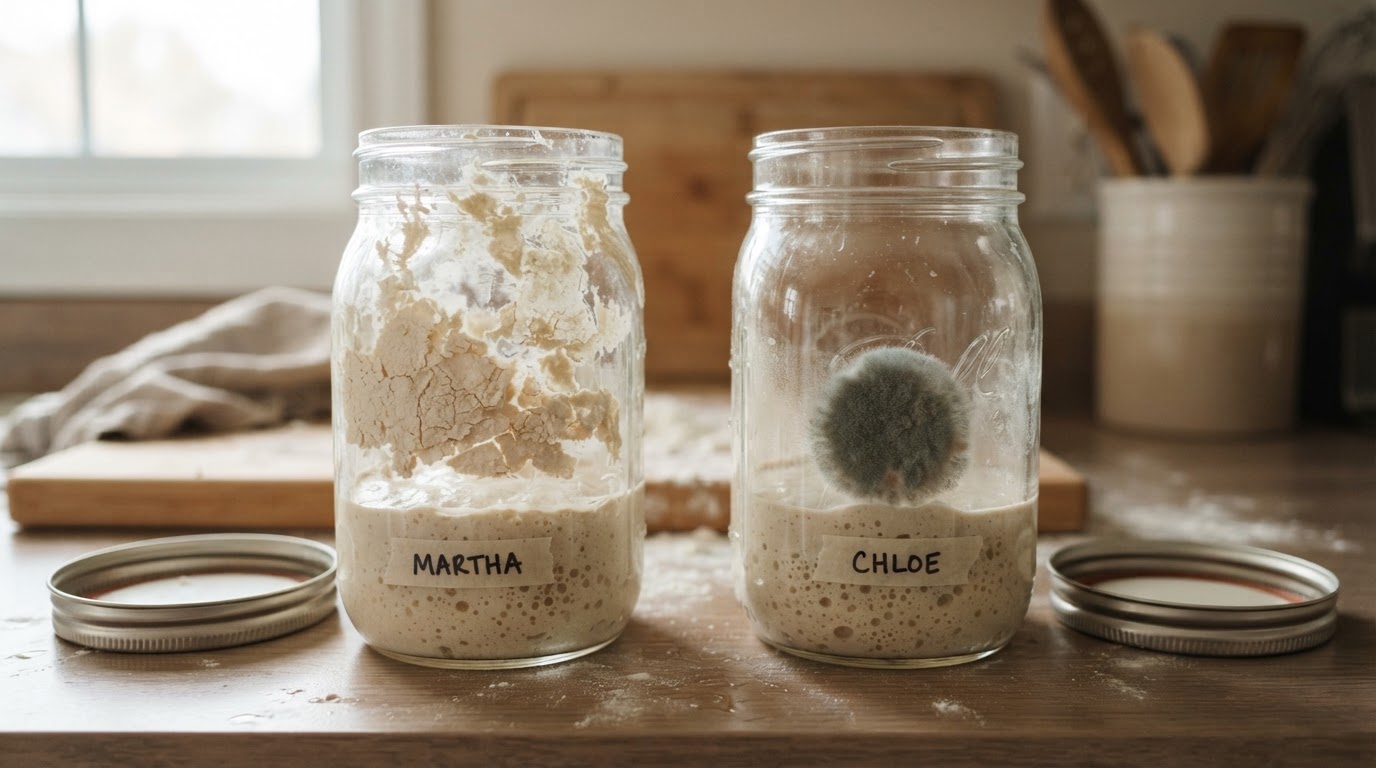
Mold on the sides of a sourdough starter jar is not something you can fix by wiping the glass. If the growth is fuzzy or velvety, or if it has any color beyond the cream and amber tones of a healthy starter — pink, orange, blue, green, gray, or black — discard the starter, clean the jar, and start fresh. Do not scrape it away and keep feeding what is underneath.
Dry residue or a liquid layer may be ordinary starter buildup, but appearance alone cannot certify that an ambiguous spot is harmless. A crusty ring of flour above the fill line and a smooth layer of liquid are different from clearly fuzzy growth; if you cannot tell which you have, discard the culture.
How to tell dried residue, hooch, and mold apart
Look at the wall in good light before you smell or stir anything. Texture and placement usually answer faster than color.
What you see on the jar | How it looks and feels | What it usually is | What to do |
|---|---|---|---|
A crusty ring or patches above the fill line | Dry, matte, crumbly, or powdery; no fuzz; flour or dough stuck to the glass | Dried batter from mixing and feeding | Wipe it off when you clean the jar and keep the starter |
Clear to dark liquid on top of the starter | Smooth liquid; may run from clear to smoky gray, brown, or almost black | Hooch, an alcohol by-product of a hungry starter | Stir it in or pour it off, then feed |
An ambiguous dark gray or wrinkled layer | May be dried starter, but appearance alone cannot rule out contamination | Uncertain | Do not peel and use the underlying culture as a safety test; discard if you cannot confidently identify it |
Fuzzy or velvety patches, or spots in pink, orange, green, blue, gray, or black | Raised, hairy, powdery, or matted; often in patches that spread | Mold | Discard the whole starter and clean or replace the jar |
A putrid, rotting, or garbage-like smell | Not the usual clean sour tang, alcohol, or nail-polish-remover hunger note | Spoilage | Discard |
Two details matter most. Hooch is not mold: it forms when food runs low and can darken or dry into a skin on a neglected jar. And never taste raw starter to decide whether it is safe — appearance and smell are clues, not proof.
Color is the sharper test: King Arthur Baking's sourdough guidance says a starter showing anything beyond cream or amber in the pink, blue, green, or orange range should be thrown out, and the same goes for an off-putting smell.
Why scraping mold off the wall does not make the starter safe
Resist the instinct to scoop a fuzzy patch out and keep feeding.
The CDC's guidance on mold, written for mold in the home, gives the practical rule: if you see or smell mold, remove it — and you do not need to know which type it is. The agency does not recommend testing.
A jar makes that rule hard to follow. You can scrub mold off glass, but you cannot verify the culture underneath is free of it, and no home test will tell you the starter is safe. Scraping the visible growth removes the evidence without restoring certainty. The CDC also notes molds can cause a stuffy nose, sore throat, coughing or wheezing, burning eyes, or a skin rash, with more severe reactions possible for people with asthma or a mold allergy.
So the boundary is simple: fuzzy growth or unusual color means discard, wash the jar, and begin again. You lose flour and water; baking from a jar you cannot vouch for is not worth one loaf.
If it is residue, not mold, clean the jar properly
When the marks on the glass are dry, matte, and crumbly, you are dealing with dried dough, not contamination. Clean it now, so a future patch of fuzz is obvious.
- Confirm the texture: dried residue is matte, with no fuzz or colored patches. If you see those, discard the starter instead.
- Move the starter. Spoon or pour it into a clean bowl or fresh jar, leaving the crusted wall behind; if it looks and smells normal, keep going.
- Wash the jar. Hot soapy water and a bottle brush handle dried flour; for hard, non-porous surfaces, the CDC's cleanup advice allows soap and water or a diluted bleach solution of no more than one cup of laundry bleach per gallon of water, used with ventilation and gloves — never mixed with ammonia or other cleaners. Rinse and dry.
- Reset the wall. After each feeding, wipe the inside wall above the fill line and the rim. That stops old residue from hiding new growth.
- Check the completion standard. You are done when the jar is clean and dry, no dried batter remains above the fill line, and the starter rises and bubbles normally after feeding.
What you cannot tell from looking
- Appearance cannot identify a mold or prove a starter is safe; the CDC does not recommend testing, and the type does not change the response.
- Smell is a clue, not a verdict, and no trick makes a moldy culture verifiably clean.
For ordinary starter maintenance after starting over, see our separate sourdough starter guide. The steps here are only for deciding what to do with suspicious jar-wall growth.
FAQ: mold on a sourdough starter jar
Is the white crust on the inside of my jar mold or dried dough?
A white crust is usually dried flour or dough when it is dry, matte, and crumbly and sits above the level the starter reaches. White mold can look pale too, but it is fuzzy or velvety and spreads in patches. If you cannot tell, discard the starter — the cheaper mistake.
Can I scrape mold off and keep feeding my starter?
No. Once growth is fuzzy or colored, removing the visible part does not make the rest of the culture verifiably clean. Discard it and start again in a washed jar.
Is the dark liquid on top of my starter mold?
No. Hooch is the alcohol layer that appears when a starter goes unfed for a while. It can be clear, amber, gray, or nearly black, and may dry into a skin; it is not fuzzy and does not grow in colored patches. Fuzz or unusual color is a different situation: discard.