When to Add Inclusions to Bread: The Short Answer
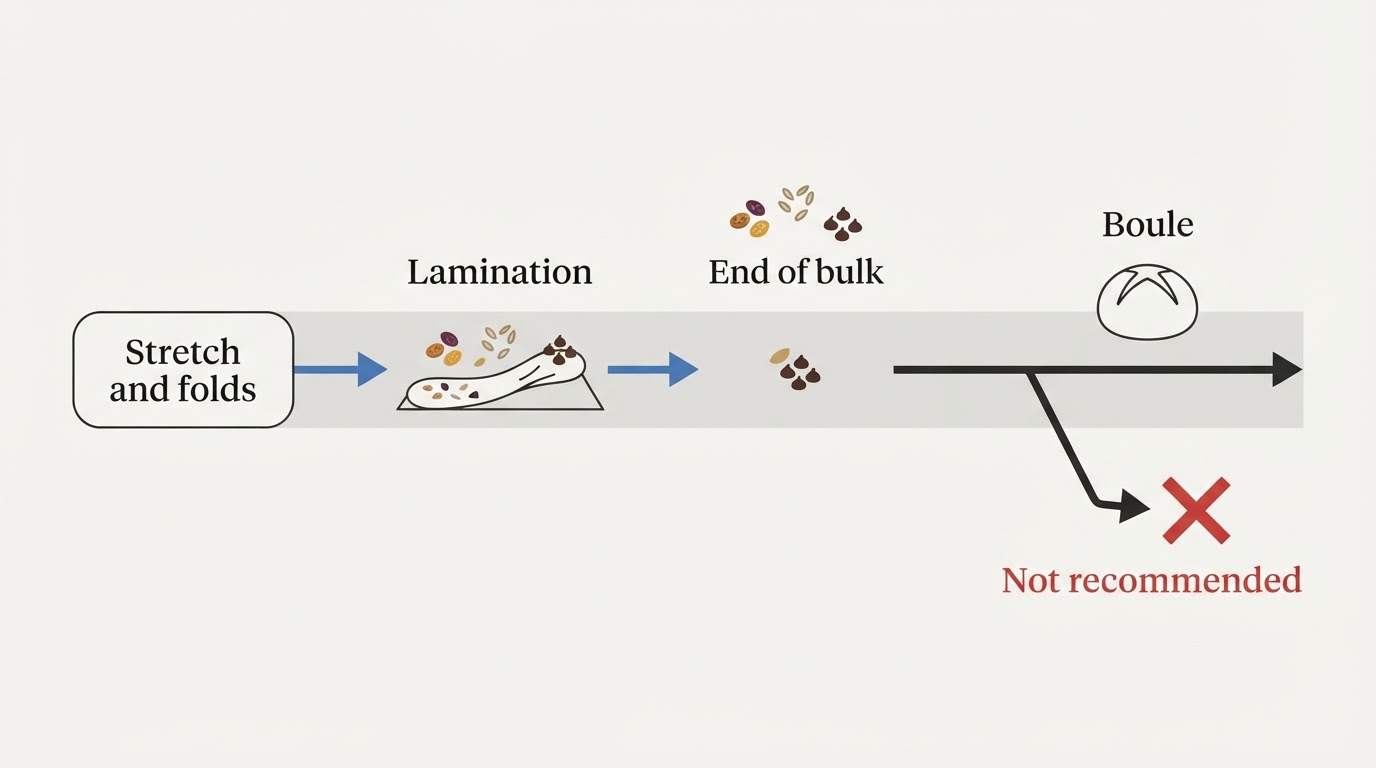
For most mix-ins, the best moment is the end of bulk fermentation, right before you shape. The gluten is already developed, so you can fold in nuts, seeds, dried fruit, olives, or grated hard cheese with gentle handling instead of fighting a slack, freshly mixed dough. Amy Coyne's guide to adding inclusions to artisan sourdough describes three timing options: during stretch and folds, as a lamination that replaces a fold, or laminated in at the end of bulk. The steps below adapt that framework; the sequence is an adaptation, not a tested recipe.
Timing is only half the decision. Dry, shelf-stable mix-ins are forgiving in a long ferment. Wet or perishable ingredients bring safety and hydration problems that no folding technique solves.
Compare the Timing Options
When you add them | Good for | Trade-off |
|---|---|---|
During stretch and folds | Small, dry mix-ins: seeds, chopped nuts, dried fruit | Gluten is still developing; heavy or wet additions can slow it down |
Lamination during bulk | Medium to heavy pieces: olives, walnuts, grated hard cheese | Very even layers, but the dough must stretch thin without tearing |
End of bulk, before shaping | Late or melt-prone additions; the most controlled "after bulk" result | Fewer folds remain, so distribute the mix-ins in two gentle passes |
After shaping or after the cold ferment | Nothing — not recommended | Folding shaped, chilled dough tears it and leaves uneven pockets |
Weighing stretch and folds against lamination: use folds for small dry pieces, and laminate when pieces are chunky or you want distinct layers. When bulk is nearly finished, one lamination before shaping is the cleanest way to work additions through.
How to Add Inclusions After Bulk Fermentation
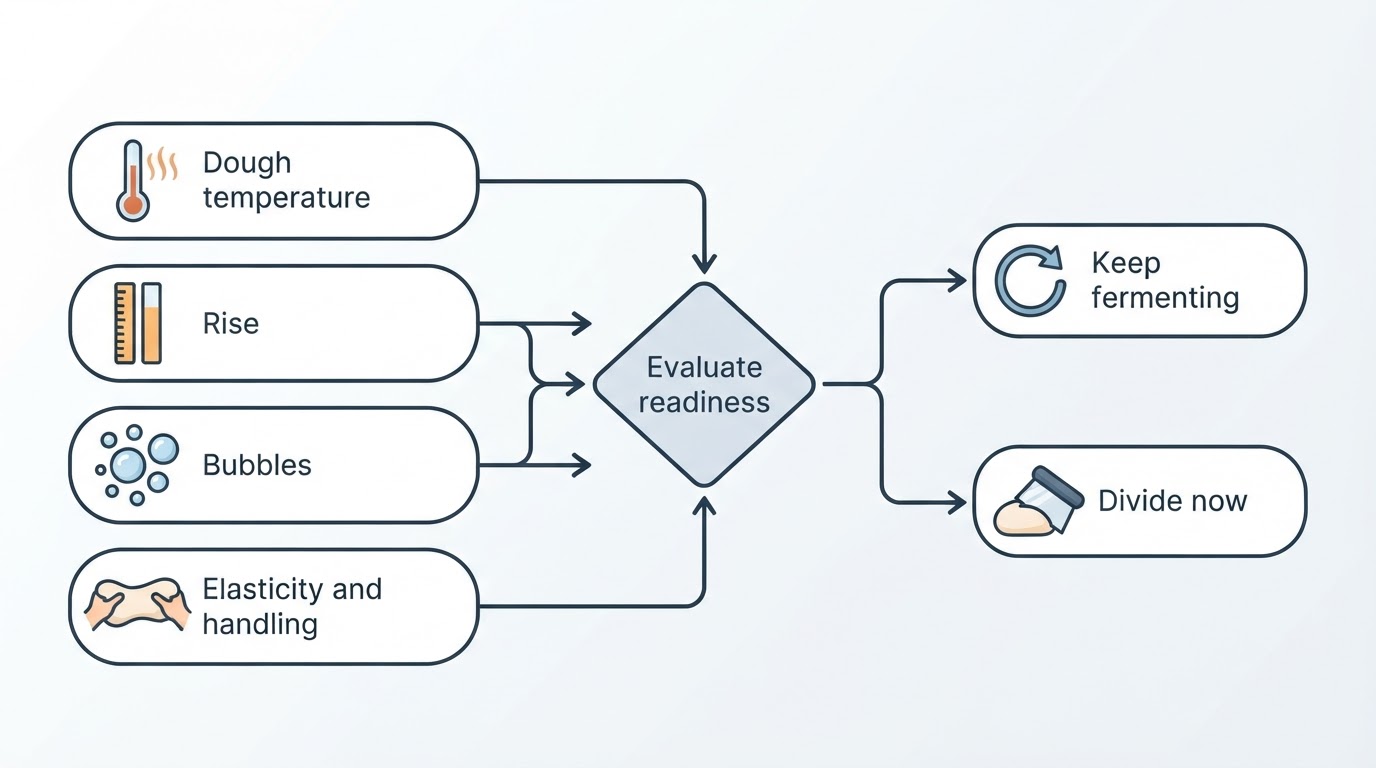
- Prep first. Chop nuts and larger pieces small and evenly, toast seeds if you like, and pat wet items such as olives or jarred peppers dry. This article covers inclusion timing, not how to judge whether bulk fermentation is complete.
- Turn the dough out gently. Work on a lightly wetted counter. Tip the dough out seam-side up. Stretch it with wet hands into a rectangle, stopping before it tears.
- Add in two passes. Scatter about two-thirds of the inclusions over the surface, leaving a clean border. Fold the sheet into thirds like a letter, then scatter the rest and fold or roll again.
- Rest, then shape. If the dough tightens, let it relax 15–30 minutes, then preshape and shape as usual.
- Tuck every piece back inside. Before the cold proof, push any inclusion that pops through the surface back under the dough so it does not burn. Inclusions interrupt the gluten strands, so expect less ornate scoring and no dramatic "ear."
- Bake according to a tested recipe for the dough and additions. Check exposed pieces near the end because they may brown before the crust; do not assume all inclusions behave alike.

Dry vs. Wet or Perishable Inclusions
Dry mix-ins — nuts, seeds, dried fruit — are the easier ones. Dried fruit absorbs water and can tighten the dough; juicy or frozen fruit can instead add moisture, so use a recipe tested for that ingredient rather than changing hydration by guesswork. Chocolate and cinnamon chips can go in late, at the end of bulk before the cold ferment, to help keep their shape (adapted from Amy Coyne's method).
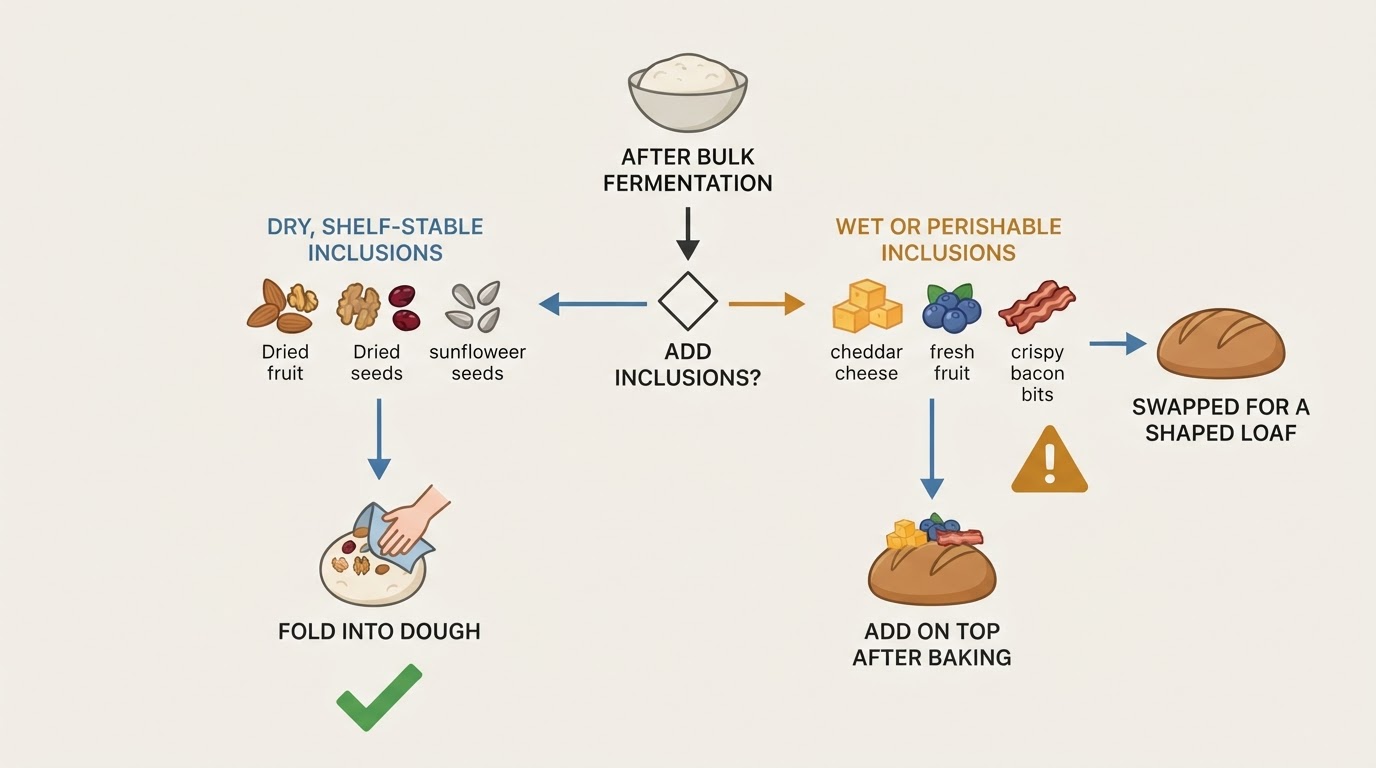
Wet or perishable mix-ins are where technique meets food safety. Bulk fermentation and proofing can hold dough at room temperature for many hours, well inside the 40°F–140°F "Danger Zone," where bacteria can double in as little as 20 minutes; the USDA limit is two hours out of refrigeration, or one hour above 90°F (USDA FSIS). Sourdough's acidity does not guarantee safety for perishable additions, and oven heat may not penetrate inclusion pockets enough to kill bacteria inside them (UC ANR Master Food Preservers).
The practical answer: leave fresh vegetables, cooked meats, and fresh dairy out of long room-temperature ferments. Choose shelf-stable additions such as dried fruit, nuts, seeds, dried herbs and dehydrated vegetables, checking the package storage instructions. Serve perishable toppings after baking instead of treating a shortened ferment or thorough bake as a universal safety fix.
Limitations: What Inclusions Change
There is no universal inclusion percentage, and no single tested recipe fits every dough. Amy Coyne, whose method is cited above, uses roughly 1–2 cups per loaf as her personal approach; treat that as a starting point to scale down and test, not a standard. More inclusions mean more interference with gluten: expect a denser crumb, less oven spring, and harder shaping. Hydration shifts too, because dried fruit absorbs water while wet mix-ins add it, so dough that felt perfect earlier can tighten or slacken after folding. Sweet or cinnamon-heavy additions can slow fermentation, and so can cold or salty ones. This is a timing and technique guide; for judging when bulk fermentation is finished, use a separate readiness check.
FAQs
Do you add inclusions before or after bulk fermentation?
Both work, and the better choice depends on the mix-in. Adding during bulk, at a stretch and fold or a lamination, gives the inclusions more folds to distribute evenly. Adding after bulk, at the very end and just before shaping, keeps them from interfering while gluten develops and is the most reliable window for chunky or melt-prone pieces. If you pick one, pick after bulk for control.
When should you add cheese inclusions to sourdough?
Only consider a hard cheese if its packaging confirms it is shelf-stable, and follow a tested recipe. Fresh and soft cheeses are perishable and can sit unrefrigerated through a long ferment, so keep them for topping the baked loaf instead.
Can I add inclusions to my sourdough after cold fermentation?
Practically, no. Once the dough is chilled and shaped, folding more in tears the surface and leaves uneven pockets, so save the idea for the next bake. Add shelf-stable inclusions before the cold proof. If the timing of the earlier dough stage is uncertain, first check the separate bulk-fermentation readiness guide.