Cold proofing is the last step, not a way to finish bulk
Cold proofing — bakers often call it retarding — means the dough is already shaped and sitting in its banneton in the refrigerator for its final rise. The Perfect Loaf's proofing guide describes it as proofing cold for many hours, usually overnight, then baking straight from the fridge or after a short warm-up.
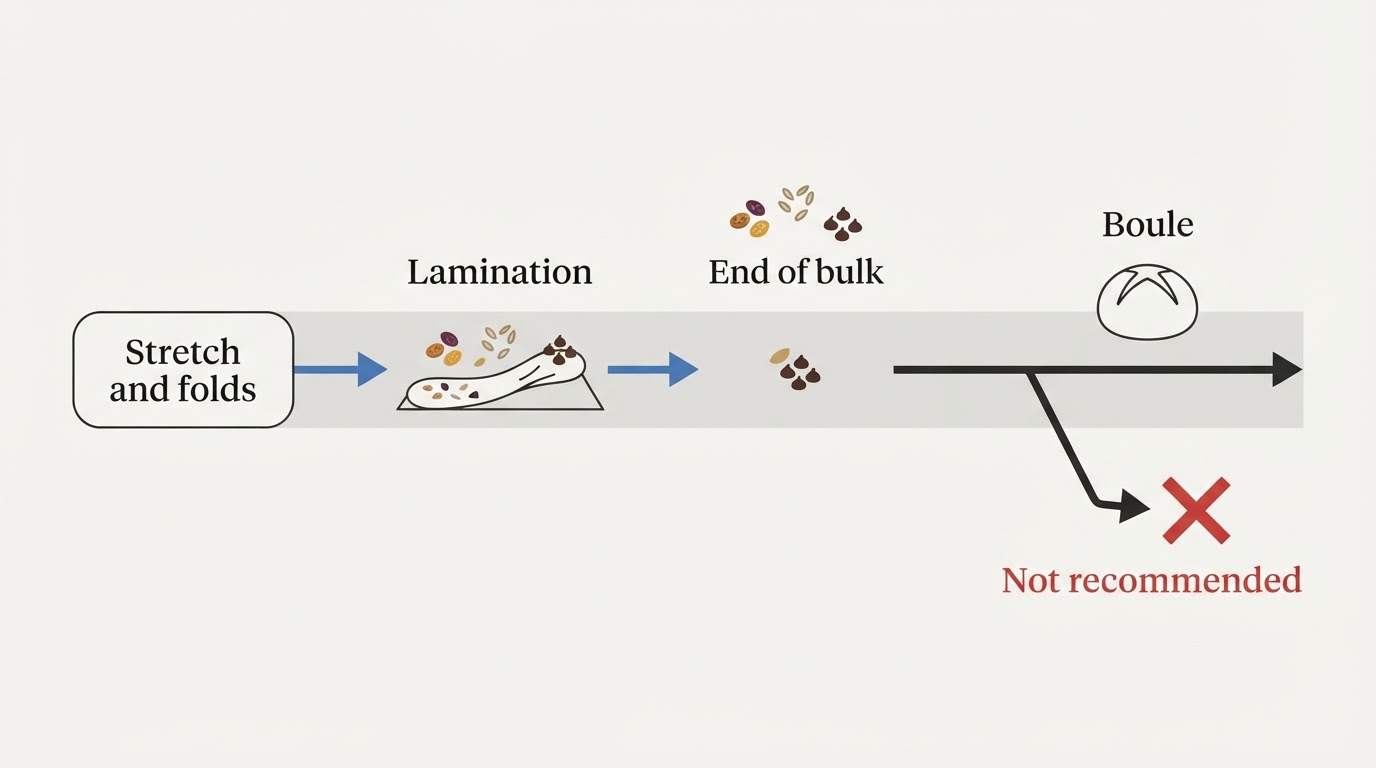
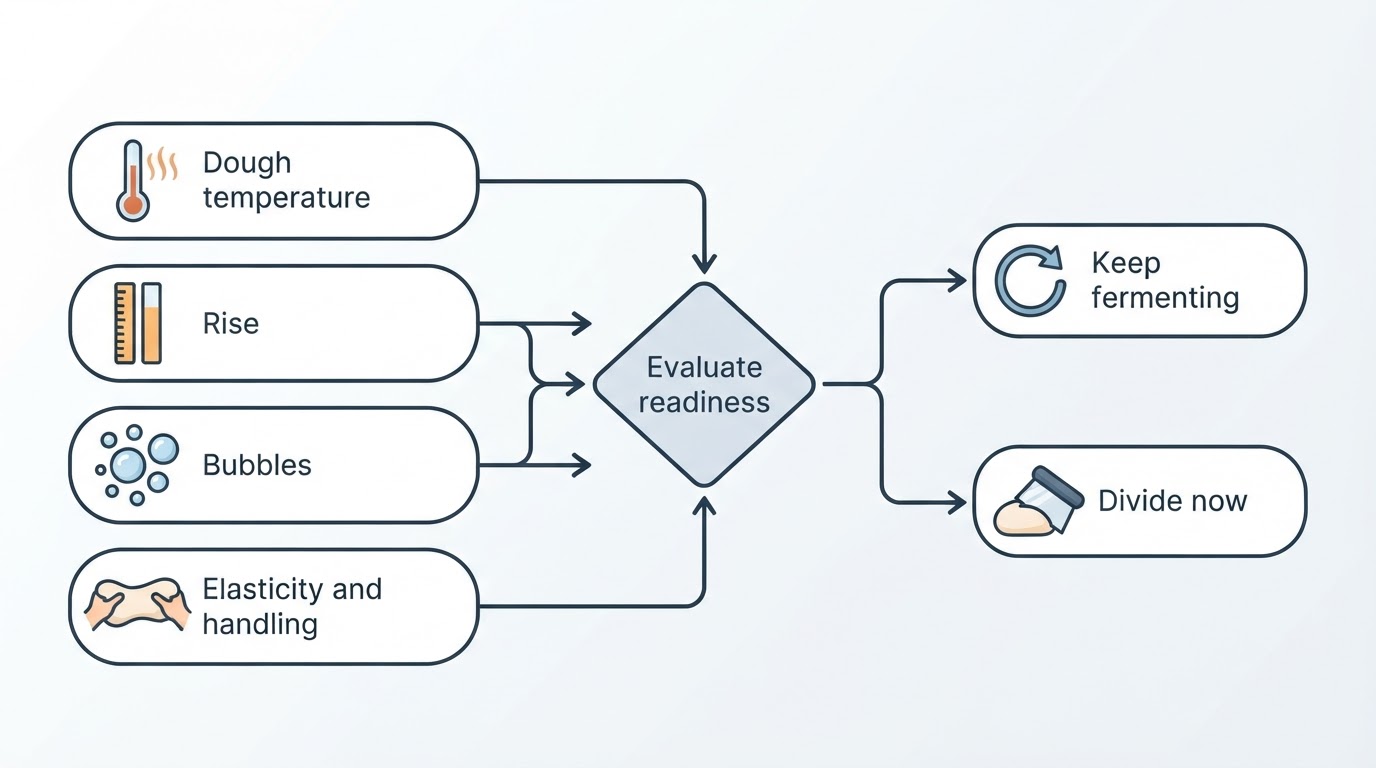
Bulk fermentation is a different, earlier stage that happens in the bowl before shaping. If bulk stopped short, the refrigerator will not reliably fix it: cold slows fermentation down. That is why the cold-proof clock only makes sense after the dough went into the fridge in good shape. If you are unsure, use the separate bulk-fermentation readiness guide.
What the cold buys you is time and flavor. King Arthur's extra-tangy sourdough recipe notes that refrigerating the dough encourages more acetic acid, the sharper of sourdough's two main acids, so a cold rest is one lever for a tangier loaf. Cold dough is also firmer and easier to score.
The variables that actually move the window
- Dough temperature at fridge time. A warm dough keeps fermenting fast until it chills through.
- Inoculation. More starter means faster fermentation and a shorter fridge window.
- Bulk progress. Dough that finished bulk near its peak has less room left; dough that finished early has more.
- Refrigerator temperature. The biggest variable; The Perfect Loaf puts a typical home fridge around 39°F (4°C).
- Shape and size. A large boule chills through more slowly than small rolls.
- Flour. Whole-grain flours ferment faster and are less forgiving over long cold rests.
The Perfect Loaf's proof-time chart is a starting point, not a rule: roughly 1 to 2 hours at 80°F, 2 to 4 hours at 74–76°F, 6 to 8 hours at 46°F in a commercial retarder, and 10 to 16 hours at 39°F in a home refrigerator. The guide describes 8 to 16 hours as general, says the author usually targets 10 to 16 hours, and notes dough can stay cold up to 48 hours — with more sourness and less rise.
Overnight proof versus extended proof
Time in the fridge | What is usually happening | When it makes sense |
|---|---|---|
Under 8 hours | The dough may still be proofing or may simply have had a short cold rest | Follow the recipe and inspect the dough rather than assuming it is unfinished |
10 to 16 hours | The common overnight window for many recipes | When you want a predictable next-morning bake |
16 to 24 hours | Flavor deepens; the dough firms up and gets slacker | When the schedule demands a later bake; check earlier |
Beyond 24 hours | Sourness climbs; oven spring and score definition can drop | Only if you know the dough and your fridge runs cold |
Two cautions. The hours are not transferable between kitchens: a fridge at 41°F and one at 36°F can behave very differently overnight. Second, longer is not automatically better. The Perfect Loaf reports that an extended cold proof produces a sourer loaf with less rise — still good bread, just different.
How to read the dough instead of the clock
- Finish bulk properly first. Judge the dough before shaping: visible bubbles, a slight jiggle, and a relaxed feel.
- Shape, then chill promptly. Cover the banneton so the surface does not dry into a skin.
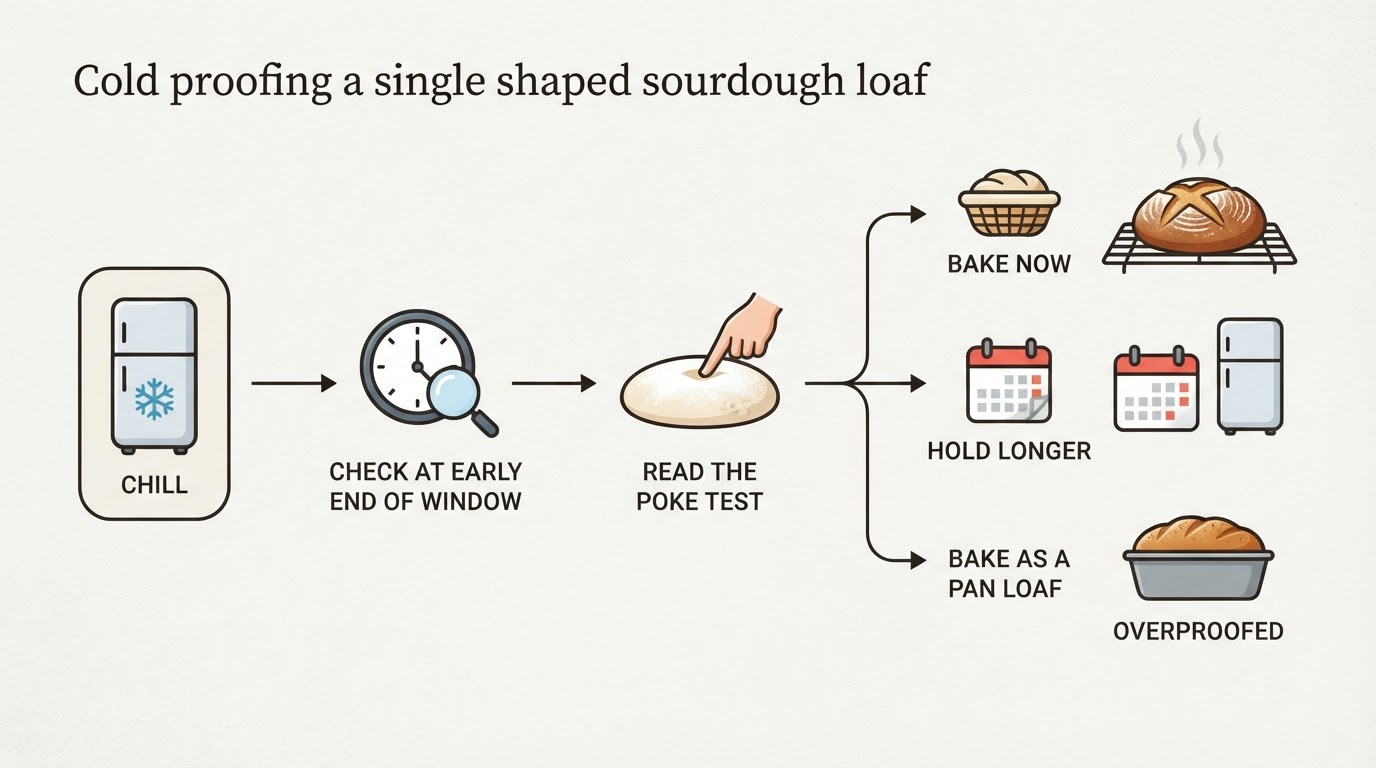
- Check before the far end of your recipe's window. Inspect the dough instead of waiting blindly for a universal number.
- Treat the poke test as one clue. Cold dough is stiffer than room-temperature dough, so spring-back can be harder to interpret; compare it with how this recipe normally behaves.
- Use shape and volume as additional clues. A slack dough that spreads quickly may be overproofed, while a dough that still holds tension may have room to rise. No single visible signal is definitive.
- Bake or warm it as your recipe directs. Whether to bake straight from the fridge depends on the dough and method; do not add a fixed room-temperature rest by default.
What an overproofed cold loaf looks like
Overproofing in the fridge is real, especially if the dough went in already fermented or the fridge runs warm. Signs include a slack, sticky dough that spreads instead of holding shape; a poke that never rebounds; weak oven spring; and a crumb full of small holes with a larger tunnel near the top.
If you catch it, bake as soon as possible — a pan can contain the spread — or use the dough for focaccia or a pan loaf instead of a free-form boule. To avoid a repeat, The Perfect Loaf suggests mixing later in the day, cutting bulk fermentation 15 to 30 minutes shorter, or setting the fridge a degree or two colder.
What cold proofing cannot promise
The refrigerator does not have a universal safe or optimal hour count, and no chart knows your kitchen. The trade-off is real: fridge temperatures drift between shelves, starters vary, and a dough that behaves overnight at 38°F can overproof at 42°F. Treat every number here as a window to test against your own dough. King Arthur's sourdough guides make the same point from the other direction: temperature and hydration matter, but reading the dough is part of the skill.
FAQ
How long can sourdough sit in the fridge before baking?
Many recipes work in the 8- to 16-hour range; The Perfect Loaf generally targets 10 to 16 hours at home-fridge temperatures. That is a quality window, not a safety guarantee or an indefinite storage rule. Follow your recipe and ordinary refrigeration and food-safety guidance.
Can you cold proof sourdough for 2 hours?
Two hours is usually too short to count as a cold proof. At 39°F the dough needs many hours to finish fermenting, which is why the same guide reserves 1 to 4 hours for warm-temperature proofing. If you only have two hours, proof at room temperature and watch the dough.
Do you have to cold proof sourdough?
No. Cold proofing is a scheduling and flavor tool, not a requirement. A shaped loaf can finish at room temperature in a few hours. The refrigerator is simply the safer choice for an overnight rise, because a room-temperature dough can overproof while you sleep.