What Should Sourdough Crumb Look Like? Start With the Loaf
Sourdough crumb is the pattern of holes and the walls between them inside a baked loaf. What counts as good depends on the bread you set out to make.
A soft sandwich loaf typically has small, even holes because that structure slices cleanly and holds a filling. A country boule may be more open but still reasonably even. Very wet styles such as ciabatta can be deliberately irregular, with larger holes beside small ones. There is no universal hole-size target.
Flour moves the target too. Whole wheat bran and germ particles cut through the gluten network, so a whole-grain loaf will almost always be more closed than the same dough made with white flour, and King Arthur Baking notes that higher-protein bread flour makes an open interior easier to reach. Before judging the crumb, name the style, the flour, and the hydration.
The Five Crumb Patterns and What They Usually Mean
Even crumb
Small to medium holes spread consistently from bottom crust to top, with thin, fully cooked walls. This is what good sourdough crumb looks like in sandwich bread.
Dense crumb
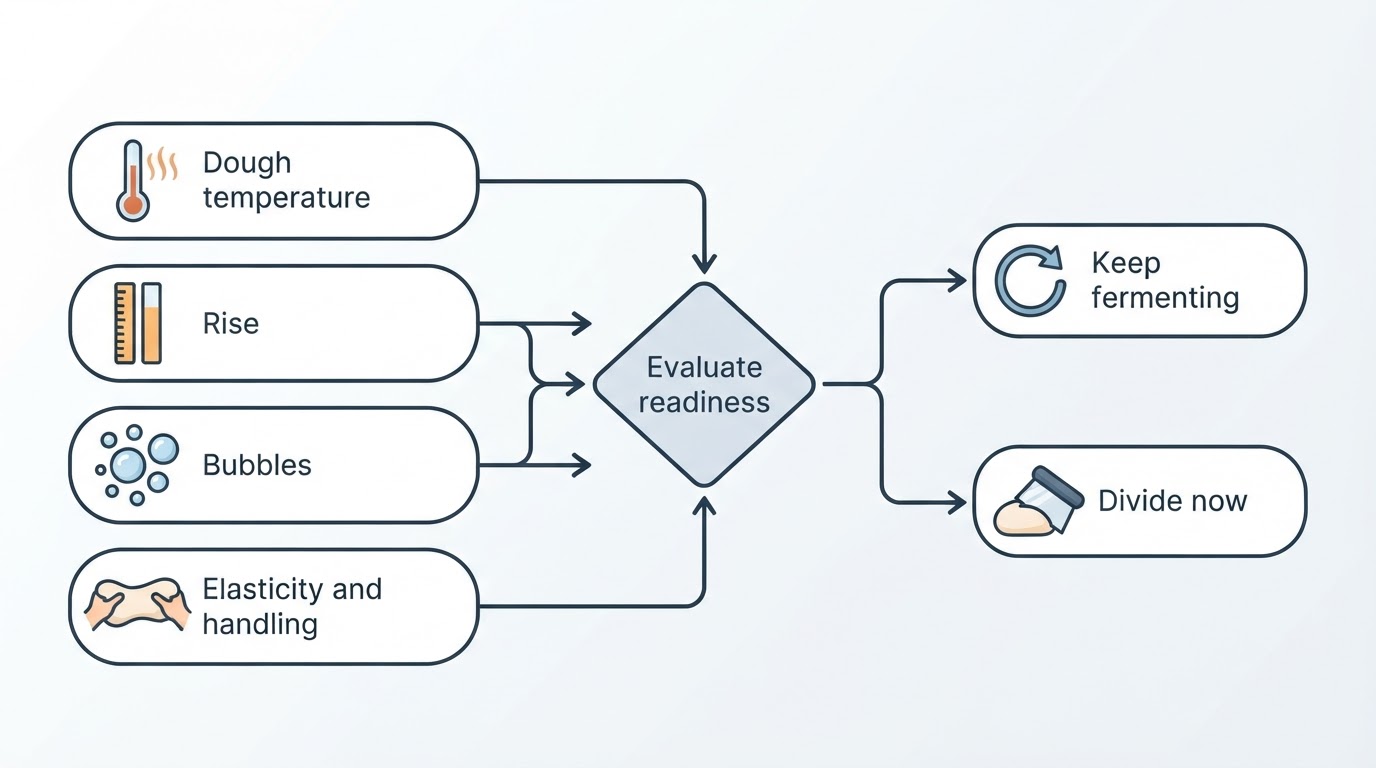
A tight, uniformly small crumb that feels heavy in the hand usually means fermentation ended before the dough was ready. King Arthur Baking reads the end of bulk fermentation through dough strength and liveliness: it has risen significantly, feels elastic when tugged, looks smooth rather than shaggy, and jiggles when you shake the bowl.
Gummy crumb
A gummy or sticky sourdough texture that clings to the knife can have several causes, including slicing before the loaf cools, insufficient baking, or fermentation problems. The Perfect Loaf's beginner recipe gives a cooling and baking procedure for that particular dough; its temperature or time should not be treated as a universal test for every loaf. Let your loaf cool fully, then review its specific recipe and process before changing the bake.
Tunneling
Tunneling is one or two oversized channels or caverns, often directly under the top crust, with ordinary crumb around them. It is not the same thing as an open crumb. Tunnels usually trace back to handling and shaping, where gas collects into one large pocket instead of staying divided into many small ones. King Arthur is direct about force: rough handling breaks the dough's gas pockets into smaller versions of themselves and tightens the structure overall. Gentle folds and even shaping pressure keep those pockets separate.
Wet crumb
A crumb that looks shiny or damp but holds together can reflect hydration, bake length, cooling, or fermentation; appearance alone does not identify the cause. Water alone does not decide openness, either: King Arthur points out that you can get an open crumb at lower hydration and a tight one at high hydration when other variables differ.
A Diagnostic Matrix for the First Useful Slice
What you see on the cut face | What it usually means | First thing to change |
|---|---|---|
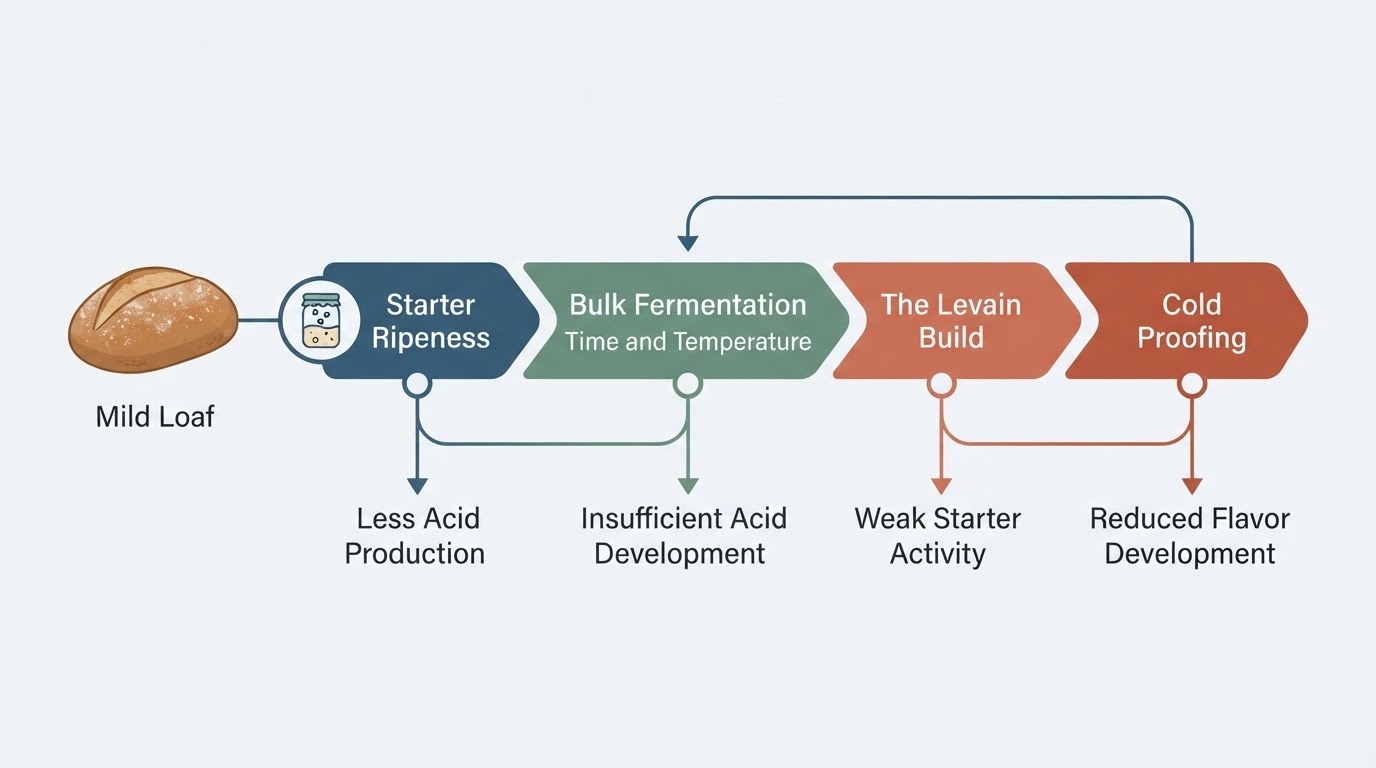
Small, even holes and a heavy slice | Fermentation ended early, or the starter was sluggish | Extend bulk and check dough liveliness, not the clock |
Big tunnels under the crust, dense elsewhere | Gas trapped and merged during shaping | Gentler folds and even shaping pressure |
Gummy, sticky center | Possibly sliced warm, underbaked, or affected by fermentation | Cool fully; compare bake and fermentation with your recipe |
Closed crumb with thin, tender walls | Whole wheat or a lower-protein flour choice | Adjust expectations, or blend in bread flour |
Broad, flat loaf with a closed interior | Possible proofing or dough-strength issue | Review bulk, final proof and shaping together |
A crumb chart is only a naming tool. Use this sourdough problems chart to describe what you see, then test one change on the next bake.
How to Read a Crumb Without Fooling Yourself
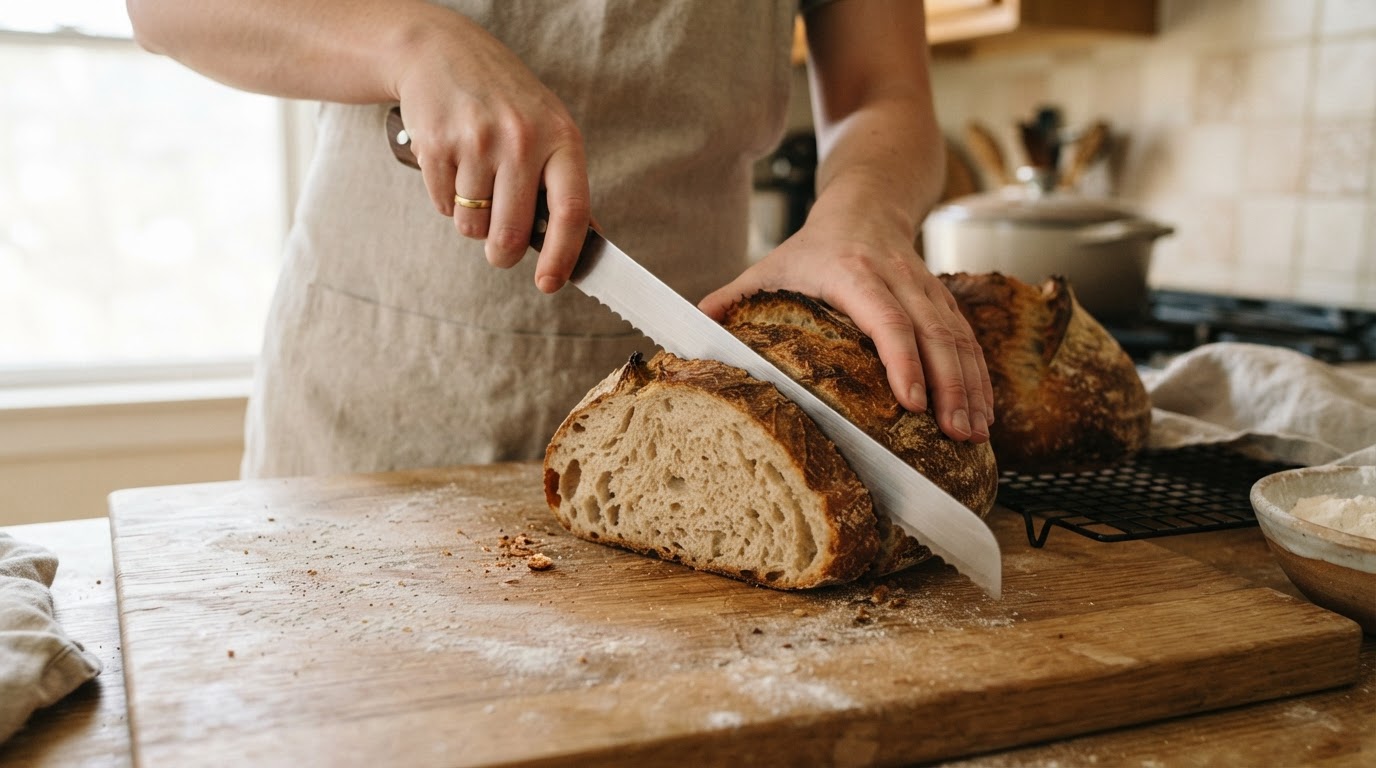
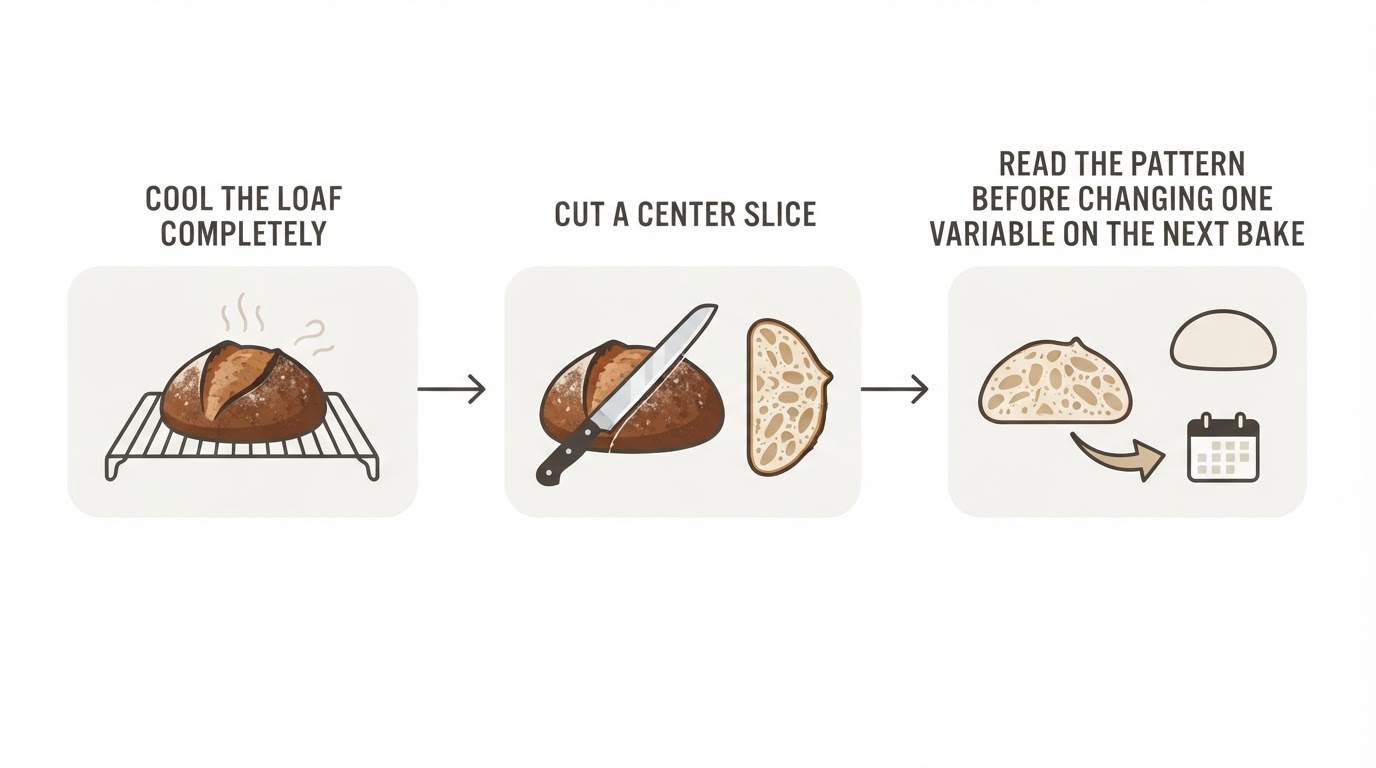
Wait until the loaf is fully cool, then cut a center slice. Look at the whole cut face rather than one corner, and at the middle of the slice rather than the end piece, because crumb varies along a loaf. Ask what the bread was supposed to be before calling anything wrong.
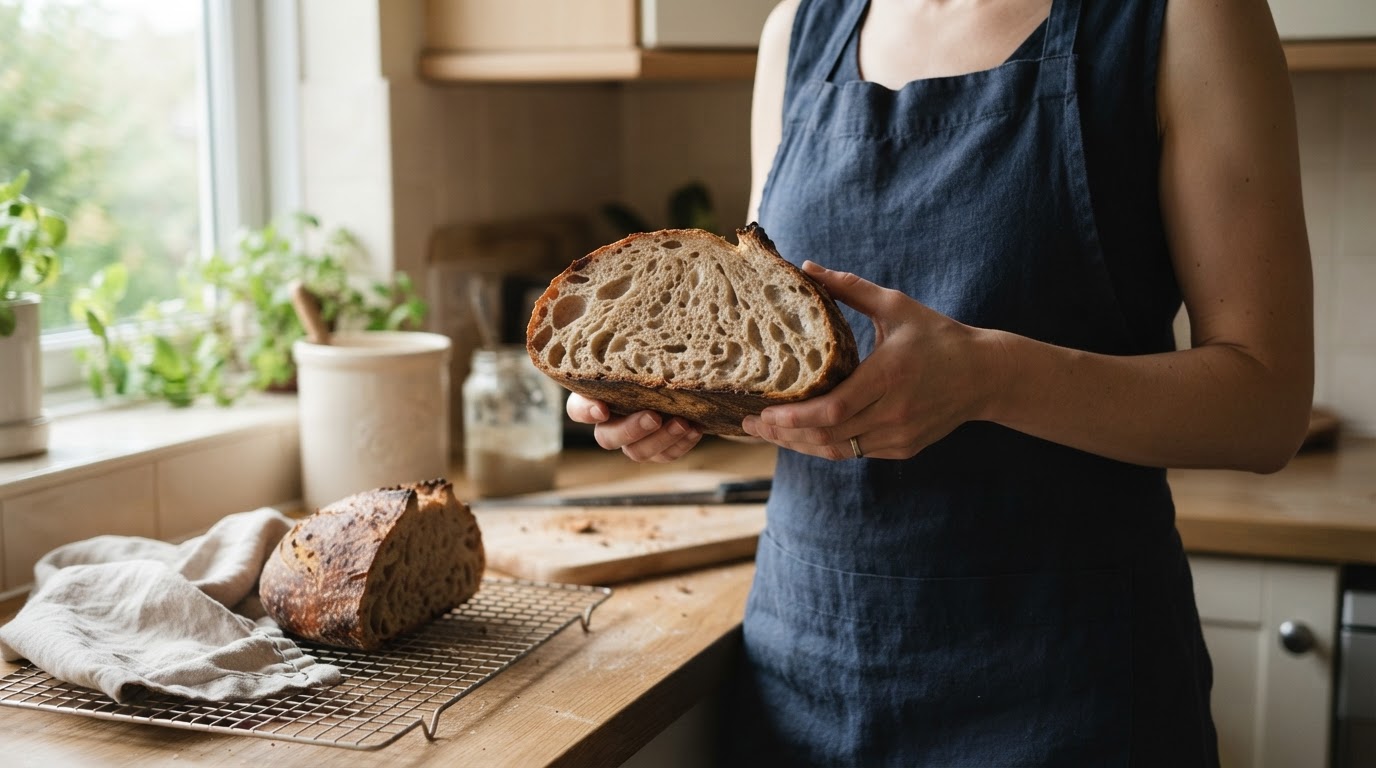
Then check the loaf against its process. Was bulk fermentation finished for your dough temperature and recipe? Did the dough still hold shape after final proof? Change one variable at a time: inspect bulk fermentation if the crumb was tight, cool fully and review baking if it was gummy, or examine shaping if tunnels appeared. For a narrower comparison, see our gummy sourdough versus normal crumb guide.
Limitations
A crumb photograph or a single slice can describe a pattern but cannot prove its cause: fermentation, flour, hydration, shaping, and bake length overlap. Crumb reading is a diagnostic habit, not a test; the only confirmation is a controlled change on the next bake.
Three Common Questions
Is sourdough supposed to be spongy?
Some springiness is normal: a well-baked crumb bends and springs back rather than crumbling, and higher-protein flour makes it chewier. Spongy only becomes a problem when the walls feel wet and sticky or the crumb tears instead of bending, which points back to bake length or slicing too early.
What should the inside of sourdough look like after it has cooled?
It should look like the style you chose: even and fairly tight for a sandwich loaf, moderately open for a country loaf, boldly irregular for ciabatta. A fully cooled loaf cuts cleanly, and the walls look cooked and matte rather than glossy. If it is still sticky when fully cool, review the bake length and the dough's hydration.
Does a more open crumb mean better bread?
No. Openness is a style outcome, not a quality score. Whole wheat flour trades openness for flavor, and a tight sandwich crumb is a success when the bread must hold a filling. Judge the crumb by whether it fits the job the loaf was baked to do.