What Freezing Does to Sourdough (and What It Can't Do)
Freezing is a practical way to keep a baked sourdough loaf past its first day or two, but it is a pause button, not a reset. King Arthur Baking's sourdough storage guide recommends freezing bread you will not eat soon, either whole or sliced. Quality still fades if air reaches the surface and dries it out.
Freezing does not make an already stale loaf fresh again. A loose wrap, trapped condensation or a long stay in the freezer can disappoint even when the bread remains usable.
Whole Loaf or Slices? Decide Before You Freeze
Both formats work; the choice is about how you eat the bread.
How you will use the loaf | Freeze it as | What to expect |
|---|---|---|
Most of the loaf within a few days | Whole loaf | Fewer cut faces to wrap; the whole loaf thaws at once |
One or two slices at a time | Sliced, grouped in twos or fours | Fastest serving; cut edges dry sooner |
Sandwiches or grilled cheese | Sliced, separated with parchment | Slices stay separate and go straight to the pan |
Several small loaves or one large boule | Halves or quarters | Thaws faster; more cut surfaces to protect |
The King Arthur Baking Baker's Hotline groups slices in twos or fours, keeping them from fusing with small squares of parchment. Whole or sliced, the job is the same: cool it, wrap it, and freeze it fast.
Cool Completely, Then Wrap It Airtight
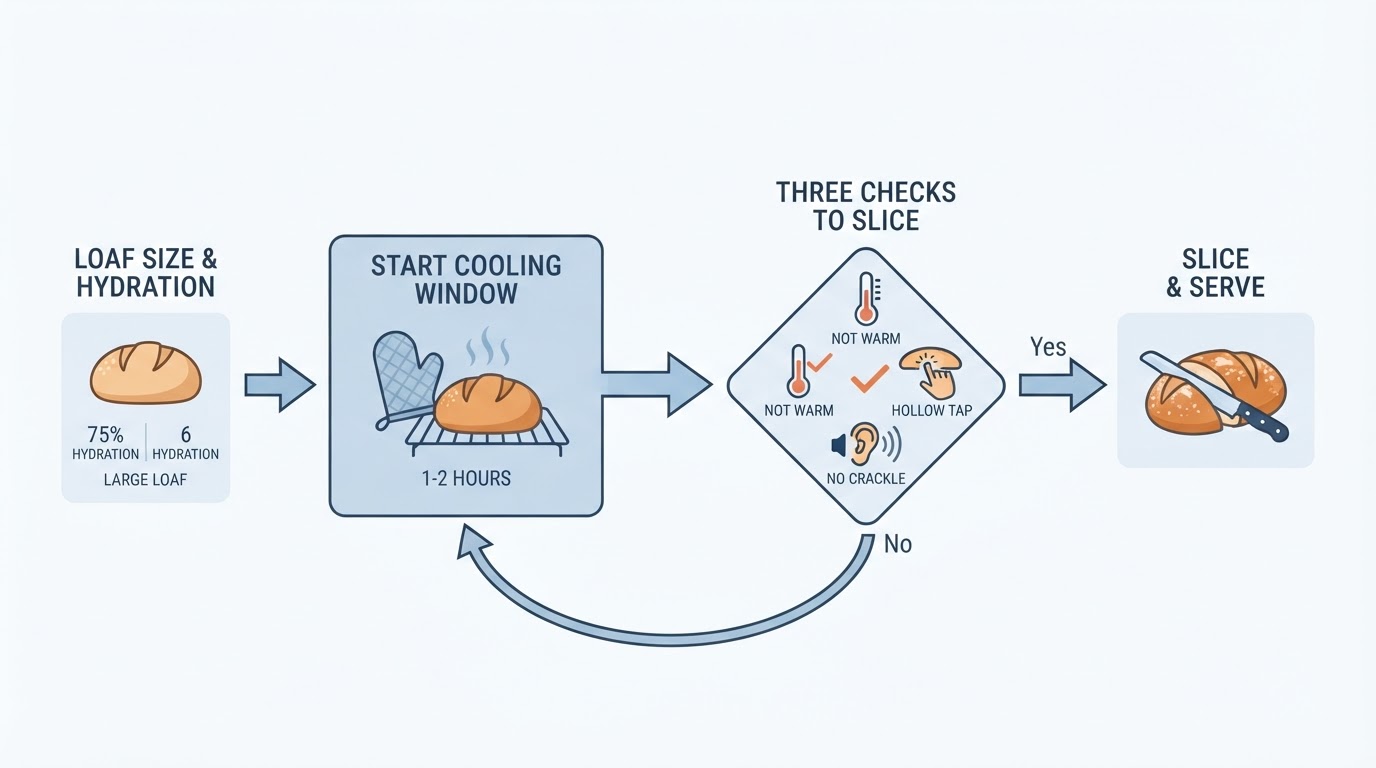
Warm bread traps condensation inside the wrapping. King Arthur Baking advises cooling bread completely before freezing; use a rack until the base and sides feel neither warm nor damp. Our sourdough cooling guide covers that first step in more detail.
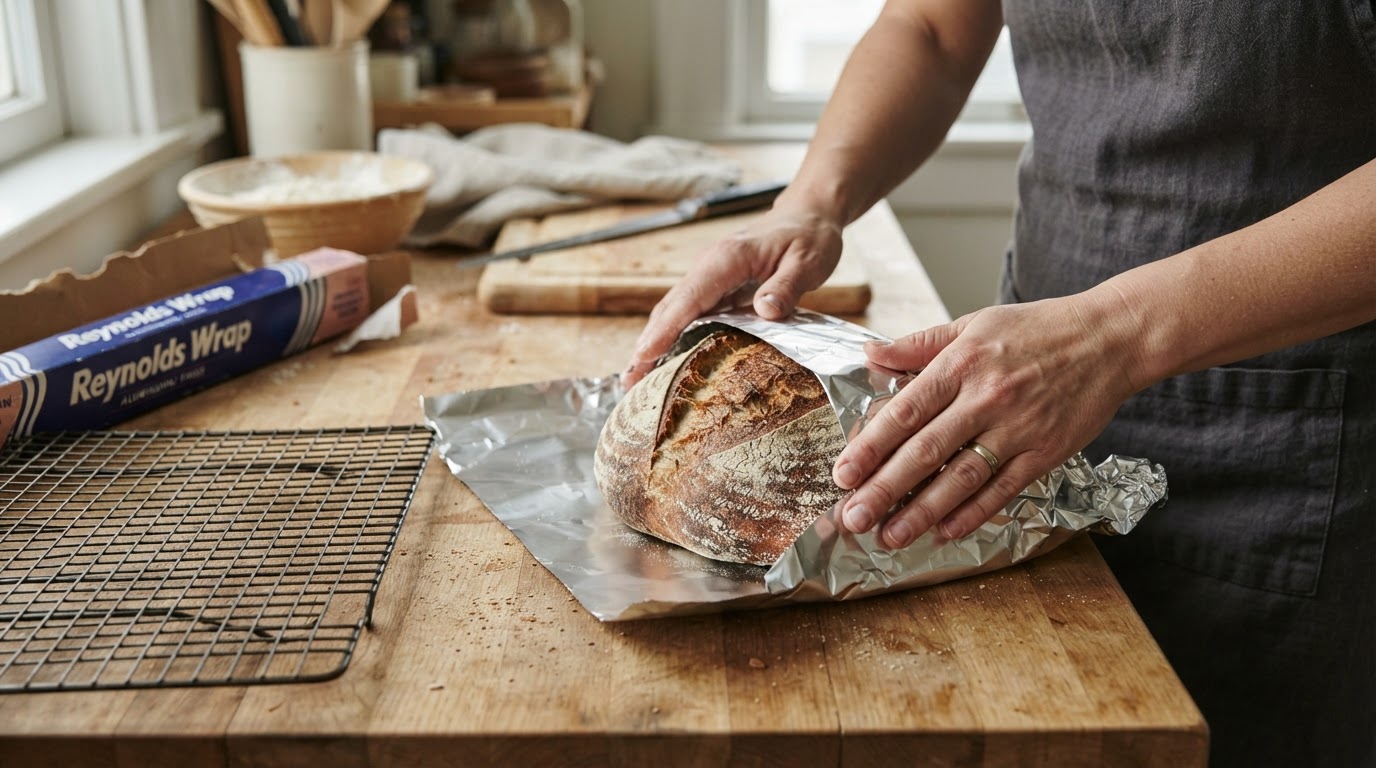
Airtight wrapping limits drying and freezer burn. Use a freezer-suitable bag or wrap plus a rigid sealed container if needed. If avoiding plastic, use a freezer-suitable foil wrap inside a sealed container; check that any reusable wrap is rated for freezer use before relying on it.
Press the air out of each layer without crushing the loaf, label the date, freeze it on a shelf rather than stacking warm packages, and add glazes or butter toppings only after thawing.
How to Defrost Sourdough Bread Without Soggy Slices
The best thawing method and the fastest one are not the same. King Arthur Baking's defrosting guide recommends room-temperature thawing for ordinary bread: a whole loaf may take about three hours depending on its size and the room, while slices thaw faster or go straight into the toaster. The microwave is a fallback for a slice, but can leave the bread dry and hard.
That room-temperature guidance is for an ordinary baked loaf, not one filled with perishable ingredients. Follow the recipe's storage instructions for bread with meat, cheese or other fillings that require refrigeration. The USDA's two-hour rule for perishable foods should not be applied to a plain loaf as if it were a thawing deadline.
How to Reheat Sourdough So the Crust Comes Back
Thawed bread is close to fresh, but the crust needs a second act. The Baker's Hotline suggests a quick refresh in a 350°F oven for artisan loaves, tenting with foil if the top darkens. Slices are easier in a toaster or toaster oven.
The loaf is ready when the center is no longer cool and the crust has tightened. If the crust darkens before the center warms, tent it with foil. A toaster or oven is usually better for crust texture than a microwave.
How Long Can You Keep Frozen Sourdough?
There is no single best-quality shelf life for frozen sourdough. USDA guidance distinguishes safety from quality for continuously frozen food; bread quality depends on the loaf, wrapping and freezer conditions. King Arthur Baking gives a general bread-quality window of about three months, not a guarantee for every sourdough loaf.
Write the date on every package and check the loaf when you thaw it. If the smell is rancid or off, or you see mold, throw it out; freezing does not sterilize bread, it only pauses it.
Limitations and Mistakes to Avoid
- Freezing cannot rescue bread that was already stale or moldy.
- One thin bag is not airtight. Freezer burn comes from air, not from cold.
- A freezer opened often or set warmer than 0°F speeds up quality loss.
- Each freeze-thaw cycle costs texture, so portion before the first freeze.
- This guide covers baked loaves; freezing dough and storing starter follow different rules.
Frequently Asked Questions
Does Freezing Sourdough Bread Ruin It?
No. Freezing keeps bread safe and slows the staling already underway. A cooled, tightly wrapped loaf, thawed wrapped and refreshed in the oven, comes back close to fresh but not identical. Trapped steam, a loose wrap, or months in the freezer are what ruin it.
Should I Freeze a Whole Sourdough Loaf or Slice It First?
Both work, and the choice is about serving, not safety. Freeze whole if you will eat most of the loaf within a few days of thawing. Slice first if you toast single servings: group slices in twos or fours, separate them with parchment, and take out only what you need.
Can I Reheat Sourdough Straight From the Freezer?
Slices can go straight into the toaster. A whole loaf is easier to refresh evenly after it has thawed at room temperature; size and room temperature determine how long that takes. Then give it a short stint in a 350°F oven, as King Arthur Baking suggests.