The Short Answer: It Depends on What Went Into the Fridge
Can you shape sourdough after an overnight fridge rest? Usually yes — if the dough that chilled overnight was still an unshaped mass. Dough in bulk can be assessed, preshaped and final-shaped the next day, then proofed and baked like any other loaf. A loaf that was already shaped and tucked into a banneton for its final cold proof is a different situation. It has already been shaped, and the standard next step is to score and bake it, not to reshape it.
That one distinction answers most of what bakers mean when they search for shaping sourdough after fridge overnight. Unshaped dough that spent the night cold still needs a shape. A shaped loaf that spent the night cold needs the oven.
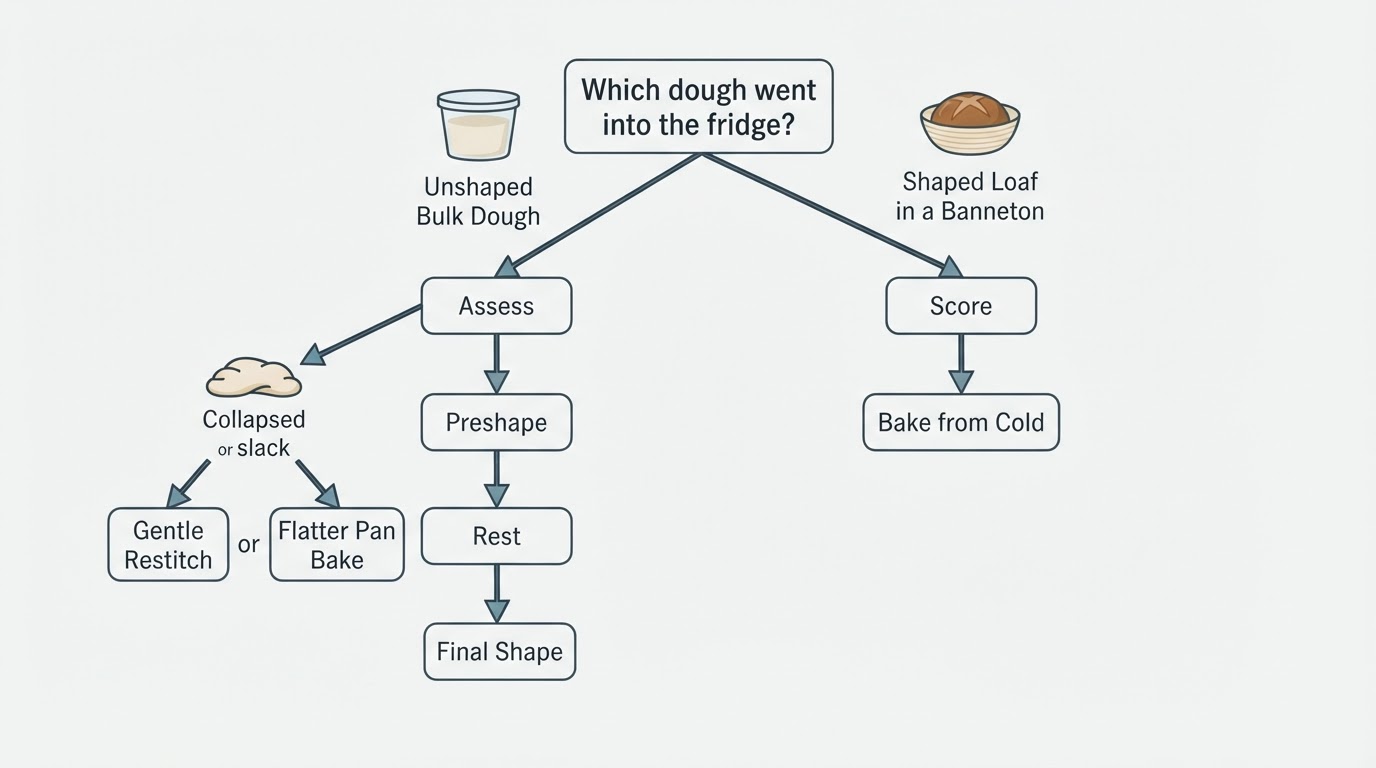
King Arthur's Baker's Hotline describes the same fork in the road: you can chill bread dough during either the first rise or the second rise, though it is best to do only one of the two cold (Can you refrigerate bread dough and bake it later?). Which rise you chilled is what decides your morning.
First, Work Out What Is Actually in Your Fridge
Before you flour a bench, name the stage your dough is in.
- Cold bulk fermentation (first rise in the fridge). The dough is still one mass, usually in a bowl, tub or covered container. There is no seam and no basket shape. It has not been shaped yet.
- Cold final proof, also called a cold retard (second rise in the fridge). The dough was shaped first and is sitting seam-side up in a floured banneton, basket or loaf pan.
If you are unsure, look at the container and the dough itself. A vessel that lets the dough spread, with no visible seam, means bulk. A basket or pan holding a shaped round, oval or pan loaf means the final proof.
This is also where the common “I forgot” situation lands. If you forgot to shape sourdough before the fridge, you are in the first case. It may still be shapeable, but assess how far fermentation went before proceeding.
What you see in the morning | What stage it is | What to do |
|---|---|---|
One mass of dough in a bowl or tub, domed and bubbly | Cold bulk, ready or nearly ready | Turn out, preshape, rest, final shape |
One mass of dough, very tight and barely risen | Cold bulk, under-fermented | Rest on the counter until it looks slightly puffy, then shape |
One mass of dough, collapsed and spreading | Cold bulk, likely overproofed | Shape gently and proof, or bake it as a flatter loaf |
A shaped loaf in a basket, seam up, holding its shape | Final cold proof, ready | Score and bake straight from the fridge |
A shaped loaf that has flattened and looks puffy and fragile | Final cold proof, possibly overproofed | Bake now; avoid aggressive handling |
Check the Dough Before You Touch It
Cold dough lies to your hands a little. The chill makes it feel firmer and more collected than it may be, while fermentation has quietly kept going in the background. Read these cues before you decide to shape:
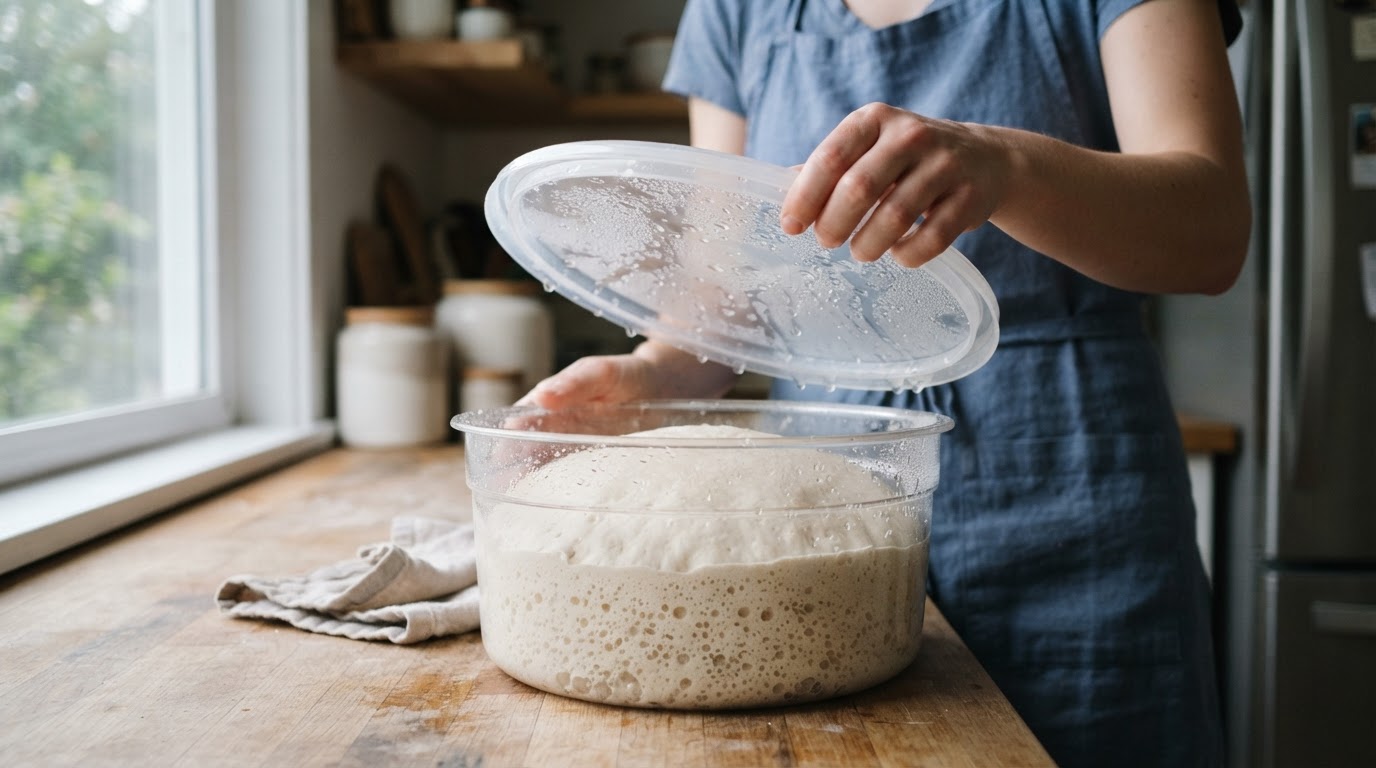
- Rise and dome. Did the dough grow overnight? A gentle dome, a slightly domed top and a visible edge line on the container are good signs. A flat, sunken top is not.
- Bubbles. Small bubbles on the surface and around the sides mean gas is still being produced. A tight, glassy surface with no bubbles usually means the dough needs more time, not more handling.
- Jiggle. Gently shake the container. A soft, even wobble suggests active, gassy dough. A stiff, dead weight suggests the opposite.
- Touch and strength. Cold dough can feel firm even when fermentation has advanced. Use rise, bubbles and structure together; a finger dent alone is not a reliable test for cold bulk dough.
- Smell. Fresh, milky and slightly sour is normal. Sharp, boozy or acetone-like smells suggest the dough has been fermenting longer than you think.
- Slackness. Lift an edge. Dough that stretches without tearing still has strength. Dough that tears, feels gluey or slides apart has lost some.
Chill slows fermentation; it does not pause it. A dough that was already advanced when it went into the fridge can keep creeping forward overnight, especially if the container was large or the dough went in warm.
Cold Dough Is Firm, Not Necessarily Strong
Can you shape cold sourdough straight from the fridge? Often, yes. Cold dough is firmer and easier to handle, it holds a cut cleanly for scoring, and it is less likely to stick to your hands than warm, slack dough. That firmness is helpful for shaping, but do not mistake it for strength. A cold dough can still be overproofed underneath.
There is one trade-off. Dough straight from the fridge can be so tight that it resists stretching and folding. If it fights you, give it time to relax on the counter rather than forcing it. King Arthur's bread-dough refrigeration guide describes warming refrigerated first-rise dough before shaping, but its timing is not a universal sourdough rule. If your dough handles well cold, shape it cold; otherwise wait until it is workable without tearing.
How long can you refrigerate sourdough before shaping? There is no single number, because it depends on fridge temperature, how much fermentation happened before chilling and the recipe. Use the recipe's schedule and the dough's condition rather than transferring another bread formula's cold-rise duration.
How to Shape Cold Dough Gently
If you are looking for how to shape sourdough after cold proof, the technique is the same as any gentle preshape and final shape, with extra attention to temperature and handling.
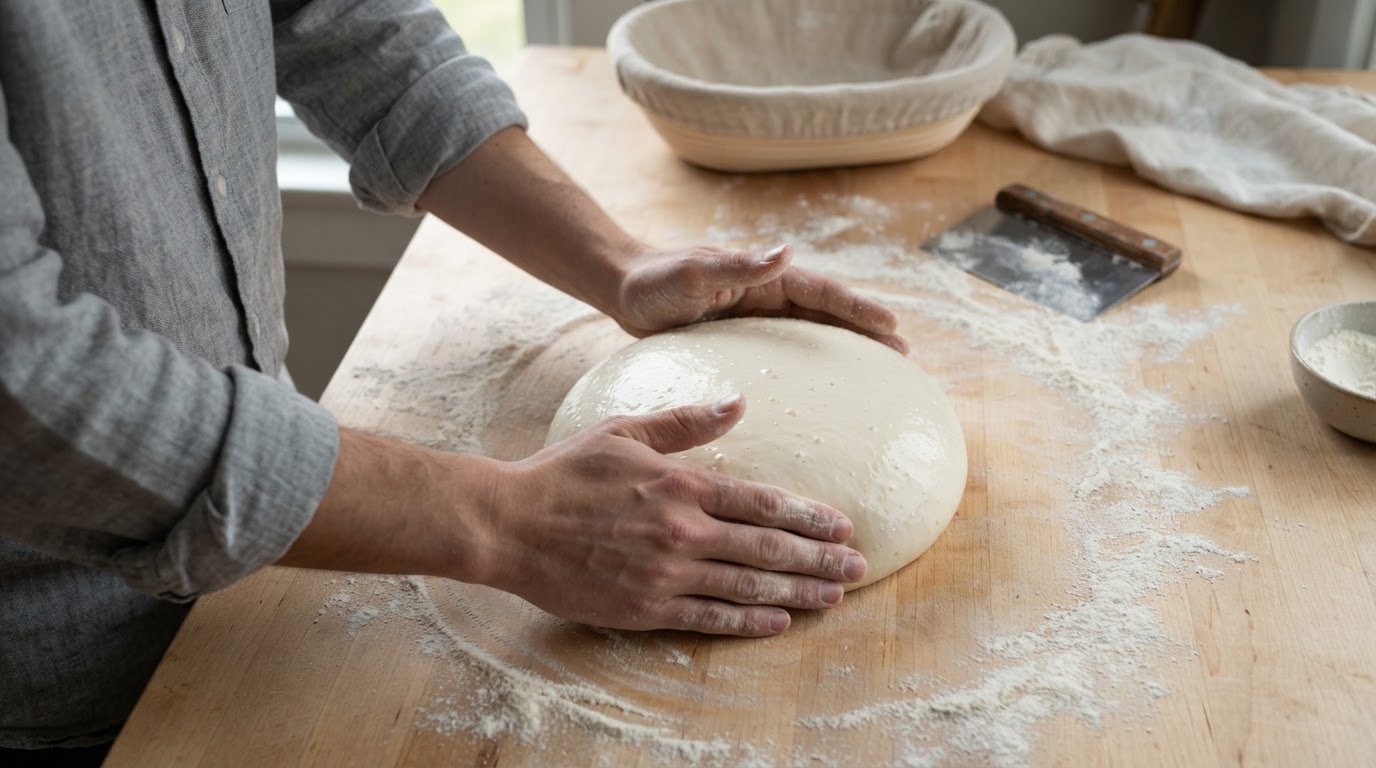
- Set up first. Lightly flour the bench and your hands, and have a bench knife and a floured proofing basket ready. Use just enough flour to stop sticking; too much flour lets the dough slide instead of gripping the bench, and bench friction is what builds surface tension.
- Turn the dough out gently. Keep as much of the accumulated gas and structure as the chosen shaping method allows.
- Preshape, but do not press. Gather the dough into a rough round with light, confident movements. Pre-shaping is optional, but it makes the final shape easier, and King Arthur stresses that doing a good job shaping makes a real difference to the bread's rise (a streamlined sourdough routine).
- Bench rest if the dough resists. Cover it and wait until it relaxes enough to shape without tearing; use its feel, not a fixed timer.
- Final shape. An envelope fold — bottom up, sides in, top down — then flip the dough seam-side down and drag it gently toward you with your hands flat, using the outer edge of each palm to build tension.
- Check the surface. The dough should look smooth and taut, not torn. If it tears, you were too forceful; next time use a lighter hand, exactly as King Arthur advises in its boule shaping guide. Work quickly: the longer your warm hands stay on cold dough, the more it softens and the more gas you risk pressing out.
- Transfer seam-side up. Place the shaped dough into a floured banneton or bowl, cover it and let it proof.
When the Dough Is Already Past Its Best
Some cold dough cannot be brought back. A collapsed, slack mass that spreads, feels weak and tears instead of stretching may have fermented too far; smell or a single poke cannot confirm that diagnosis by itself.
Can you reshape sourdough after cold proofing? A shaped loaf that has already finished its final proof is usually better handled as little as possible. Reshaping it can deflate it and restart a proofing stage you may not have time or dough strength to complete. If it is sound, follow your recipe's scoring and baking instructions instead.
Honest limits: there is no universal rescue. A dough whose gluten has broken down will not come back with more folding, and no timing trick guarantees a high rise once fermentation has gone too far. What you can do is shape it with a light hand, proof it minimally, and bake it in a pan or as a flatter loaf. Overproofed dough often still tastes good; it just bakes denser than you hoped.
The Shaping Workflow, With a Completion Standard
Use this sequence when you pull unshaped dough out of the fridge:
- Read the dough in its container: dome, bubbles, jiggle, smell.
- Turn it out onto a lightly floured bench, top side down.
- Preshape into a rough round, then rest it if it pulls back; shape when it relaxes.
- Final shape with an envelope fold or gather-up, finishing with a light drag to tighten the surface.
- Check the result. The dough holds a rounded shape without tearing and has enough surface tension for the chosen loaf; do not judge cold bulk dough by a single poke.
- Proof and bake it as your recipe directs. If the shaped dough is very cold and tight, let it proof a little longer at room temperature before scoring and baking.
If the dough tears during shaping, stop forcing it. Cover it, wait, and come back with a lighter hand. That is the whole test: surface tension you can see, with no damage you can feel.
Why This Is Not the Same as Cold Proofing or Bulk Fermentation
"How long can you cold proof sourdough bread?" asks about the duration of a shaped loaf's cold rest. "How do you know when bulk fermentation is done?" asks when to end the first rise. This article answers a third, narrower question: what to do about shaping after the dough has already spent the night in the refrigerator.
The checks overlap, because all three depend on reading your dough instead of your clock. For the broader questions, use the site's cold-proof timing guide and bulk-fermentation checklist. Here the key decision is whether the dough entered the fridge shaped or unshaped and whether it still has the strength to continue.