The Direct Answer: A Flat Boule Lost Structure, Not Just Height
A flat loaf is rarely a single mistake. It is the end of a chain that usually started hours before the bake. The dough either never built enough strength to hold gas, lost that strength during a long proof, or met an oven that could not lift it fast enough.
Over proofing gets most of the blame, and it earns part of it. On King Arthur Baking's podcast Things Bakers Know, Amber Eisler, the bakery's Director of Baking Education, says a really flat loaf often means the dough was over proofed. In the same answer she names a second everyday cause: scoring the dough too deeply, which invites the loaf to open sideways instead of rising upward.
That is why "just proof it less" is dangerous advice. Shorten the proof on dough that was actually under proofed and you get a tight, dense loaf with even less lift. Start with when the loaf went flat.
Step 1: Decide When Your Loaf Went Flat
The moment of failure narrows the list faster than any ingredient audit. Decide which of these three you actually saw.
It spread before it hit the oven. If the shaped dough slumped on the bench, felt slack when you moved it, or flattened as it went into the pot, the structure was already gone. Dough that soft usually carries too much water for the flour it was made from, built too little strength during folding, or proofed longer than its structure could tolerate.
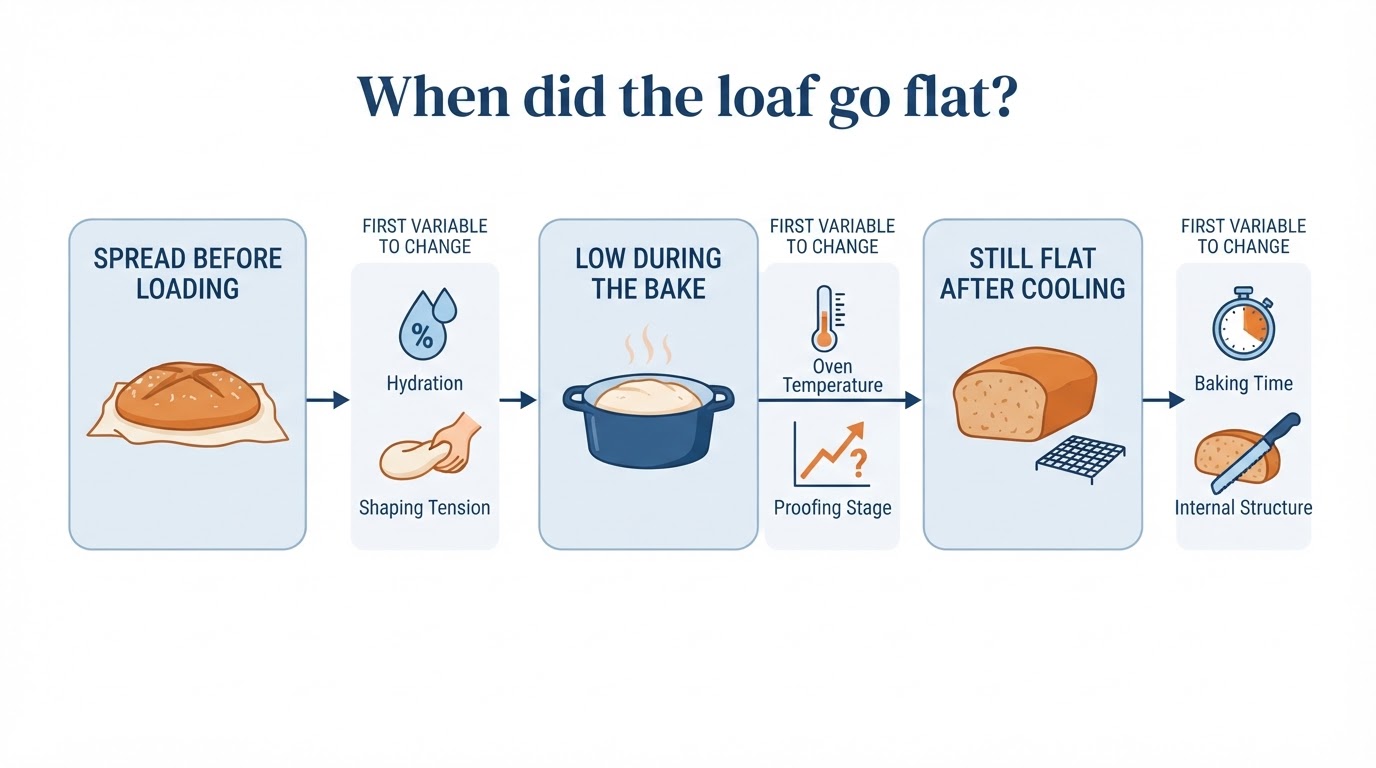
It stayed low during the bake. A loaf that keeps its shape but barely lifts points at oven spring. The usual suspects are a vessel that never got properly hot, no steam to delay the crust, a score cut too deep, or a dough so fragile it could not hold the expansion it managed.
It sank as it cooled. This is different from a loaf that never rose. Check whether the center was fully baked before diagnosing proofing; compare the crumb after the loaf has cooled completely. See this site's guide to sourdough crumb for what to record.
Cause 1: Fermentation Timing (There Is No Universal Proof Time)
Room temperature, dough temperature, starter strength, and how much starter you used all move the useful proofing window, which is why every recipe's hour count is a starting point rather than a rule. For the earlier stage, compare the dough with this site's bulk-fermentation readiness guide.
King Arthur's Amber Eisler describes the range by feel: an under proofed loaf still feels tight and springy, while dough that is ready gets puffier, softer, and more airy without turning fragile. Once dough feels fragile, it has passed its best point and may collapse when you turn it out or slide it into the oven.
Under proofed: tight, springy, dense
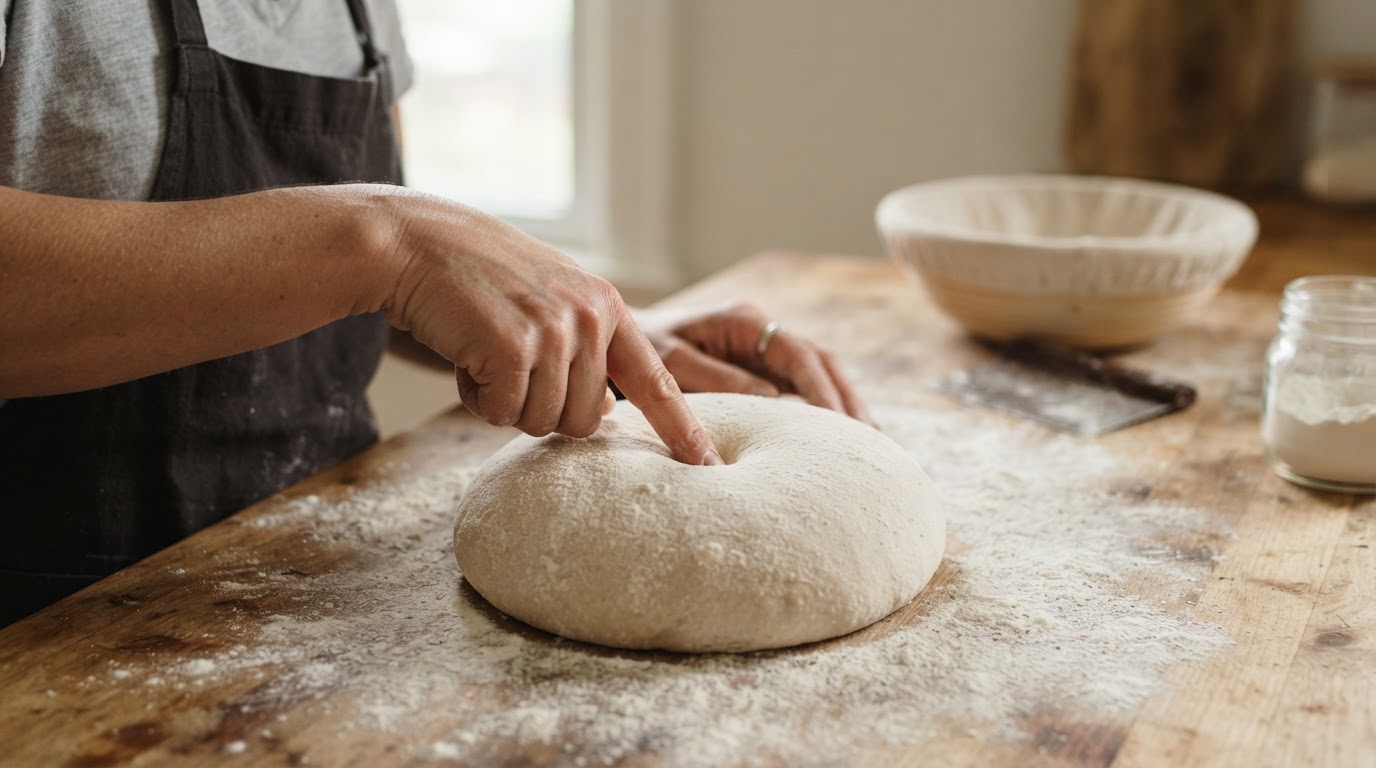
Under proofed dough has not produced enough gas, and it has not relaxed enough to open up in the oven. The poke test is a quick read: press one finger into the dough and watch the dent. A dent that springs back quickly means the dough is still tight. Give it more time, or move it somewhere warmer, rather than loading it.
Over proofed: wobbly, fragile, flat
Over proofed dough has gone the other way. It feels airy to the point of fragility, and it may sag or collapse the moment you turn it out of the basket. If your sourdough goes flat after proofing, this stage is where the loss usually happened. The fix is not less time forever — it is one adjustment: move the dough to a cooler spot, use less starter in the mix, or shorten the bulk stage. Then record what changed.
Foodbod Sourdough draws a useful line at the overnight proof. If the dough already feels soft and sticky before it goes in for the night, the mix likely carries too much water. If it only turns soft and sticky afterwards, over proofing or too much starter is the better explanation, so try a cooler resting spot with less starter.
Cause 2: Weak Dough and Loose Shaping
A boule holds its height the way a balloon holds air: the surface has to be under tension. King Arthur's guide to preshaping sourdough makes the point that a preshape is not just tidying up, it is strengthening. Dough that feels loose or slack when it is divided can take a firmer preshape to add structure, and dough that is especially weak — from under mixing or too much water — can be preshaped a second time before the final shape. The payoff is dough that rises high with less chance of spreading or collapsing.
Timing matters as much as technique. A bench rest between preshape and final shape usually runs about ten to forty-five minutes, depending on how tightly the dough was preshaped. If the dough spreads quickly during that rest, the guide's advice is to cut the rest short and either preshape again or move straight to final shaping.
Then there is the shaping itself. If the skin is not tightened when the dough goes into the banneton, the loaf has nowhere to go but outward. The same happens when the basket is too big for the dough.
Cause 3: Too Much Water for Your Flour
Hydration is not a virtue by itself. Foodbod's list of reasons dough spreads begins with flour that is not strong enough to hold the dough's shape, and with too much water for the flour being used. The same dough that feels beautifully soft in a high-hydration recipe can turn into a puddle when a weaker flour is doing the work, because the water outruns what the gluten can support.
The practical move is to match water to flour instead of chasing a fashionable percentage. If your dough keeps losing its shape no matter how carefully you shape it, pull the water back a little, keep everything else the same, and see whether the next loaf stands taller.
Cause 4: Scoring Deeper Than the Loaf Can Afford
Scoring gives the expanding loaf a controlled place to open. Cut too deep and you can weaken the structure that was holding its height. That is another cause King Arthur's Amber Eisler gives for flat loaves, and it is easy to do with a new blade.
Soft dough creates the opposite problem. Foodbod notes that dough which cannot hold its shape is hard to score, and that scores can close back up even when the cut is made. Both problems trace back to structure. If your score disappears and the loaf still spreads, treat the dough before you blame the blade.
Cause 5: The Oven Never Gave the Loaf a Chance to Spring
Oven spring is a race. The crust has to stay soft long enough for the loaf to expand upward, which is what steam does, and the heat has to be there the moment the dough lands. A vessel that only warmed up alongside the dough, or a preheat that stopped early, hands the race to the crust.
Doneness belongs in this conversation too. In the same King Arthur podcast segment, the deepest part of the score mark comes up as a useful check: if that line is still pale, the loaf probably needs more time, and underbaking leaves excess moisture in the bread. A finished loaf shows color in the score.
A Decision Table for Your Next Bake
What you saw | Most likely cause | First variable to change |
|---|---|---|
Dough spread on the bench before loading | Weak structure, too much water, or a long proof | Reduce hydration slightly, or proof somewhere cooler |
Dough felt tight and springy, loaf stayed dense | Under proofed | Give the dough more time and a warmer spot |
Dough was wobbly and fragile when turned out | Over proofed | Less starter or a shorter bulk, then a cooler proof |
Shape held but height never came | No steam, weak heat, or a deep score | Preheat longer, add steam, score more shallowly |
Score closed up, or the crust set early | Soft dough or insufficient preheating | Build more tension and follow your recipe's vessel-preheating instructions |
Loaf is wide and flat but the dough felt strong | Banneton too large for the dough | Match the basket to the dough weight |
How to Fix Flat Sourdough Before Baking: One Variable per Bake
Use this order so each bake teaches you something.
- Confirm the starter is ready to work. Feed it and mix bread when it is active; a recently refrigerated starter may need refreshing according to the recipe and its condition.
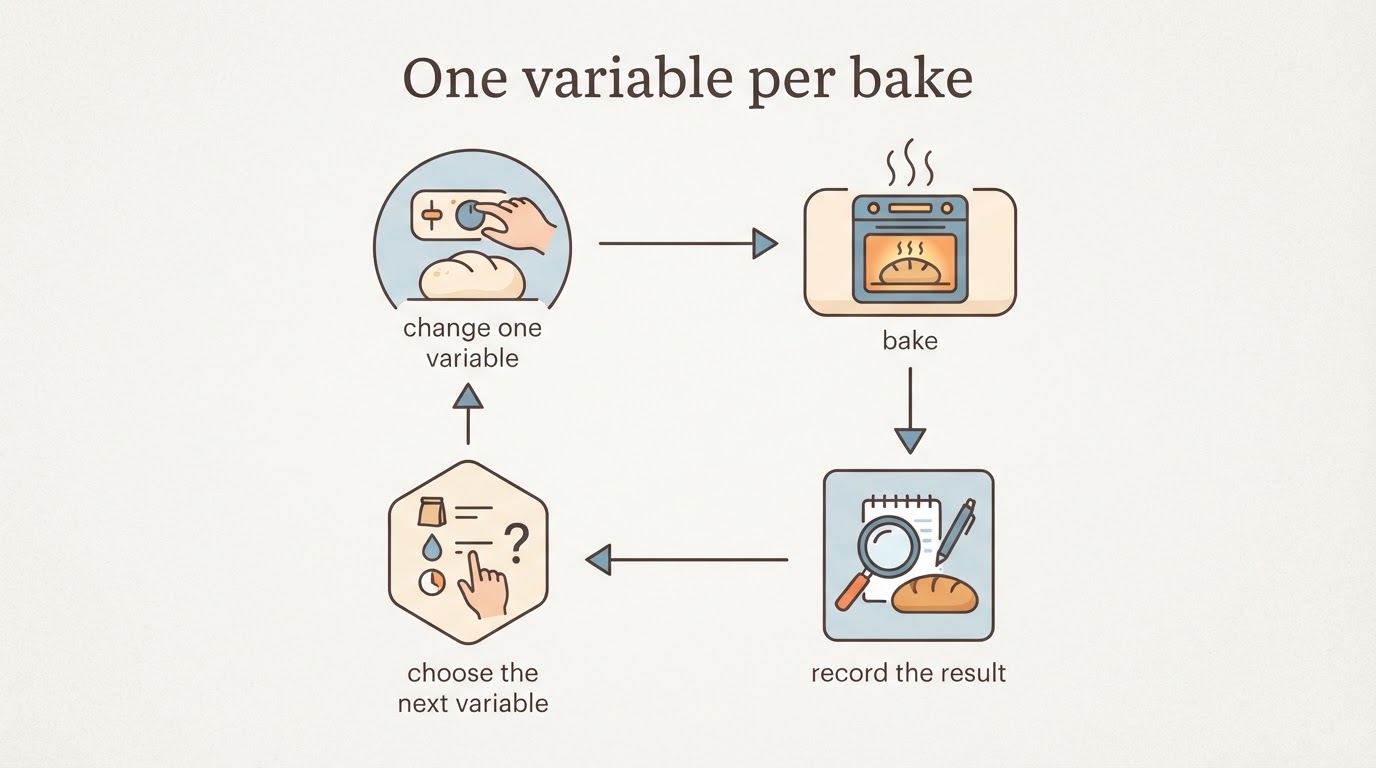
- Write down one change. Just one: hydration, starter amount, bulk length, proof temperature, shaping tension, or scoring. Everything else stays exactly as it was.
- Watch temperature the whole way through, not just at the start. Check the room and the dough as the hours pass, and adjust the resting spot rather than the clock.
- Build strength during bulk. Fold the dough and feel it tighten; if it still feels slack, fold more before moving on.
- Preshape with intention. Round the dough, feel for tension, then let the bench rest relax it — shortened if the dough starts to spread.
- Shape and load with the dough under tension, into a basket that fits it.
- Decide the moment with the poke test. If the dent springs back quickly, wait. If the dough feels fragile, it is time — or past time.
- Bake hot enough and long enough to see color in the score mark.
Completion standard: the bake worked when the dough holds its shape through scoring and the finished loaf measures taller than the last one made from the same recipe. If it is still flat, you have still learned something. Change one more variable, not five.
Keep One Bake Log, Not Five Theories
Record the dough temperature, hydration, proof time, and result. Compare those notes over several bakes and change one variable at a time so you can tell which adjustment actually helped.