Stop Pulling, Then Read the Stage
A tear during a stretch and fold does not mean the recipe failed; it means the dough has reached the limit of what it will stretch right now. Set it down, let it relax, and work out which pattern you are seeing: an early, tight dough that still has its structure, or a later, slack dough that is losing it. These are possible clues rather than a certain diagnosis, because timing, hydration, flour and handling can overlap and a single tear cannot separate them on its own. Still, the two patterns call for nearly opposite responses, so read as much as you can before you fold again. A fold is a gentle lift and lay-over, not a test of how hard you can pull; King Arthur's sourdough guide warns that digging your fingers into wet dough can cause sticking and tearing.
Four Checks Before You Touch the Dough Again
No single observation identifies the cause, so read these four together as clues that point in a direction rather than as a diagnosis.
- Timing. How long since the previous fold? Come back too early and the gluten has not relaxed; the usual fold interval is a convention, not a deadline.
- How far you pulled. Did you stop at the first sign of resistance, or pull on to finish the motion? How hard and how far you pulled is a handling clue, not proof that the dough itself is failing.
- Flour and water distribution. Dry patches or unhydrated flour tear along weak spots however gently you work.
- Fermentation progress. Is the dough domed and holding its shape, or slack and spreading? This check is one clue that helps separate the two cases below.
Early Tears: Tight Dough That Fights Back
Early in mixing and folding, dough is often rough and resistant: you lift a corner and the surface tears before it stretches far. That often points to handling as much as to the dough, because the gluten has not relaxed yet and the network is still forming.
The response is gentle handling and the rest your recipe calls for: fold with the lightest touch that moves the dough, stop at resistance, and keep the interval the recipe sets between sets. Do not reach for a hydration correction first; adding water helps some doughs and harms others, and the right adjustment depends on your flour and formula, not on the tear alone.
King Arthur's shaping guidance makes the same point: dough that has not relaxed enough resists stretching and may tear, and the fix is a longer bench rest with a lighter hand. Shaping is a separate task with its own checks, but the principle carries over: tight dough needs time, not force.
Late Tears: Slack Dough That Shreds
Later in bulk fermentation the symptoms change: the dough feels wetter and stickier, spreads in the bowl, stretches without resistance, then tears when you try to tighten it. That pattern points toward structure breaking down, not gluten that still needs developing.
King Arthur's sourdough sourness series describes this failure directly: fermentation and its acids weaken gluten, and the warm, wet, whole-grain conditions that favor sourness also speed protein breakdown, so over-fermented dough turns wetter and tears easily. Once structure has broken down, more folds are not a rescue: they will not reliably rebuild it, and extra handling can push out the gas you want to keep.
A tear alone does not prove overfermentation, though: treat it as one clue among several and judge it with fermentation progress, aroma, and how the dough holds its shape. If the dough still looks lively and only tears under a hard pull, you may simply be handling it too aggressively.
Early vs. Late: Match the Symptom to the Stage
Use the table as a set of clues, not as a diagnosis. The cells can overlap, and timing, hydration, flour and handling all blur the picture.
What you observe | Early tight dough | Late structural breakdown |
|---|---|---|
When it tears | First folds, soon after mixing | Later sets, after hours in bulk |
How it stretches | Fights the pull, then tears from tightness | Stretches easily, then shreds |
Surface and feel | Rough, firm, springs back | Wet, sticky, spreading, bubbly |
Response to a rest | Often smoother and more cooperative | Often little improvement |
Next step | Ease off and follow the recipe's rest | Stop folding and move toward shaping if structure remains |
Read the whole row rather than a single cell: a dough can be tight in one spot and slack in another, and a late tear can still come from rough handling.
The Gentle Check That Tells You to Stop
Your recipe sets the fold schedule, and this check is how you decide when to stop folding within it, not how you decide that bulk fermentation is finished. Slowly lift one side and stop the moment you feel real resistance. Dough that stretches without a fight, holds a rounded shape, and lifts without tearing is telling you that this fold has done its work; extra folds past that point can deflate it and cost you the open crumb you want. A dough that lifts and relaxes easily does not prove bulk fermentation is complete or that a loaf is ready for shaping, so keep following your recipe for that separate decision, and use this guide to judging bulk fermentation to read the fermentation-stage signs.
Next Batch Notes
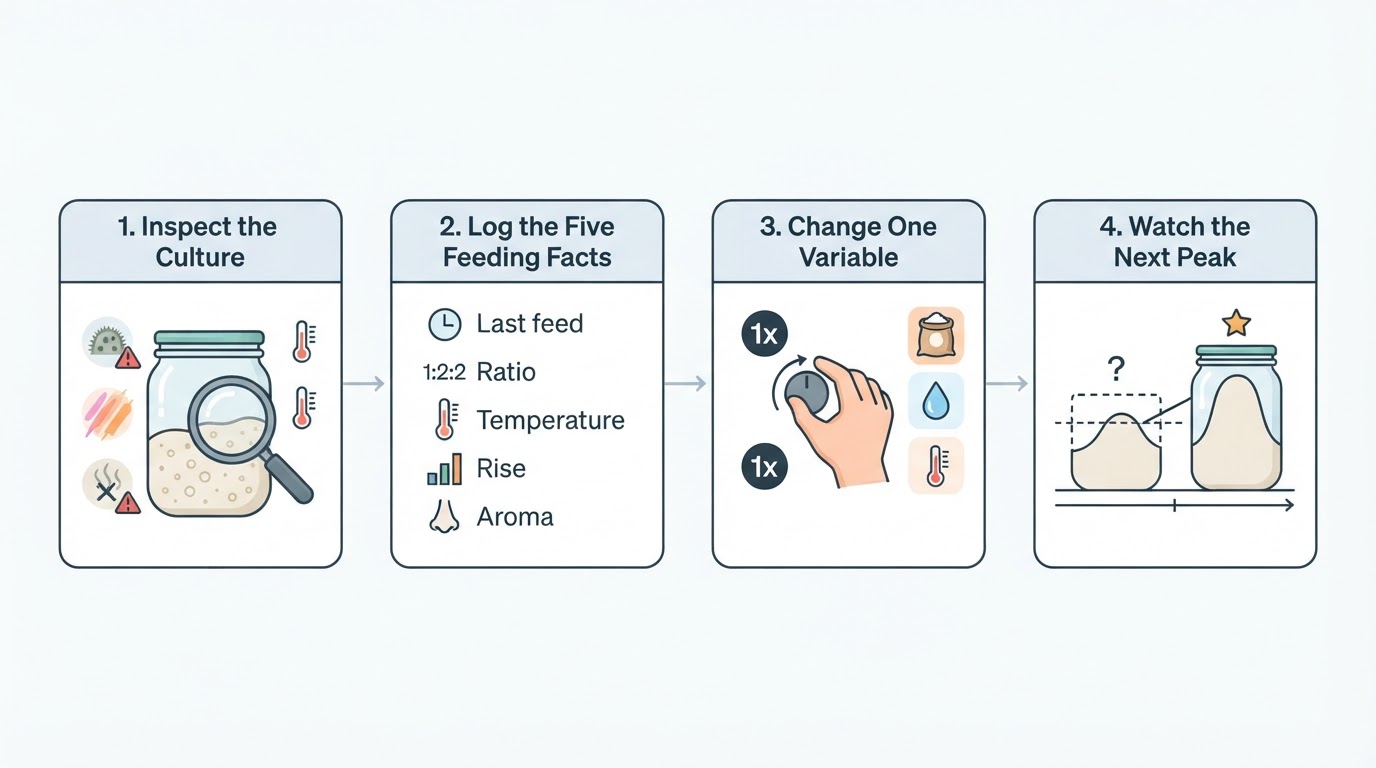
Change one variable at a time and note what you did, so the next bake teaches you something.
- Tears at the first folds: try a longer rest between sets or a lighter hand, changing one thing at a time. A longer rest may help a tight dough; it will not fix every case.
- Tears late in bulk: treat time and temperature together and consider finishing bulk earlier; warmer kitchens ferment faster. Moving sooner can limit further breakdown, but a repaired schedule will not rebuild structure that is already gone.
- Keep the recipe's hydration unless your flour clearly needs an adjustment. There is no universal hydration correction for tearing, and a fixed water change will not fix every case.
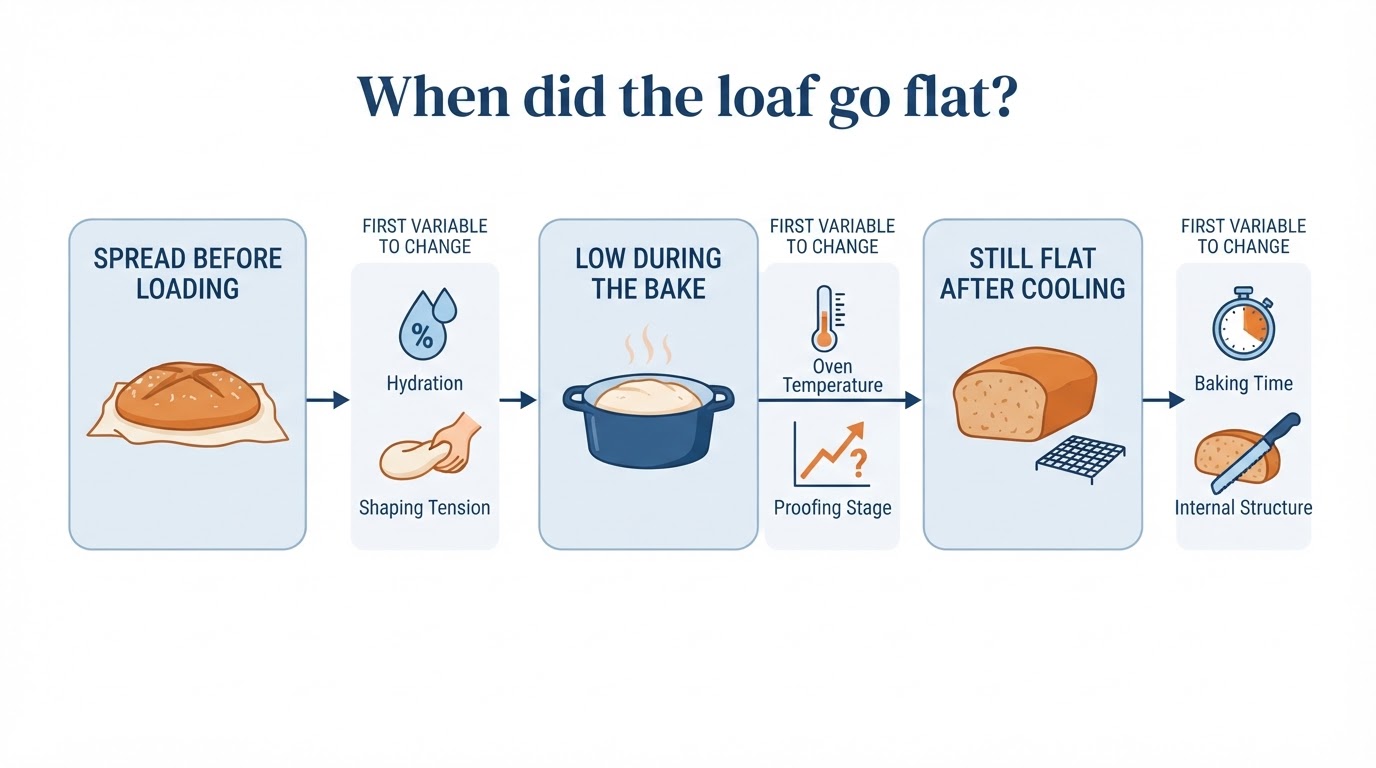
- If the finished loaf still comes out flat, the flat-loaf troubleshooting guide covers that separate problem.
Read the stage before the recipe, and let the dough's clues guide the next fold.