How to Make French Bread Baguette at Home
By Rustic Baking Notes
A crispy, golden crust. An open, chewy crumb. Four ingredients you already have. The baguette looks like a bakery secret, but it's really a technique lesson — and once you understand what each step is actually doing to the dough, you'll bake a better loaf every single time.
Table of Contents
Four Ingredients — and What Each One Does
A traditional French baguette is built from flour, water, yeast, and salt. That's it. The simplicity is real, and it's also what makes this bake a technique test rather than an ingredient puzzle. Getting the crust and crumb right has everything to do with how you handle the dough, not what you put in it.
Recipe At-A-Glance
Makes 2 baguettes, ~300-350g each
| Ingredient | Grams | US Measure |
|---|---|---|
| Bread flour (unbleached) | 500g | 4 cups |
| Water (lukewarm, 75–80°F) | 350g | 1½ cups |
| Instant yeast | 5g | 1½ tsp |
| Fine sea salt | 10g | 1¾ tsp |
Flour Choice
Unbleached bread flour (12–13% protein) gives more chew and better oven spring. All-purpose (10–11%) makes a softer crumb.
Water Temperature
Aim for 75–80°F (24–27°C) to activate yeast predictably. Cold slows it down; hot kills it.
Internal link: For an easy way to convert gram weights to cups, the Cups to Grams Converter at Rustic Baking Notes is worth bookmarking.
Mixing the Dough
Baguette dough is a lean, relatively wet dough — it should feel sticky and soft, not stiff.
Autolyse
Combine flour and water. Stir until no dry flour remains. Cover and rest for 20–30 minutes. This allows the flour to hydrate fully and gluten to begin forming without kneading.
Incorporate
Sprinkle in yeast and salt. Work them in by squeezing the dough through your fingers for about 2 minutes. The dough will feel rough initially.
Rest
Cover the bowl with a damp cloth or plastic wrap. You're ready to begin the bulk fermentation stage.
Fermentation and Folding — How to Read the Dough, Not the Clock
Bulk fermentation is where flavor and structure are built. Timeline depends on kitchen temperature more than any fixed rule.
Stretch-and-Folds
Every 30 minutes for the first 2 hours, perform a set of folds. Reach under one side, stretch upward until it resists, and fold over. Repeat four times around the bowl.
This builds the elastic gluten structure.Cold Fermentation Option
For deeper flavor, refrigerate the dough for 8–14 hours after mixing. Pull it out 45–60 minutes before shaping to take the chill off.
Shaping and Scoring — Where the Baguette Actually Happens
Pre-shape
Divide dough into two 425g pieces. Flatten into rectangles, fold top and bottom thirds to center, and rest for 20 minutes. This rest is non-negotiable to relax the gluten.
Final Shape
Fold edges to center, seal firmly, and roll with palms from center outward to 14–16 inches. Place on a floured linen couche to support the rise and prevent spreading.
Final Proof
Rest 45–60 minutes. Use the Poke Test: a gentle indent should fill back slowly and partially. If it springs back immediately, it needs more time.
Scoring
Use a lame or sharp knife at a 30–35 degree angle. Make 3–5 fast, confident, overlapping slashes. Hesitation tears the dough; confidence creates the 'ear'.
Steam and the Home Oven — Why the First 15 Minutes Are Everything
Steam keeps the crust extensible for maximum oven spring. Preheat your oven and stone/steel at 475°F for at least 45 minutes.
Cast-Iron Pan
Place on bottom rack. Add ½ cup hot water when bread goes in. Remove after 15 minutes.
Lava Rocks
Fill pan with lava rocks for a steadier steam release. Use 1 cup hot water.
Sheet Pan
Simplest method. Use a preheated sheet pan and a separate water pan below.
Bake at 475°F for 15 minutes with steam.
Remove steam, reduce to 450°F, and bake for 10–15 more minutes.
How to Tell When It's Done
Color & Sound
Deep golden brown is mandatory — caramelization is flavor. Lift and tap the bottom; it should sound hollow, like a drum.
The Cooling Crackle
Cool on a wire rack for 30–40 minutes. The 'crackle' you hear is the crust finishing its set as moisture moves outward.
Reading the Crumb
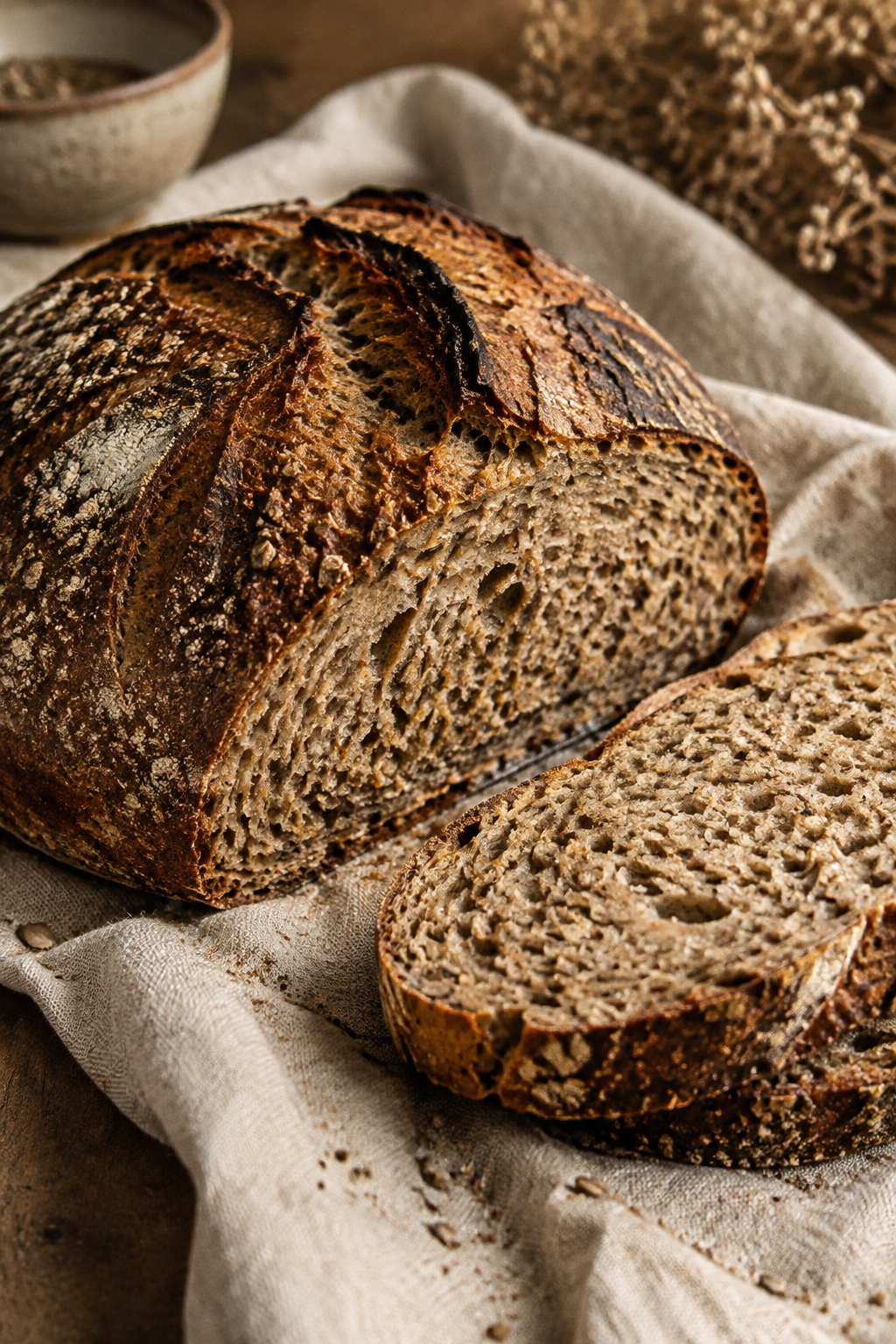
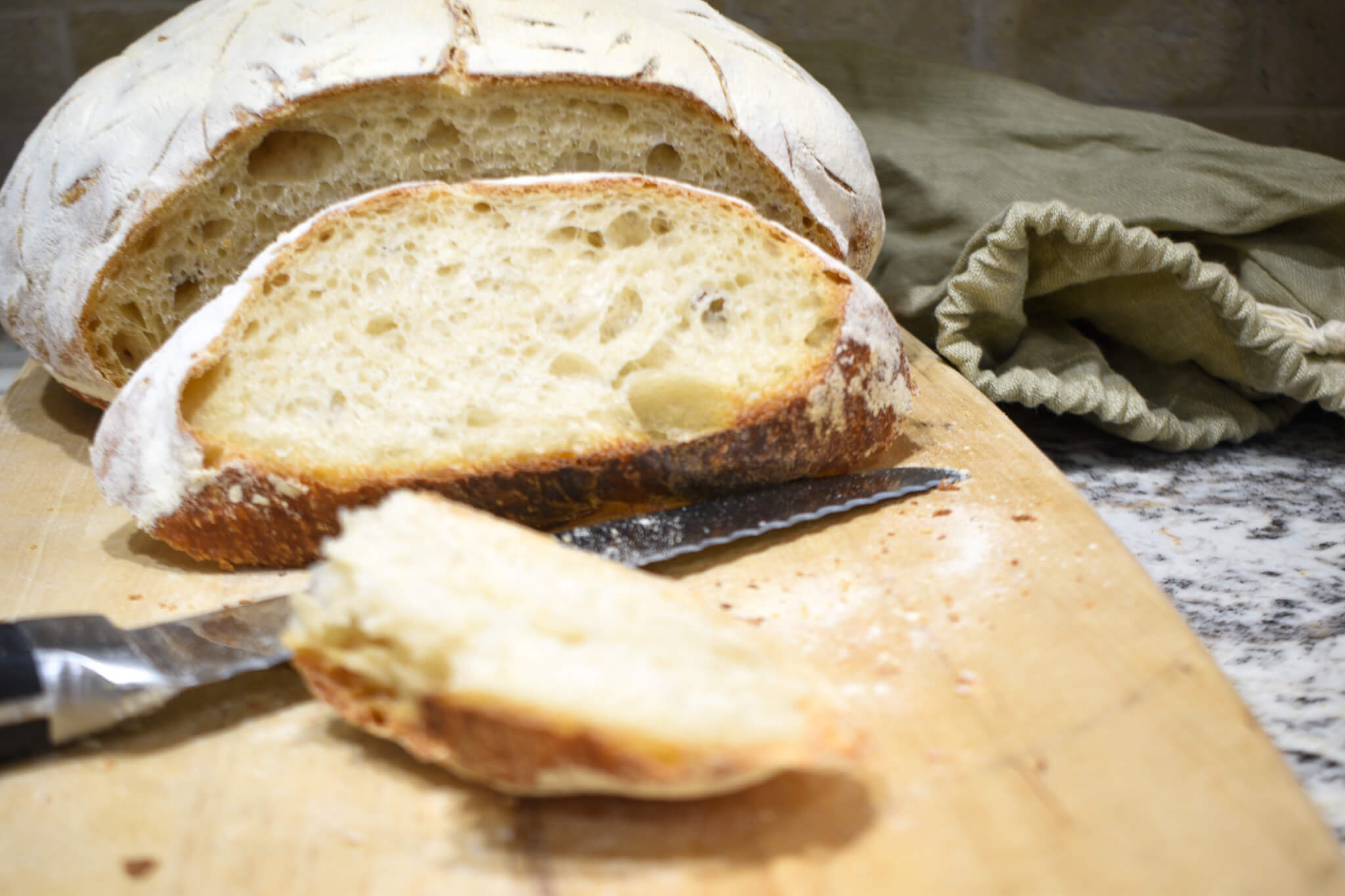
"When you slice into it, the interior should show an open, irregular crumb — holes of different sizes, slightly translucent walls between them."
Questions Home Bakers Usually Have
My baguette came out flat with almost no oven spring. What went wrong?
Usually under-proofing, weak shaping tension, or lack of steam. Check the poke test next time — the dough should feel gently springy.
The crust came out thick and hard, not thin and crispy.
Increase your steam and ensure your starting temperature is a true 475°F. Dry heat before the loaf expands dries the skin too early.
Should I use instant yeast or active dry yeast?
Both work. Instant goes in dry; active dry needs 5 minutes in lukewarm water first. Use 25% more volume if substituting active dry for instant.
My scoring tears the dough instead of cutting it cleanly.
Your blade is likely dull or you are moving too slowly. One confident, decisive stroke is required at a shallow angle.