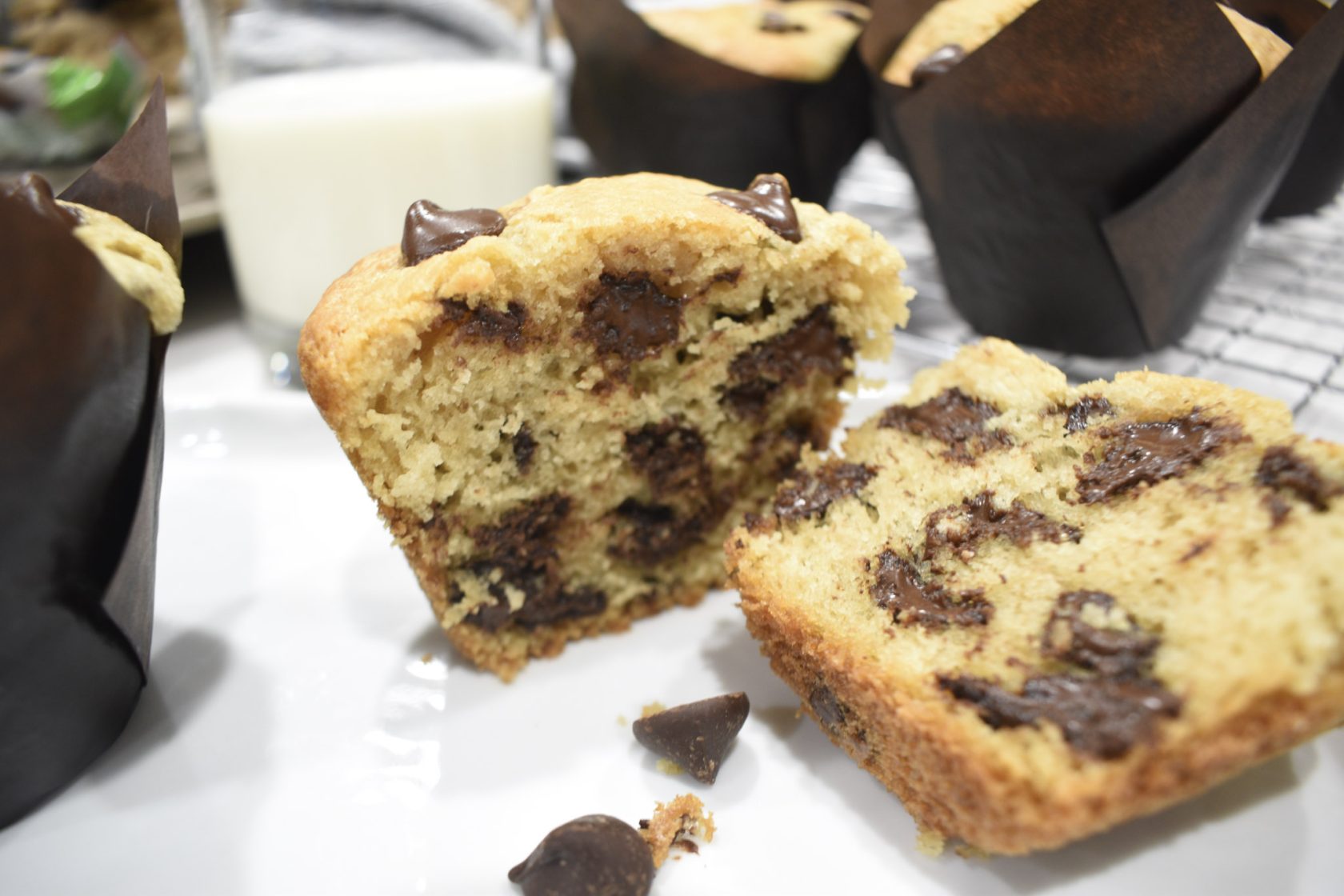
One Muffin Batter, Endless Flavors
If you've ever wanted to make blueberry muffins on Monday, chocolate chip on Thursday, and something with lemon and poppy seeds for the weekend — you don't need three different recipes. You need one well-built batter and an understanding of how to swap the additions.
I've tested this batter more times than I can count, and here's what I've learned: a good muffin batter is actually very forgiving. Get the ratios right, learn the fold, and you'll bake muffins that are taller, fluffier, and more satisfying than the packaged kind — no matter what you fold in.
In this guide I'm walking you through the base batter, starting with classic blueberry muffins, and then showing you exactly how to switch it up for six other variations. I'll also share what to look for in the pan and oven so you never have to guess if they're done.
Table of Contents
What Makes a Muffin Batter Adaptable
Most muffin recipes look different on paper — different amounts of sugar, oil, and mix-ins. But underneath, they all follow the same structural logic: a ratio of dry ingredients to wet ingredients that creates a thick, scoopable batter. The add-ins (blueberries, chocolate chips, nuts) are passengers, not drivers.
The three things that actually determine your muffin's texture are:
- 01 The fat-to-flour ratio — more fat (butter or oil) gives you a softer, more tender crumb
- 02 The liquid-to-flour ratio — thicker batter makes taller muffins; too much liquid gives you flat tops
- 03 The leavening — baking powder does the lifting; the right amount creates a gentle dome without overflow
Once you understand those three levers, adapting the batter is just a matter of swapping the additions and adjusting sweetness when the fruit or mix-in brings its own sugar.
The Base Batter — Ingredients and What They Do
Here's the batter I use as my starting point. It's balanced for a tender, bakery-style crumb with a slight lift on top. Quantities are given in both grams and US cups because baking is easier when you don't have to guess.
Dry Ingredients
| Ingredient | US Measure | Grams |
|---|---|---|
| All-purpose flour | 2 cups | 240 g |
| Baking powder | 2 tsp | — |
| Fine salt | ½ tsp | — |
| Granulated sugar | ¾ cup | 150 g |
Wet Ingredients
| Ingredient | US Measure | Notes |
|---|---|---|
| Large eggs | 2 | Room temperature |
| Whole milk (or buttermilk) | 1 cup / 240 ml | See note below |
| Neutral oil or melted butter | ⅓ cup / 75 g | Cooled |
| Pure vanilla extract | 1 tsp | — |
A note on the fat
Oil keeps these muffins moist for longer at room temperature, while butter adds more flavor. Both work. I often use a combination — ¼ cup / 55 g melted butter and a tablespoon or two of oil — but pure oil is simpler and the results are excellent.
Why buttermilk?
The slight acidity reacts with the baking powder and tenderizes the flour proteins, so you get a softer bite. If you don't have buttermilk on hand, add 1 tablespoon of lemon juice to regular whole milk and let it sit for 5 minutes.
How to Mix Muffin Batter Without Ruining It
Combine dry ingredients
Whisk the flour, baking powder, salt, and sugar in a large bowl until evenly distributed.
Combine wet ingredients separately
In a second bowl or large measuring cup, whisk the eggs, milk, oil, and vanilla together until smooth.
Pour wet into dry, then fold — not stir
Use a rubber spatula and fold with wide, deliberate strokes from the bottom of the bowl up and over. Stop when you see no more dry flour, even if the batter looks a little lumpy. Lumpy is correct. Smooth batter means overworked gluten, which means dense muffins.
What the batter should look like
Thick, slightly rough-textured, and able to hold its shape on a spoon without running off. If it pours like pancake batter, it's too thin and your muffins will spread flat. If it's stiff like cookie dough, add a splash more milk, about 1–2 tablespoons.
Blueberry Muffins — The Classic Way to Use This Batter
Blueberry muffins are where this batter really shines, because fresh blueberries have enough moisture and sweetness to complement it without overwhelming the structure.
Fresh vs. Frozen
Fresh is ideal. Frozen work, but don't thaw them first — fold them in straight from the freezer to prevent purple streaks.
Preventing Sinking
Toss your blueberries (1½ cups / 210 g) in 1 tablespoon of flour before adding them. The light coating creates friction to keep them suspended as the batter sets.
Sugar Adjustment
If your berries are tart, add 1 extra tablespoon of sugar to the dry ingredients. If they're sweet, the base recipe is perfectly balanced.
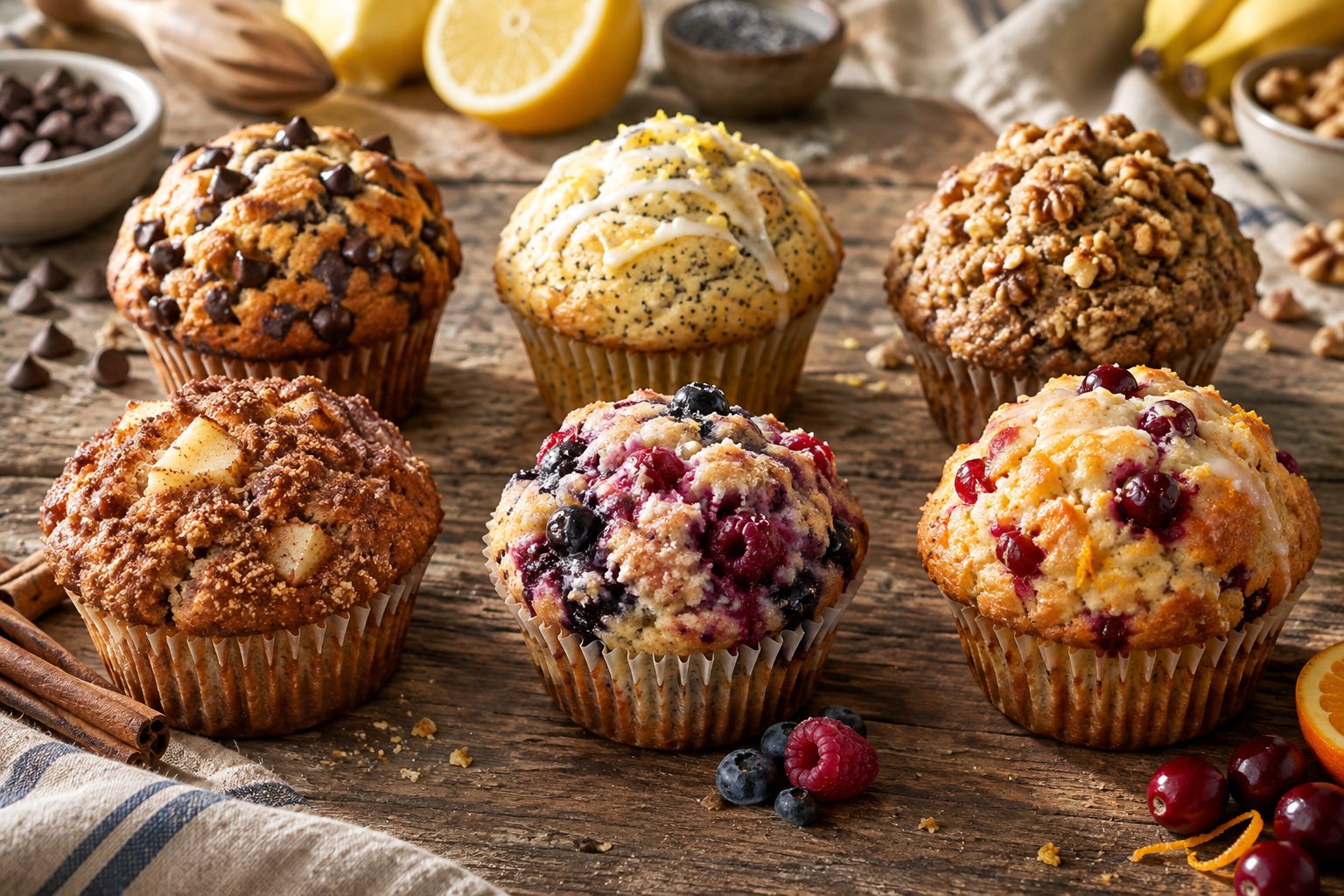
Six More Flavors from the Same Batter
Chocolate Chip
Fold in 1½ cups / 255 g semi-sweet chocolate chips. Add ½ tsp espresso powder to the dry ingredients to deepen the flavor.
Lemon Poppyseed
Add zest of 2 lemons and 2 tbsp poppyseeds to dry ingredients. Reduce vanilla to ½ tsp for better balance.
Banana Nut
Replace 2 tbsp milk with ¼ cup mashed ripe banana. Fold in ½ cup chopped walnuts. Reduce sugar by 2 tbsp.
Apple Cinnamon
Stir 1 tsp cinnamon into dry ingredients. Fold in 1 cup finely diced (¼-inch) peeled apple for a soft, juicy crumb.
Mixed Berry
Use a mix of blueberries, raspberries, and strawberries (1½ cups total). Handle gently to avoid streaking the batter.
Cranberry Orange
Add zest of 1 orange and 1½ cups halved cranberries. Add 2 extra tbsp sugar to balance the tartness.
How to Fill the Pan and Know When They're Done
Fill each standard muffin cup three-quarters full — about ¼ cup of batter per cup. Overfilling causes mushroom tops that overflow; underfilling gives you flat muffins. For bakery-tall tops, fill to the rim and accept a bit of spread.
Four Observable Cues
1. The Dome
Tops should be rounded and fully set, not jiggly or wet-looking at the center.
2. The Color
Edges and tops should be lightly golden; if pale and soft, give it 2–3 more minutes.
3. The Toothpick
Insert into center — it should come out clean or with a few moist crumbs.
4. The Pull
A fully baked muffin will have pulled away slightly from the sides of its cup.
Let the muffins cool in the pan for 5 minutes before moving them to a wire rack to finish setting their internal structure.
Troubleshooting
Q: Why did my muffins come out flat?
Overmixing is the culprit. Once gluten develops in the batter, it can't hold the gas from the baking powder. Mix only until the dry flour disappears—lumpy is good!
Q: Why did my fruit sink?
Toss fruit in 1 tablespoon of flour first and ensure your batter is thick enough to hold its shape on a spoon.
Q: Can I make this dairy-free?
Yes. Use oat or almond milk and neutral oil instead of butter. The texture is slightly less tender but the results are still excellent.
Q: Can I add a crumb topping?
Yes! Mix 3 tbsp cold butter, 3 tbsp flour, and 2 tbsp sugar until crumbly; scatter on top before baking. This works with any variation.
Scale the Next Muffin Batch
Use the local calculators to adjust the batch or convert cup measures. They run in your browser; no email address, account, or download is required.
More Baking From Scratch
Bake Better, No Signup Needed
Use the recipe scaling calculator for the next batch, or the cups-to-grams converter for accurate measuring. Both run in your browser.