Crisp Edges,
Soft Crumb,
Golden Oil
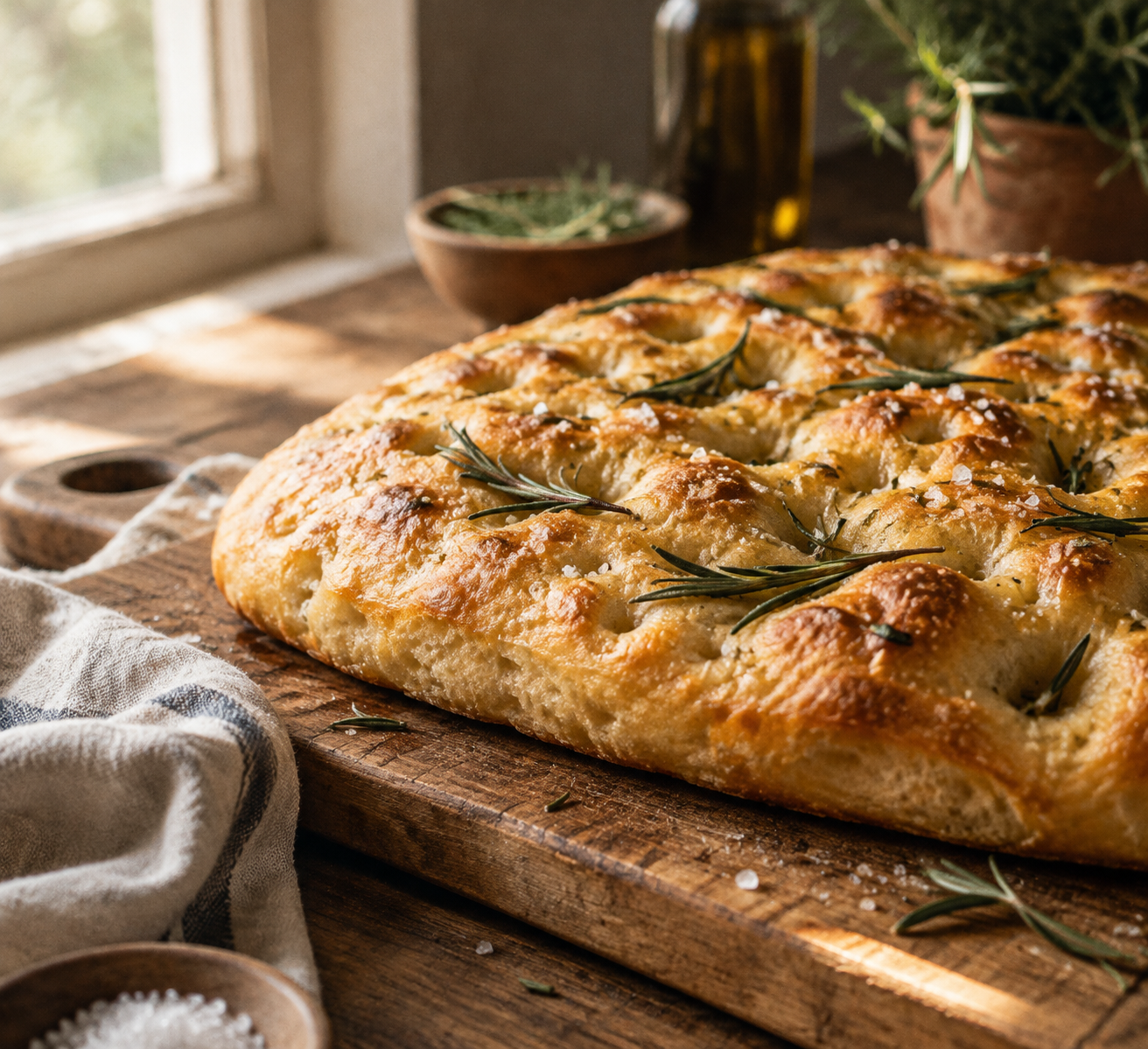
A recipe for focaccia bread in three steps: dough, shape, and bake. Follow the method and you will get a bread with a crisp, oil-fried base, an open and airy crumb, and a finish of olive oil and rosemary.
Want the same method with a sourdough starter? The sourdough version follows the same steps with a longer rise.
Mix, Fold, Rest
The dough decides most of the texture. A focaccia dough is wetter than most bread dough, so the first hour is about building strength without adding extra flour.
- 01
Mix to shaggy, then rest.
Combine the flour, water, yeast, and salt until no dry flour is left, then cover the bowl and let it rest for 20 to 30 minutes so the flour can absorb the water.
- 02
Stretch and fold, don't knead.
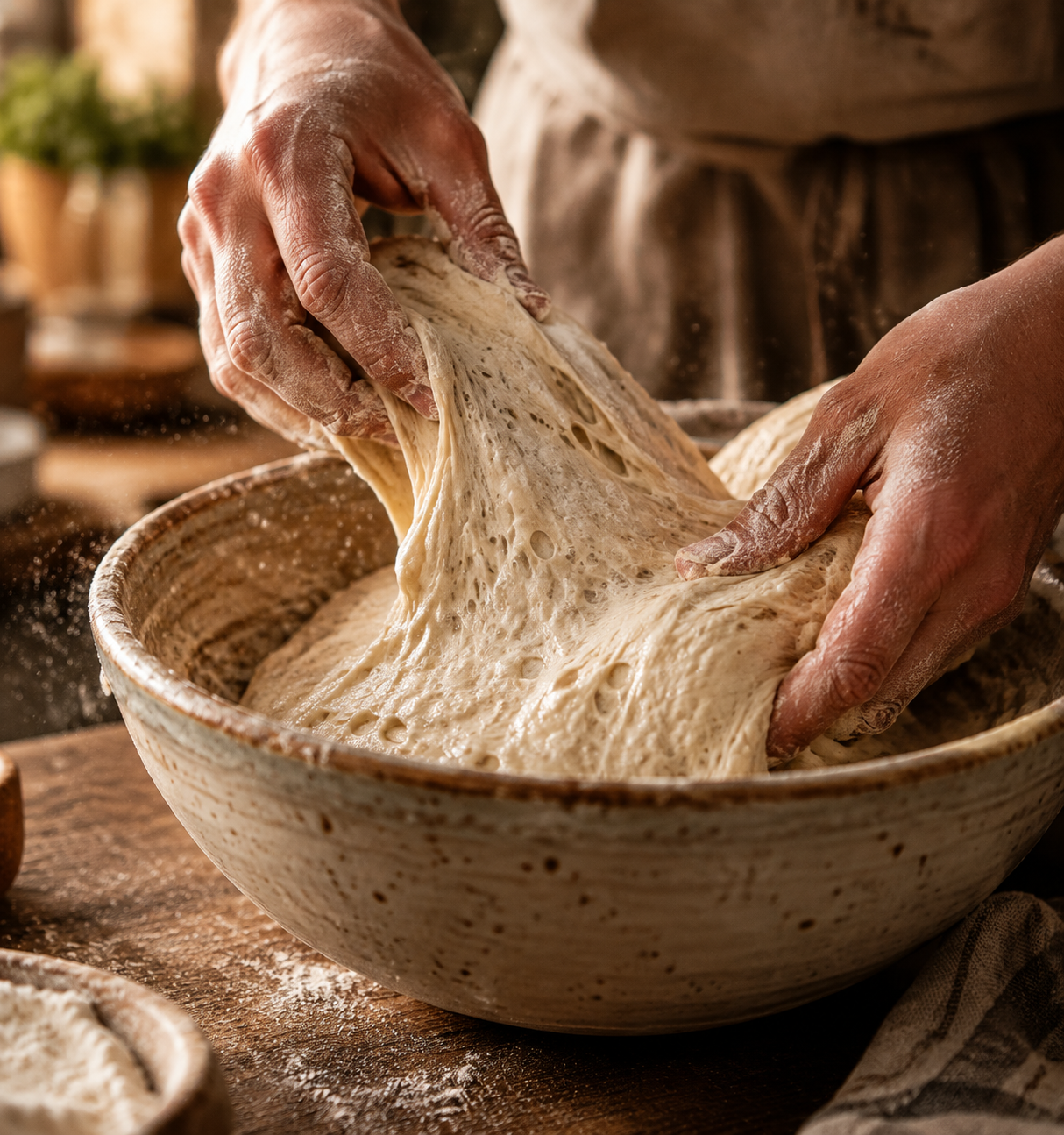
Every 30 minutes for about 2 hours, wet your hand, lift one edge of the dough, and fold it over the center. Turn the bowl a quarter turn and repeat until you have done four sets of folds.
- 03
Judge the dough by feel.
The dough is ready when it is bubbly, airy, and has pulled away from the sides of the bowl, and it jiggles when you shake the bowl.
Do not add flour to fix stickiness during folding. Wet hands and a gentle lift are enough.
Oil, Press, Dimple
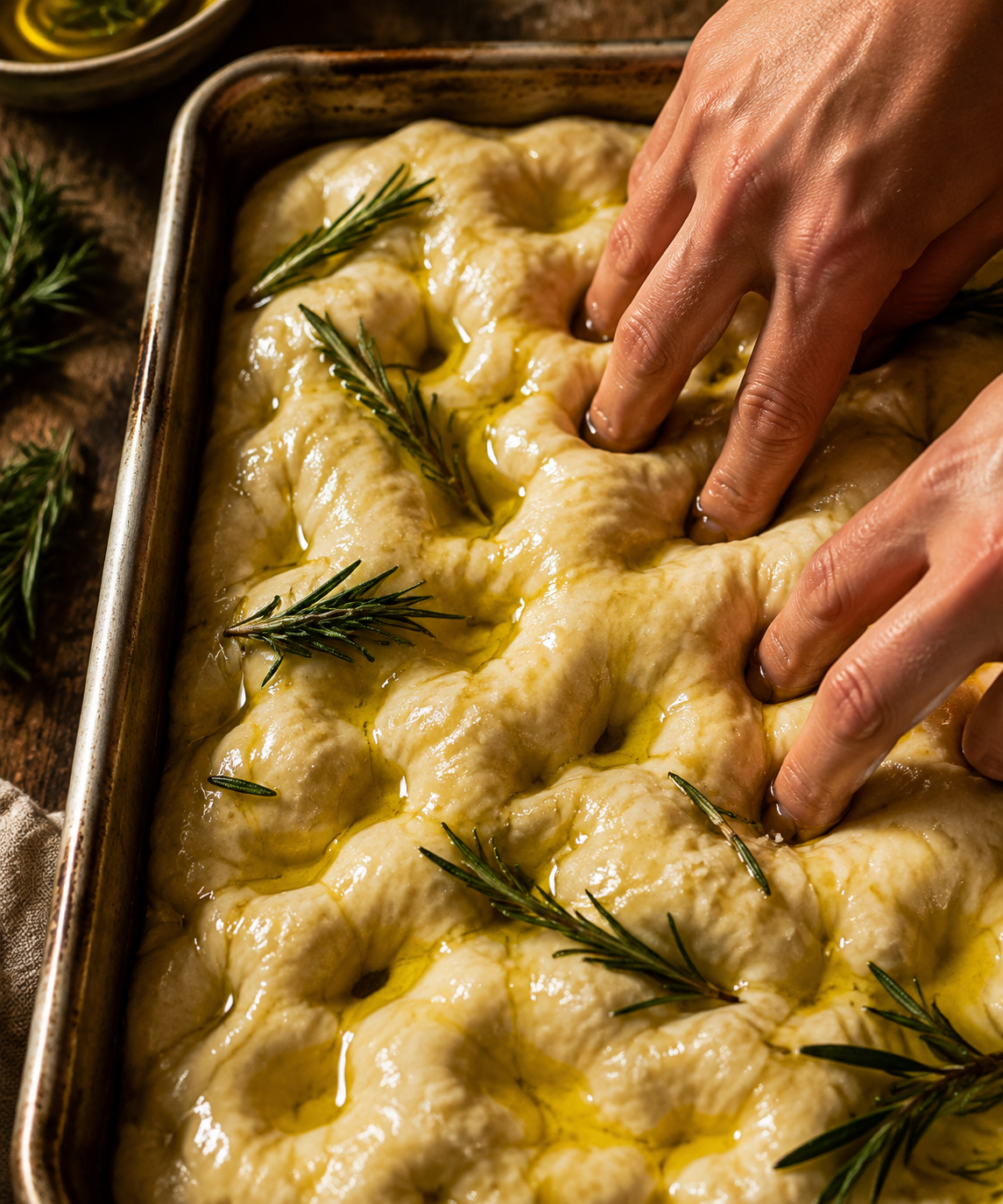
Shaping is where a focaccia becomes focaccia. Olive oil in the pan gives you the golden base, and the dimples hold the oil and the rosemary.
- 01
Oil the pan generously.
Pour about 2 tablespoons of olive oil into a 9 x 13 inch (23 x 33 cm) baking pan and spread it over the bottom and up the sides. The base needs enough oil to fry, not just grease the pan.
- 02
Move the dough without tearing it.
Tip the risen dough onto the oiled pan, gently stretch it toward the corners, and let it relax for 15 minutes before you stretch again.
- 03
Press the dimples deep.
Oil your fingertips and press all the way down to the pan every inch or so, so the dough holds pools of oil that make the crumb tender and the top golden.
Rosemary, three ways
Fresh sprigs on top.
Strip the leaves from a few fresh sprigs and press them into the dimples before baking, so they toast in the oven.
Dried rosemary in the oil.
Stir 1 teaspoon of dried rosemary into the olive oil before you oil the pan. Dried rosemary can be added directly to the oil without warming it.
Rosemary oil after baking.
Warm 2 tablespoons of olive oil with a few fresh sprigs over low heat for 5 minutes, then strain it. Brush it over the hot focaccia as it comes out of the oven. Store any leftover rosemary oil in the refrigerator and use it within a few days.
Bake, Crisp, Cool
The last stage sets the crust and the crumb. A hot oven and a metal pan on the lower rack make the difference between a pale, soft base and a crisp one.
- 01
Heat the oven hot.
Preheat the oven to 450°F (230°C) with a rack in the lower-middle position. Bake until the top is deep golden and the edges are crisp, usually 20 to 25 minutes. Ovens vary, so start checking at 20 minutes.
- 02
Crisp the bottom on the lower rack.
Bake on the lower rack so the base of the pan sits close to the heat. The oil in the pan fries the bottom into a crisp, golden layer.
- 03
Cool before you slice.
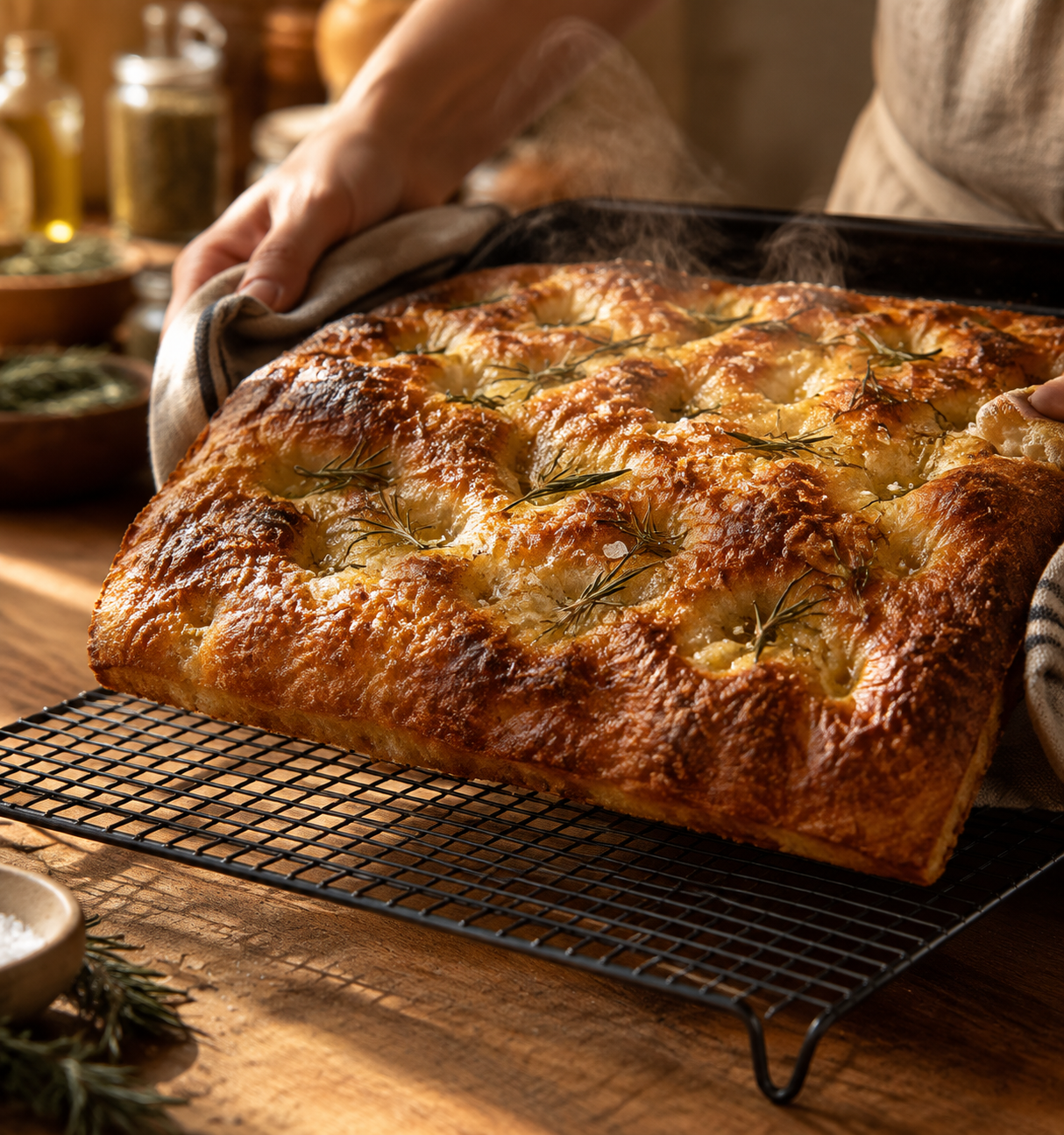
Move the focaccia to a wire rack and let it rest for 10 to 15 minutes, so the crumb sets and the crust stays crisp when you cut it.
Test your first bake and adjust the time in small steps. Every oven runs differently, and the golden color on top is your cue.
Fold It, Dimple It, Bake It Golden
Fold the dough until it is airy.
Dimple it deep in plenty of olive oil.
Bake it hot until it is golden.
Keep Baking
Sourdough Starter Feeding Calculator
Starting a sourdough starter? Use our precision tool for perfect maintenance.
Use Calculator →Guide to Making Sourdough Bread
New to sourdough from scratch? Read the complete guide to making bread from starter.
Read Guide →Sourdough Focaccia Recipe
Want a sourdough version of this bread? Follow the same steps with a longer rise.
Read Recipe →Questions about focaccia
Why is my focaccia dense?
Dense focaccia usually means the dough did not rise enough before shaping, or it was pressed too hard and lost its gas. Give the dough more time to become bubbly, and press the dimples gently but all the way down to the pan.
Can I use dried rosemary instead of fresh?
Yes. Use about 1 teaspoon of dried rosemary per batch, stirred into the oil. Fresh rosemary adds a brighter flavor, so use it on top for the best aroma.
Is it safe to store rosemary oil?
Keep any oil that has fresh herbs in it in the refrigerator and use it within a few days. Strain out the herbs before storing the oil, and throw away oil that smells sour or looks cloudy.