Fruity Cakes: Pick the Fruit,
Build the Cake, Bring It to the Table
A fruity cake is easier than it looks once you know three things: what your fruit is doing to the batter, which cake base can carry it, and how to finish it so it still looks fresh on the table. This guide walks through all three, step by step, with a bowl, a whisk, and the pan you already own.
Match the batter to the pan you own — no signup required.
Pick Your Fruit by Family, Then Pick the Cake
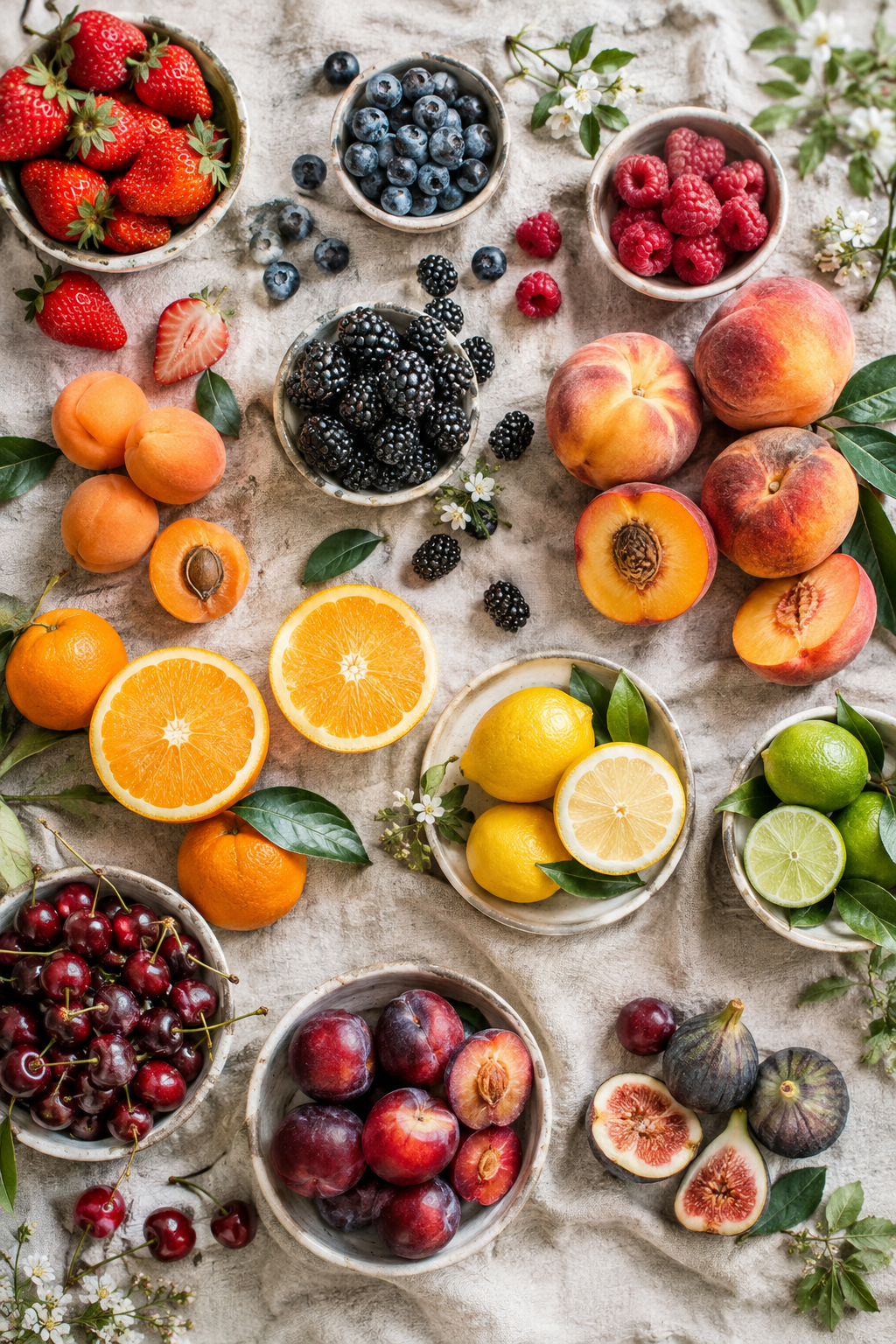
Fruit families behave differently in a cake. Choose the family first, then choose the base that suits it. Whatever you pick, buy it when it smells like itself and gives slightly at the stem.
| Fruit family | Examples | Best cake base | What to do with the fruit |
|---|---|---|---|
| Berries | Strawberries, raspberries, blueberries | A tender butter cake or a light vanilla sponge | Fold in whole and dry on paper towels first, or toss in a spoon of flour before folding |
| Stone fruit | Peaches, plums, apricots, cherries | A dense butter cake or an upside-down style cake | Slice thin, arrange on top or fold in, and remove pits before baking |
| Citrus | Lemon, orange, lime, grapefruit | A tight-crumbed citrus cake or a yogurt cake | Zest into the sugar first, then add the juice to the batter with care |
| Tropical fruit | Pineapple, mango, banana, coconut | A moist, sturdy cake such as a banana or coconut cake | Cook down or drain pineapple well, and dice mango small so it bakes through |
Table note: Fruit ripeness and season vary by region. Check what is ripe where you shop before you plan the cake.
Read Your Fruit Before You Bake
Every fruit changes the batter in one of three ways. Adjust for each one before you mix.
Water.
Juicy fruit adds moisture and can make the crumb gummy or sink in the middle. Drain it, pat it dry, or fold it in last so less liquid reaches the batter.
Acid.
Lemon, orange, berries, and tart apples add acidity. Acid can lift a crumb and brighten flavor, but too much makes a dense or crumbly cake. Taste a spoonful before deciding sugar amounts.
Sugar.
Ripe fruit brings its own sweetness. Taste it first. If the fruit is very sweet, cut the added sugar a little; if it is tart, keep the sugar and let the topping carry the sweetness.
If you are unsure, test one small spoonful of batter before you pour the whole cake.
Make the Cake from Start to Finish
This method works with any base from the fruit guide above. You need a mixing bowl, a whisk or spatula, the pan you own, and a cooling rack.
Choose your base and pan.
Pick the base that matches your fruit family. Grease the pan and line the bottom with parchment. If your pan size differs from the recipe, scale the batter to fit your pan.
Prepare the fruit.
Wash the fruit, remove stems and pits, and cut it to the size the table above describes. Drain or pat dry anything juicy.
Mix the batter.
Cream the butter and sugar until pale and fluffy, add the eggs one at a time, and mix in the dry ingredients until just combined. Stop when no dry streaks remain.
Fold in the fruit.
Toss the fruit with a spoonful of flour so it stays spread through the cake, then fold it in gently with a spatula.
Bake until set.
Bake until a tester inserted into the center comes out clean or with a few moist crumbs, and the top springs back when lightly pressed. Check early, because fruit can change the bake time.
Cool completely.
Cool in the pan for 10 minutes, then turn onto a rack. Let the cake cool fully before you add cream or topping.
Finish the top.
Arrange the reserved fruit on top, or spoon on a simple glaze or whipped cream. Keep the top simple so the fruit stays the star.
Bake the base a day ahead if you can. Then finish the top on the day of the gathering so the fruit looks bright.
Faster path: Use the Cake Pan Size Converter to scale a recipe to the pan you own.
Store the Cake So the Fruit Still Looks Good
Cut fruit releases juice over time, and cream softens in heat. Cover the cake loosely once it is fully cooled, and keep it somewhere cool and out of direct sun. Add fresh fruit or cream as close to serving time as you can. If you have leftover fruit, store it separately from the cake so the crumb stays firm.
Explore more recipes:
Secret
Log What Worked for Next Time
Write down the fruit, the base, the sugar change, and how the crumb turned out. After a few cakes you will know which pairings you can repeat. For the next bake, the cake pan size converter helps you match the batter to the tin you own.
Compare pan sizes and adjust the batter — no email needed.
Fruity Cake Questions
Can I use frozen fruit?
Yes. Thaw it, drain off the extra juice, and pat it dry before folding it into the batter. Frozen fruit releases more liquid, so toss it in flour and fold it in last.
Can I swap one fruit for another?
Yes, as long as you match the fruit family. Keep juicy fruit with juicy fruit, and tart fruit with tart fruit, so the batter stays balanced.
Why did my fruit sink to the bottom?
Fruit that is very wet or heavy can sink. Dry it well, toss it in flour, and fold it in gently at the end of mixing.
Do I need special tools?
No. A mixing bowl, a whisk or spatula, the pan you own, and a cooling rack are enough. The Cake Pan Size Converter is an optional helper for scaling a recipe.
Can I make the cake ahead?
Yes. Bake and cool the base a day ahead, then add the fruit topping on the day you serve it. Check the texture before you finish it.