A single accidental feed with self-rising flour does not establish that an existing culture is dead. The recovery steps here apply to an established starter after that feeding.
Why plain flour is the feed to choose
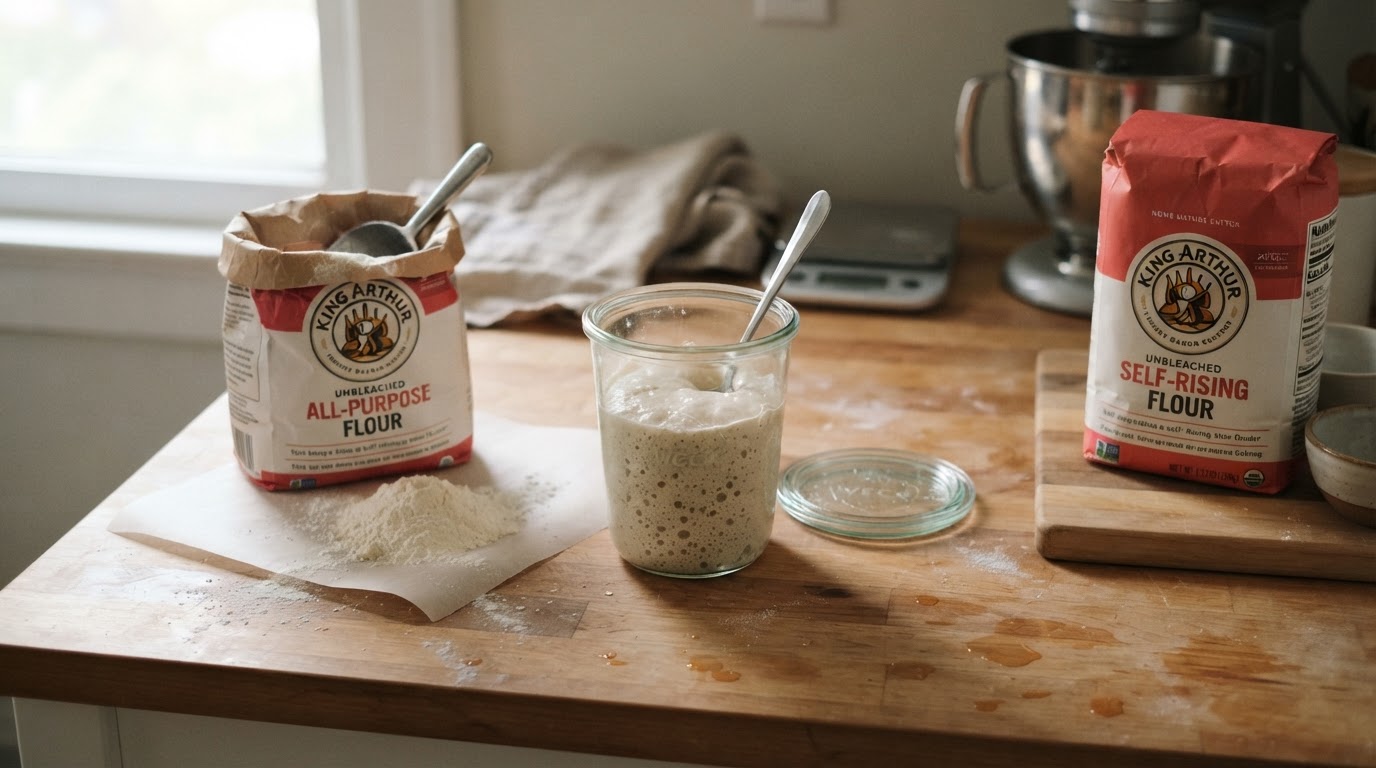
King Arthur Baking defines self-rising flour as "flour to which baking powder and salt have been added," and its sourdough starter recipe lists flour and water only. The recipe opens with whole-grain flour, holds each of its first two stages for 24 hours, then moves to twice-daily feeds with all-purpose flour on day three. No chemical leavener or added salt appears at any point.
Self-rising flour is not a bad ingredient. It is milled from a softer, lower-protein wheat and made for biscuits, pancakes, scones, and cakes, where baking powder supplies the lift and the salt belongs to a tested formula; King Arthur notes that recipes calling for it can skip separate baking powder and salt (self-rising flour guide). Feeding a culture is a different job.
The cost of using it anyway is diagnostic. A starter fed plain flour has a short list of variables: temperature, feeding ratio, hydration, and how ripe you let it get. Send baking powder and salt in with the flour and every change in the jar gains two more possible causes. When something looks off a few days later, those effects cannot be separated, and the usual response is to change several things at once.
What one accidental feed does and does not tell you
If you have already stirred self-rising flour into an established starter, the jar now holds some baking powder and some salt. How much depends on the product and the amount you used, and neither can be read back off the jar afterward. That single feed cannot separate its own effect from a cold kitchen, a late feeding, or a culture that was already weak, so it cannot tell you whether the starter is in trouble. No fixed number of plain feeds supplies that answer either; the culture's behavior over the feeds that follow does.
Skip tasting the starter or the raw flour. If you see fuzzy growth, colored patches, or mold climbing the sides of the jar, discard the culture rather than trying to feed past it.
A healthy untouched reserve gives you a separate starting point if the working jar disappoints: a spoonful kept in the fridge, a dried smear on parchment, or a second jar you have not opened. Whether that reserve is still healthy is itself unknown until it is fed and shows a rise, so it offers an alternative rather than a certainty.
What to feed instead
Can you use all-purpose flour for sourdough starter? Yes, and King Arthur answers it most directly: all-purpose is its go-to flour for feeding, the flour called for in its starter recipe, and what most bakers already have. For the feeds themselves, keep the flour-to-water ratio and feeding interval your starter normally runs on, the ones its recipe or your notes document, and use plain flour in them.
If you want something other than all-purpose, King Arthur describes the supported options plainly. Bread flour works, though the higher protein that strengthens bread dough is not needed in a starter. Whole wheat flour can boost a sluggish culture because its minerals speed up fermentation, and it is the flour the starter recipe uses on day one. Rye behaves much like whole wheat, and King Arthur suggests roughly 10% to 20% rye in proportion to white flour for an occasional feed. Self-rising flour does not appear in that list.
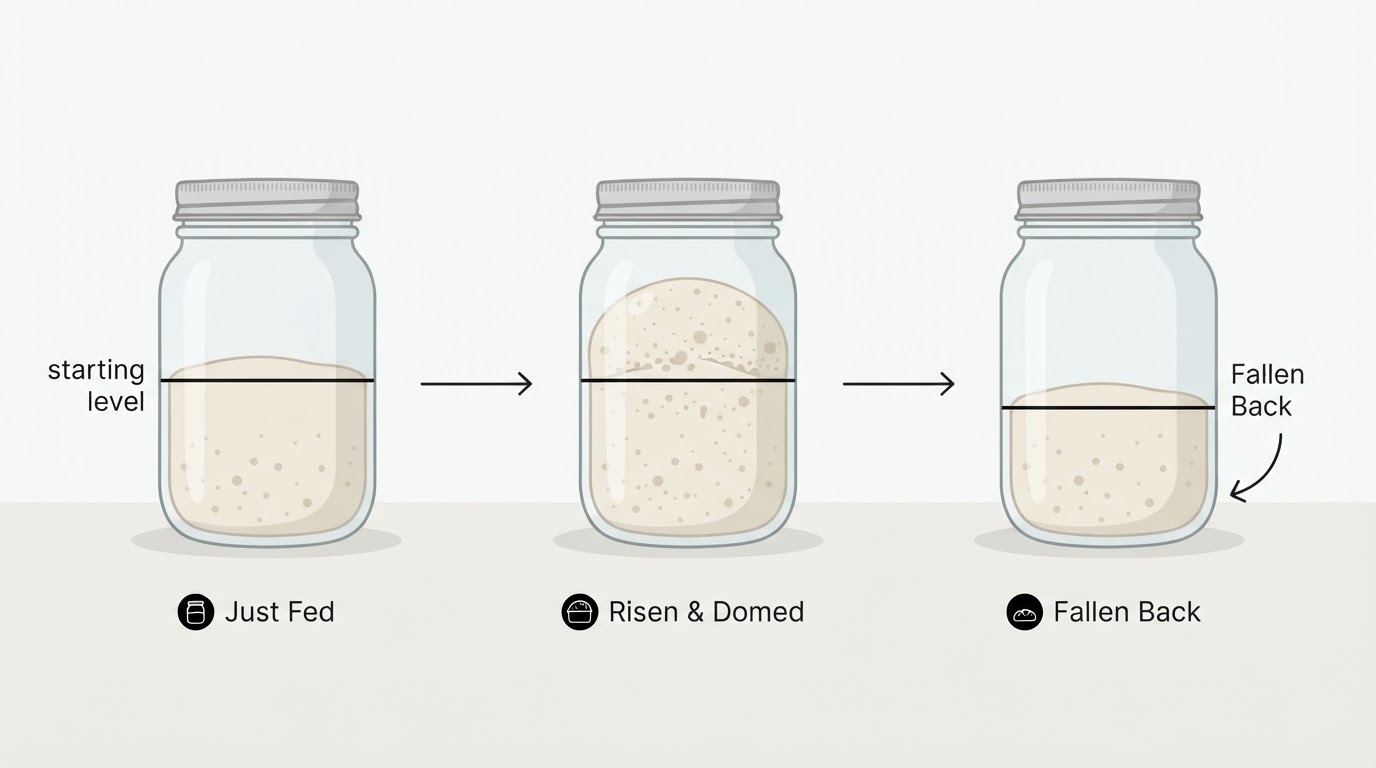
Judging by rise is more useful than judging by smell alone, since a starter left standing can smell sharp without being ruined. What you are watching for is the swell and fall that followed your feeds before the mistake, on roughly the same timing as before.
If you are starting a new culture
A new starter is a different situation. There is no established community in the jar yet, so the flour in the first mix is the flour the culture starts on, and anything added to that flour is there from the beginning instead of being diluted into a mature culture.
Start with plain flour. King Arthur's sourdough starter recipe carries the full quantities and the day-by-day schedule, opening with whole-grain flour and water and moving to twice-daily all-purpose feeds from day three. Our own starter guide walks through the build day by day and covers the readiness checks. Follow one of those rather than improvising a first mix with self-rising flour.
When to rebuild rather than keep feeding
Give the culture its normal feeds with plain flour and watch what it does. If it swells, bubbles, and falls back on a timing close to its old one, the accidental feed is behind you, and the flour you keep in the routine is the only change left.
If it stays flat through repeated feeds at a steady warm temperature, rebuild from a healthy reserve or start a fresh culture instead of continuing to feed a jar that is not responding.