Where the answer comes from
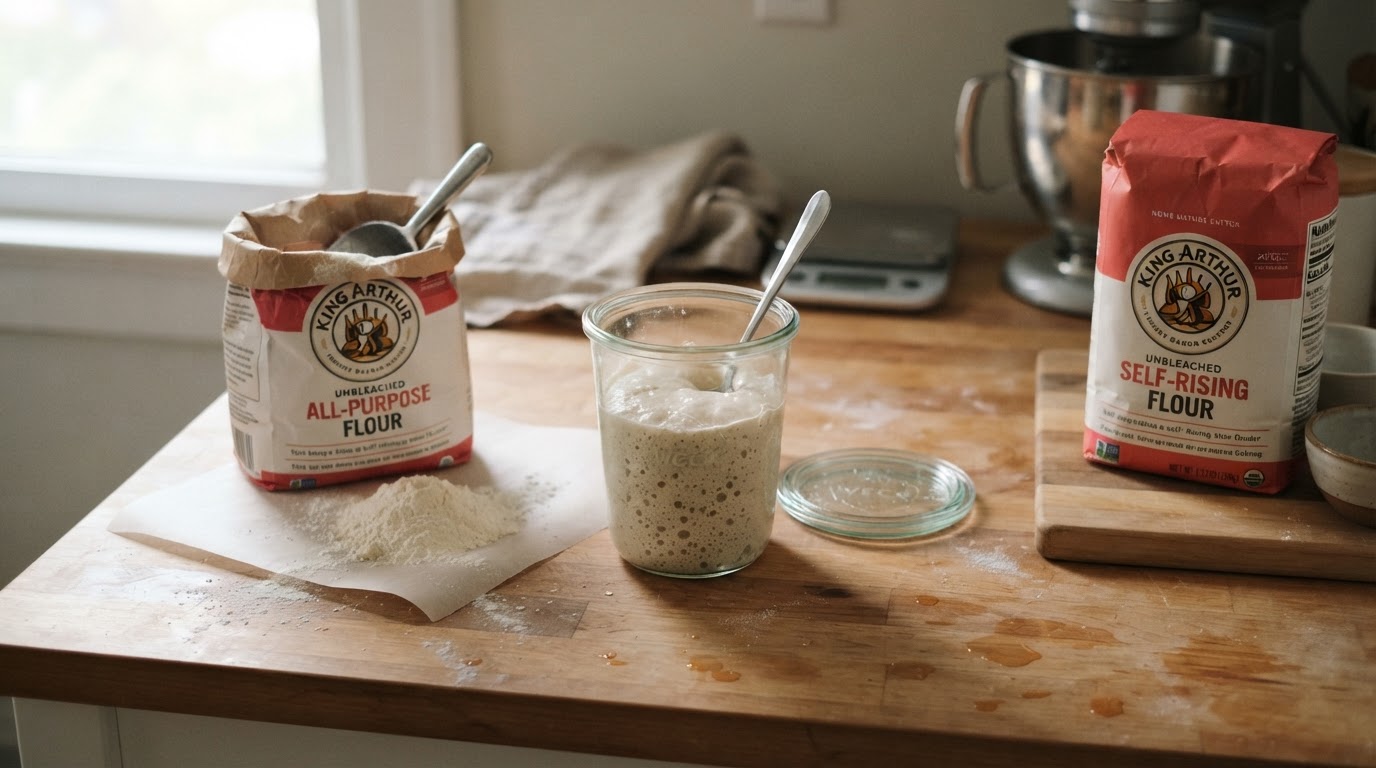
King Arthur Baking's PJ Hamel addresses the material directly in a myth-busting post published April 24, 2024. Myth #8 takes on the idea that you should never let starter touch silicone, metal or plastic. The post's answer is that apart from a metal that reacts with acidic ingredients, any bowl, tool or container is fine, and it names stainless steel mixing bowls and silicone spatulas as things that "won't bother your starter (or dough) at all."
The exception list is specific: uncoated cast iron, copper and aluminum, which the post identifies as reactive with acidic ingredients. Starter and dough are both acidic.
Confirm the metal before the dough goes in
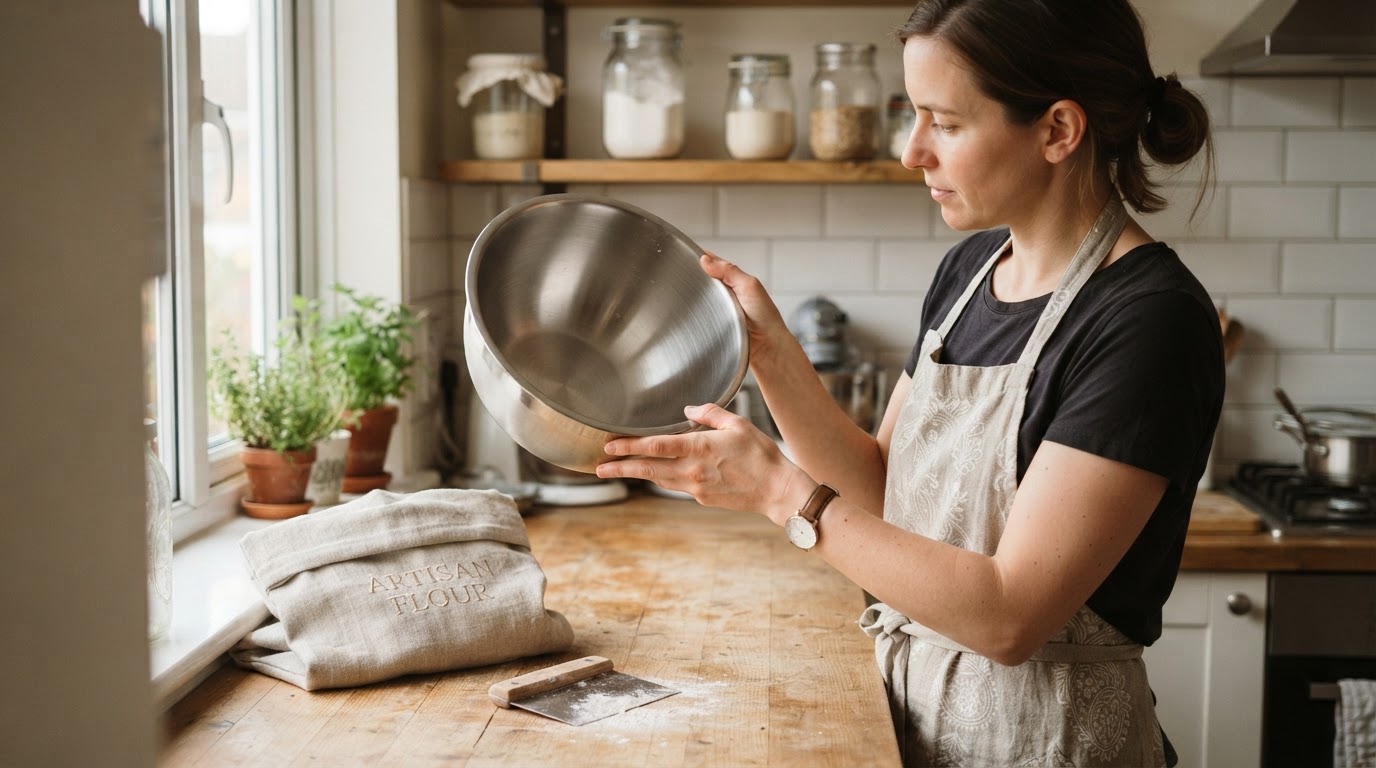
A stainless bowl is a bright metal bowl, and so is a chrome-plated, nickel-plated or polished aluminum one. The finish, the weight and the shine cannot tell you which metal you are holding, so a bowl that could be any of them needs the manufacturer's information: a grade marking or stamp on the base, the specification on the packaging or product listing, or the order record if the bowl was bought as stainless. Without one of those, treat the material as unknown for this bake.
Then check the surface that will touch the dough. Stainless with no flaking, peeling, deep pitting or worn coating is what the King Arthur guidance describes. A bowl with a chipped coating or a visibly damaged food-contact surface is outside that guidance, whatever its label says.
Finally, check the size and clean it. The bowl needs headroom, because a bowl that fits the mixed dough exactly will be too small by the end of bulk fermentation. Wash and dry it before the flour goes in.
Mixing in stainless steel
You can mix sourdough in a stainless steel bowl, and the same bowl can carry the dough through stretch and folds. A stainless spoon or a silicone spatula is fine for mixing; the source's exception is the reactive bare metals, not metal utensils as a category.
The bowl is rigid, it does not absorb water, and its sides give you something to fold the dough against. What it does not give you is a view of the dough inside.
Judging a rise you cannot see through the side
You can proof bread in a stainless steel bowl. Fermentation is read from how much the dough has grown and how it looks and feels, and an opaque wall hides the level that a glass bowl would show.
If the dough surface is visible from above, you can track it with a ruler held straight down from the rim and a measurement recorded each time. That number follows height, and height is not volume: a bowl that widens toward the rim holds more per unit of height as the dough climbs, so a dough that reads twice its starting height has grown by more than double in volume. In a straight-sided vessel the two scales line up much more closely. Treat a rim measurement as a trend, and read it next to the cues the recipe gives.
When the cue is a volume change — "until doubled", "until it has risen by half" — and you want a direct read on it, move the dough to a clear, preferably straight-sided vessel with volume markings and follow the rise there. That is the setting where a doubling of height is a doubling of volume, and it is the simplest way to see the change rather than infer it.
If the dough stays in the stainless bowl, the checks are the recipe's own:
- Note the time you finished mixing and the rise the recipe expects, such as "until doubled" or "until puffy."
- Cover the bowl as the recipe directs. A plate, a lid or another close-fitting cover keeps the dough surface from drying; a damp towel is not a dependable barrier against evaporation, and a dry skin is what forms when moisture escapes. Our guide to why sourdough dough forms a dry skin covers what a loose cover costs you.
- Compare the dough to the recipe's description rather than to the clock: the dome, the surface bubbles, the feel when you press it lightly, and the change in height you measured.
- Move on when the dough reaches the stage the recipe describes, and give it more time when it has not.
Bowl materials compared
Bowl material | Reading the rise | Practical note |
|---|---|---|
Stainless steel | Only from above; a rim measurement tracks height, not volume | Suitable for starter and dough per the source; rigid, non-absorbent and opaque |
Clear glass | Visible through the side; markings make volume easy to follow | Fine for mixing and proofing, and useful where growth has to stay visible |
Clear food-grade plastic | Visible through the side | Fine per the source; check the container is clean and intended for food |
Uncoated cast iron, copper or aluminum | Not applicable | Reactive with acidic ingredients; keep them out of starter and dough |
Starter in a stainless bowl
Clear glass and plastic are the common containers for starter because you can watch the culture rise, and a marked glass container makes growth easy to follow. A stainless bowl still works for mixing and holding starter; you just cannot read the level through the wall.
If your starter lives in stainless, measure down from the rim at feeding time and again later, or move it to a marked clear container when you want to watch the rise directly. The source also says to cover starter between feedings, with a lid that is not tightened all the way down.
Common questions
Can you mix sourdough with a metal spoon?
Yes, when the spoon is stainless steel. The reactive-metal exception is about the surface that touches the dough, so an uncoated cast iron, copper or aluminum utensil is the one to leave in the drawer. The source also names a silicone spatula as fine.
Can you proof sourdough in a glass bowl?
Yes. Clear glass shows the side of the dough as it rises, which is the view a metal bowl hides, and a marked glass bowl lets you follow volume directly instead of measuring height from the rim.
What about plastic bowls?
The source includes plastic among the materials that are fine. Use a food-grade container that is clean and in good condition; clear plastic gives the same visibility as glass.
Does the bowl change how long fermentation takes?
King Arthur's post covers which materials are suitable; it does not report dough temperature or fermentation timing by bowl type, so it does not establish that dough ferments at the same pace in a stainless bowl and a glass or ceramic one. Follow the recipe's cues and watch the dough, and treat timing as something to observe in your own kitchen rather than something the material settles.
When to use a different bowl
Set the bowl aside for this bake if you cannot confirm the metal, if the food-contact surface is flaking, pitted or worn through a coating, or if it is too small for the rise ahead. An unverified bowl is not a mixing bowl either: confirm it before the flour goes in, or use one you can identify.