What a floating sample actually measures
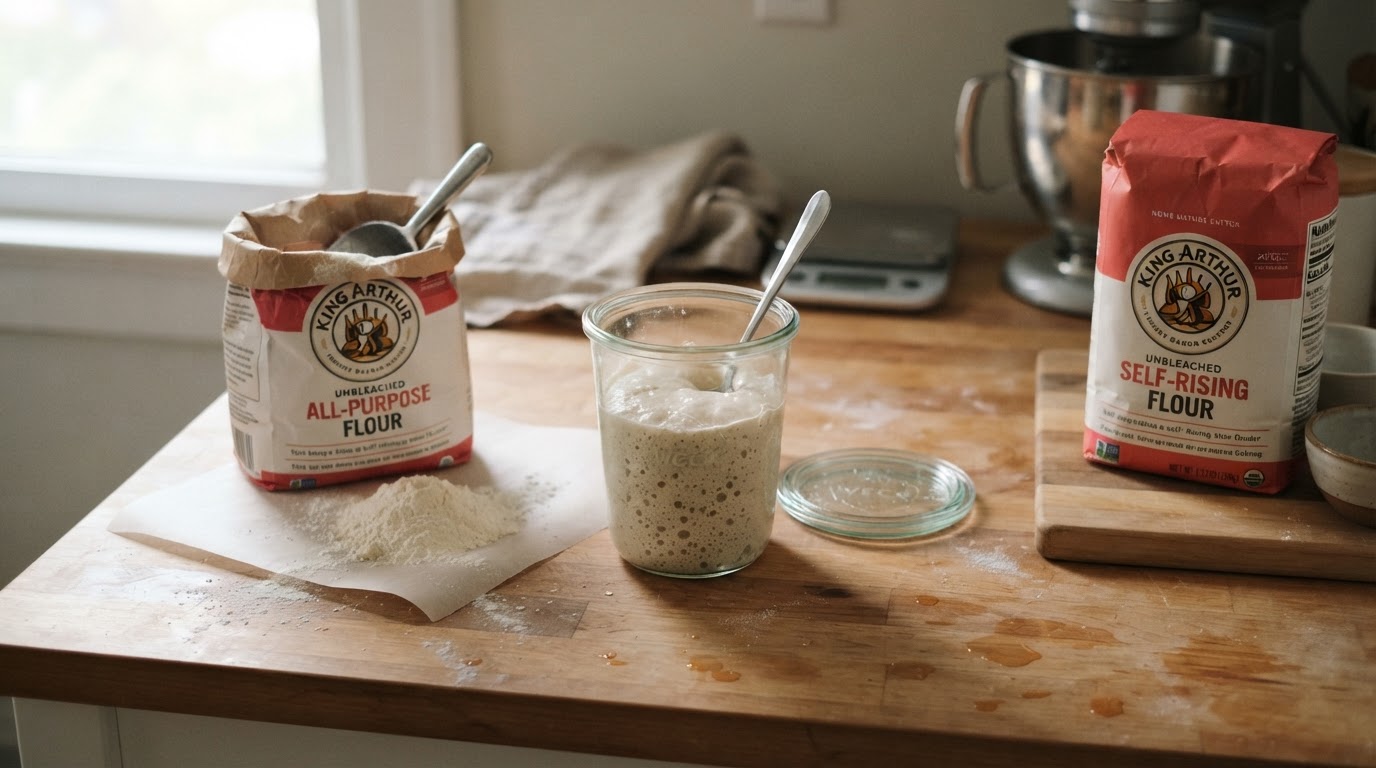
Fermentation produces carbon dioxide, and in a starter that gas is held inside the flour-and-water web. As more collects, the mixture becomes lighter than water and a spoonful can rise to the surface. King Arthur Baking opens its float test post with that mechanism, then tests whether buoyancy tracks readiness.
It does not. The post, published January 2, 2019, answers its own question — whether the float test is a good way to judge fully risen dough or a starter at its baking peak — with a flat no. Two groups of samples floated: partially risen yeast dough, and starter that was growing but not yet ripe.
PJ Hamel's fed starter floated four hours after feeding, while she still estimated another two to four hours before it was ready for baking. Those were her kitchen observations in that post, not a schedule that carries to other starters.
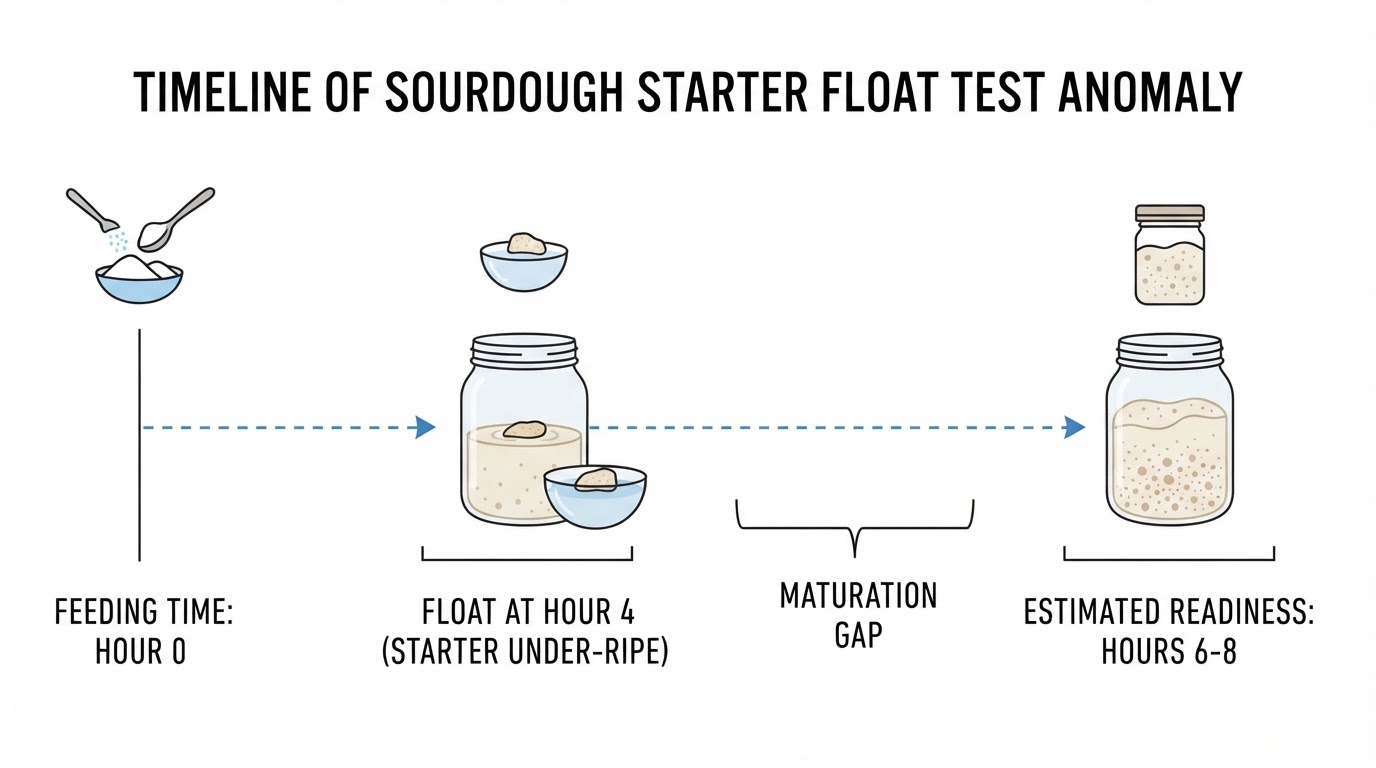
So the reading is narrow. A float reports trapped gas in the piece you dropped into the glass. It says nothing about whether the starter has the activity to carry a loaf through mixing and bulk fermentation.
What to track instead of buoyancy
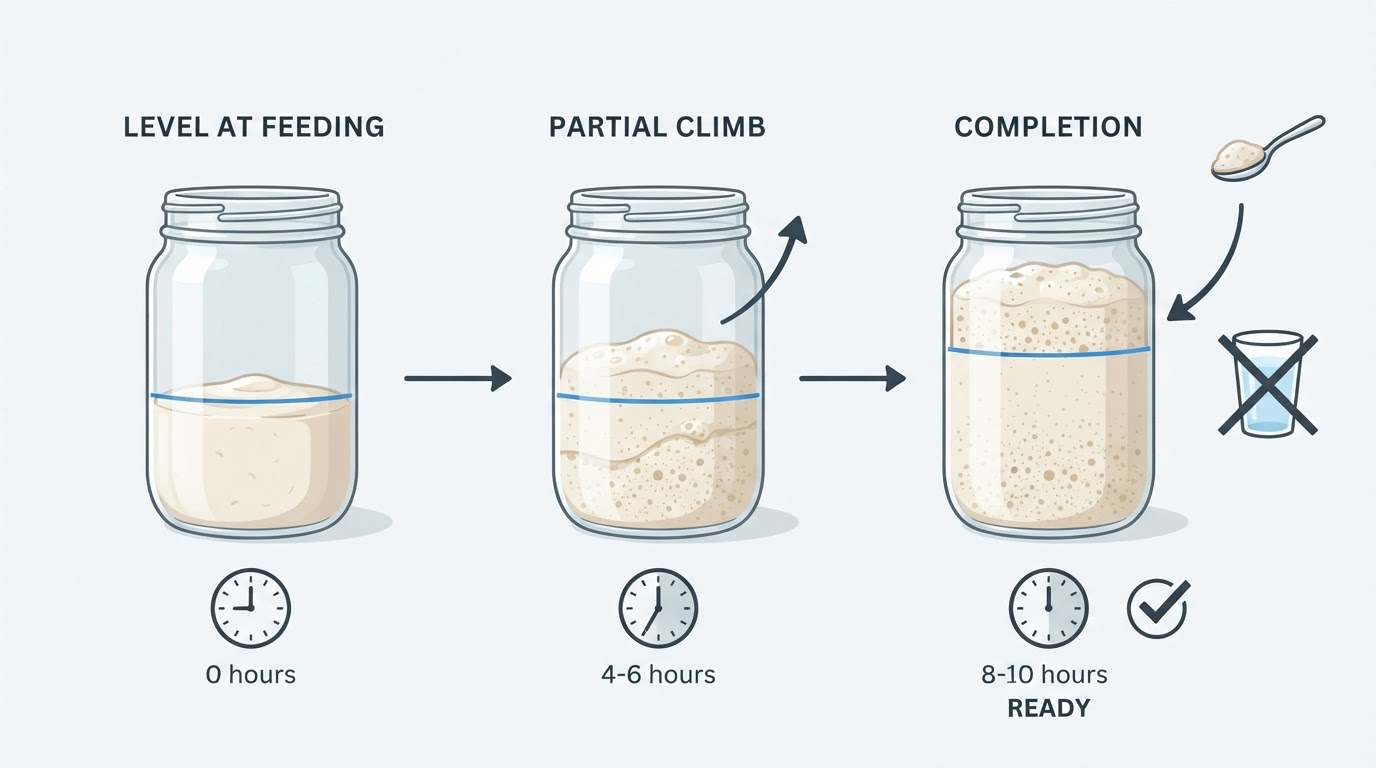
King Arthur returned to the question on April 24, 2024, in a post on sourdough myths, and filed the float test as one of them. The method, it says, is simply too unreliable for deciding whether a starter is healthy and active enough to use. Its replacement is to track the progress of the fed starter in its bowl or container: a starter that has doubled in size in eight hours or less is ripe. A photo caption in the same post puts the gap plainly — a fed starter will float hours before it has doubled.
A readiness check with a finish line
What replaces a coin flip in a glass is a record you keep across a few feeds. The 2024 post points out that a marked glass container makes it easy to track a fed starter as it grows, which is the entire method.
- Mark the level right after feeding. A rubber band or a strip of tape at the surface gives you a fixed starting point that survives the rise.
- Note the time of the feed, and keep the container where your recipe keeps it. The interval you are measuring begins at feeding, not at the first bubble.
- Watch two things: how far the surface climbs past the mark, and whether bubbles run through the mass rather than sitting only on top.
- Compare the climb with the window in your recipe rather than with someone else's kitchen, since flour, hydration and room temperature all move the clock.
- Judge with one completion standard before you mix: the starter has reached twice its fed volume inside the recipe's window.
A single climb to the line is thinner evidence than the same climb repeating under your own conditions. Neither post fixes how many feeds that takes, so track what happens at each feeding you would normally do rather than counting to a set number.
If the line has barely moved, wait. A float in a glass does not shorten that interval.

When the reading looks confusing
The sample sinks. The 2019 post states that if rising yeast dough or fed sourdough starter sinks in water, it is not ready for the next step in the recipe. That is one statement from that experiment, not a health test validated across flours and hydration levels, and buoyancy alone cannot establish that a starter has reached its peak. The marked line and the rise your recipe expects are what you can act on.
It floats, then sinks. The same sample can read differently on two dips, because buoyancy reflects the gas held in that piece at the moment you tested it. Neither article supplies a timing rule for how quickly that changes, so a flip between two tests cannot tell you whether you are an hour or four hours from a usable starter.
Warm water or cold water. Neither post treats water temperature as a variable in the test, so changing the water does not turn a confusing result into a decision. The marked line does.