The short answer: tap water is usually fine
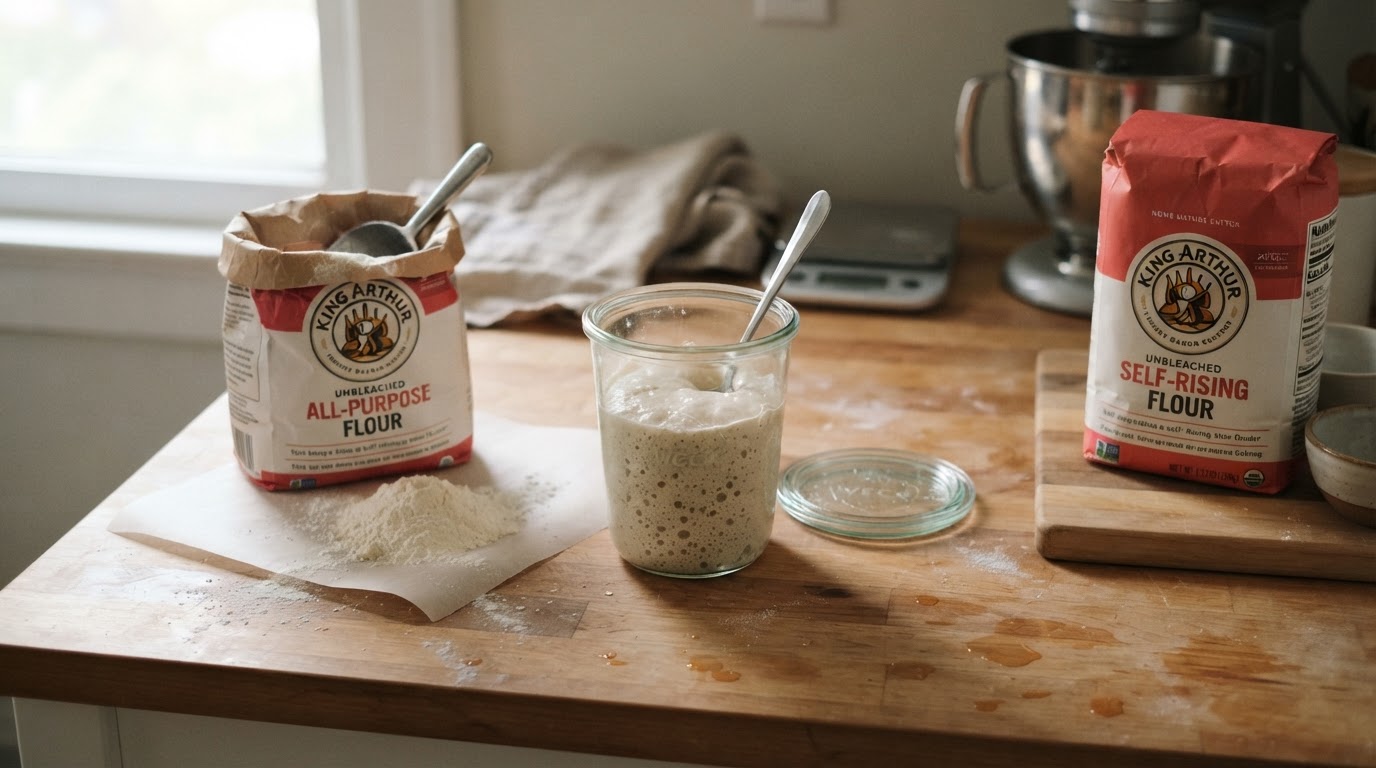
If your water is potable and does not smell strongly of disinfectant, you can feed your starter with it. King Arthur Baking's sourdough starter recipe is direct about this: tap water is fine unless the water is so heavily treated that you can smell the chemicals. Bottled water is not automatically required.
The EPA describes chloramine as a drinking-water disinfectant that stays active longer than chlorine as water moves through pipes, and notes that water meeting EPA standards is suitable for cooking (EPA chloramine guidance). That is general information about treated water, not a prediction of what any particular starter will do.
For most home bakers, changing water is a troubleshooting step rather than part of the setup. If the starter rises predictably and smells pleasantly sour, the water is doing its job.
What water treatment means for a living starter
A starter is a culture of wild yeast and lactic acid bacteria, and drinking-water disinfectants are designed to control microorganisms. That is why water quality comes up in starter troubleshooting, but it does not follow that treated tap water will ruin a starter.
Chlorine and chloramine are the two disinfectants most likely to be in US tap water, and chloramine's longer-lasting action is why it can be harder to remove than chlorine. If a starter is struggling, though, water is one plausible variable among several, not a universal cause. Plenty of bakers feed with treated tap water for years without an obvious problem.
How to check your own water
Start with your utility rather than a forum. Ask which disinfectant your water system uses, or read the water quality report it publishes. That single fact tells you whether your water is treated with chlorine or chloramine and whether a filter is worth considering at all.
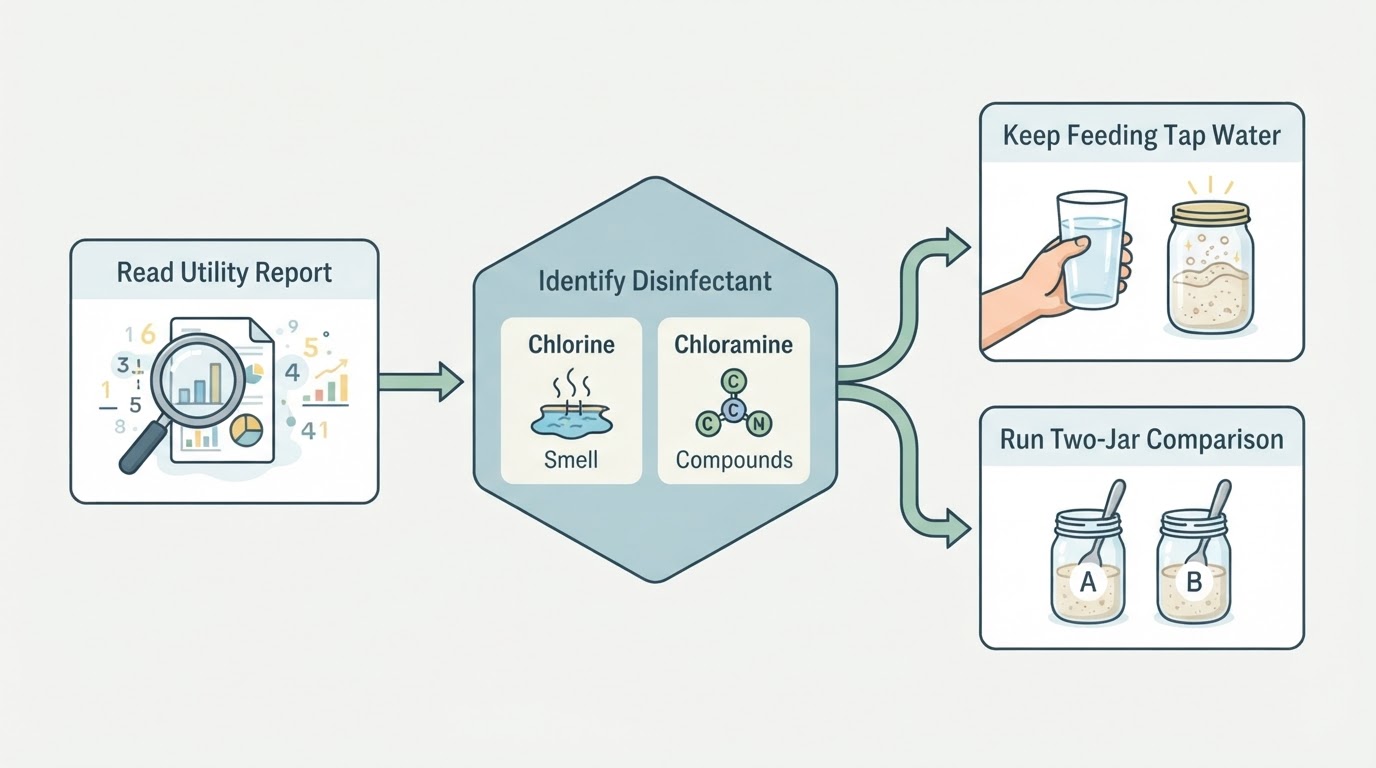
Smell is baking guidance, not a water-safety test. King Arthur uses a strong chemical smell as a signal that the water may be heavily treated; it is not a measurement of disinfectant level, and it says nothing about whether your water meets safety standards. If you want to know what is in your water, ask the utility or read its report.
If you decide to remove a disinfectant, read the filter's actual reduction claim. A pitcher that improves taste is not automatically rated for chloramine. The manufacturer's claim for your specific model is the figure that matters, and it should name the contaminant rather than just say "filtered."
Do you need to buy bottled water?
Bottled water is not a requirement, and no single type of water has been shown to be universally better for a starter. If you choose bottled, filtered, spring, distilled, or purified water, the product label and its treatment claims are the useful information; the category name on the bottle tells you less than the specifics.
The minerals in water are not the starter's main source of nutrients — the flour supplies those — so a low-mineral water such as distilled water is not automatically a poor choice. If you already have a water you like and your starter behaves well on it, changing is optional.
Filtered tap water keeps the convenience of tap water. If your utility confirms a disinfectant you would rather avoid, a filter with a specific reduction claim for that compound is the targeted option.
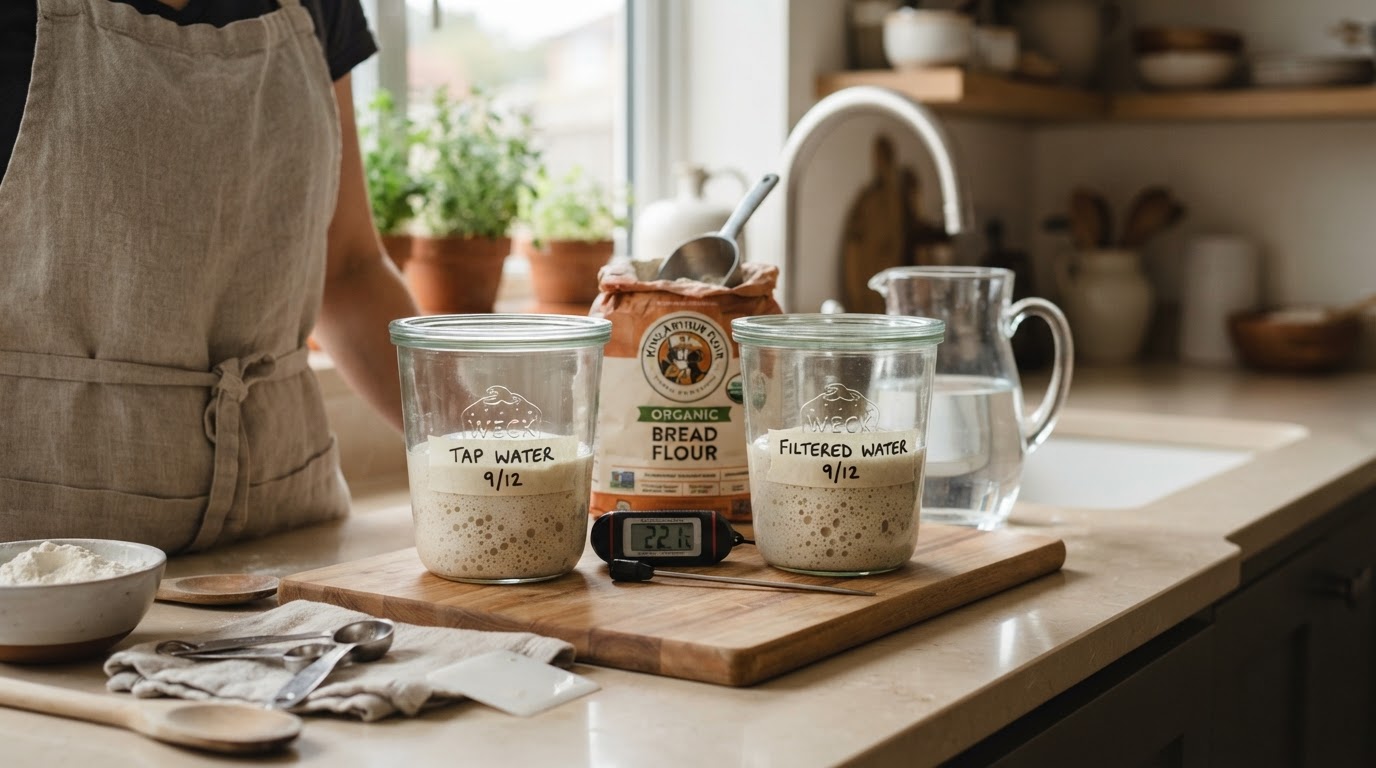
If you want to see whether water matters in your own kitchen, a side-by-side comparison is optional. Use the same flour, feeding ratio, and water temperature, and two identical jars. Feed one with your normal tap water and the other with the water you are considering, keep them side by side, and compare how they behave across several feedings. The result is a clue about your kitchen, not proof that water is or isn't the cause: temperature, feeding routine, flour, and starter maturity all affect how quickly a starter develops.
What else explains a slow starter
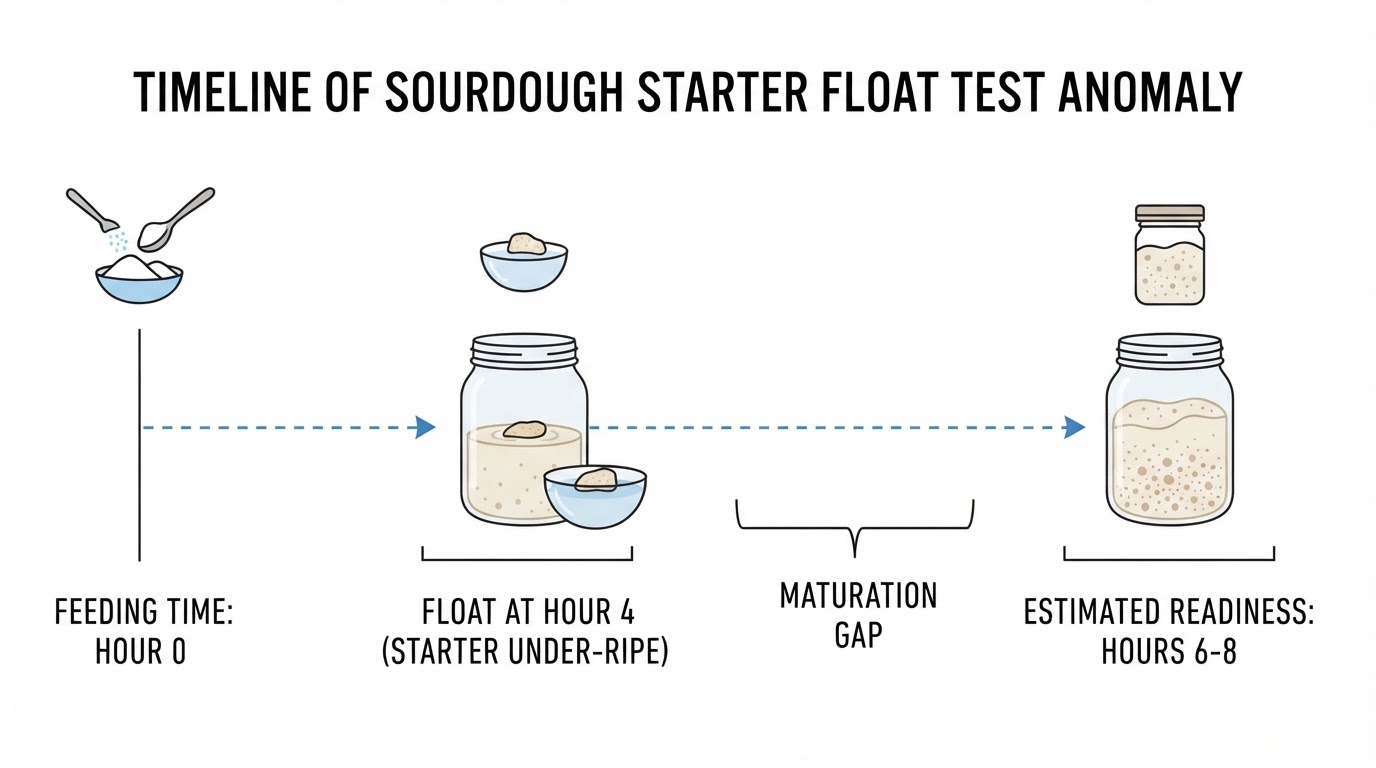
Water gets blamed for problems that have simpler explanations. Temperature is the first one to check: King Arthur's starter recipe notes that colder conditions slow starter growth, so a kitchen that dropped ten degrees can make a healthy starter look lazy. Feeding ratio and frequency matter too, as do the flour you use and how long the starter has had to establish.
Development varies from starter to starter. Age, temperature, feeding routine, and flour are checks to run, not a diagnosis on their own. A starter that was rising well and suddenly is not may have been moved somewhere cooler, fed less often, or switched to a different flour.
If you are still building your starter, our sourdough starter guide covers feeding schedules and what normal development looks like.
A practical plan
- If the starter is active, keep feeding it with potable tap water. No change is needed just because the word "chloramine" appears in a water report.
- If it is sluggish, check temperature, feeding routine, flour, and maturity before changing the water.
- If you want to know what is in your water, ask your utility which disinfectant it uses.
- If you decide to filter, confirm the specific product's reduction claim for that disinfectant.
- Keep using potable water and follow any local drinking-water advisory, especially after a boil-water notice.
Tap water needs no replacement for most bakers. Check your water when there is a real symptom, change one thing at a time, and give the starter time to respond.