Separate Crust Color From Doneness
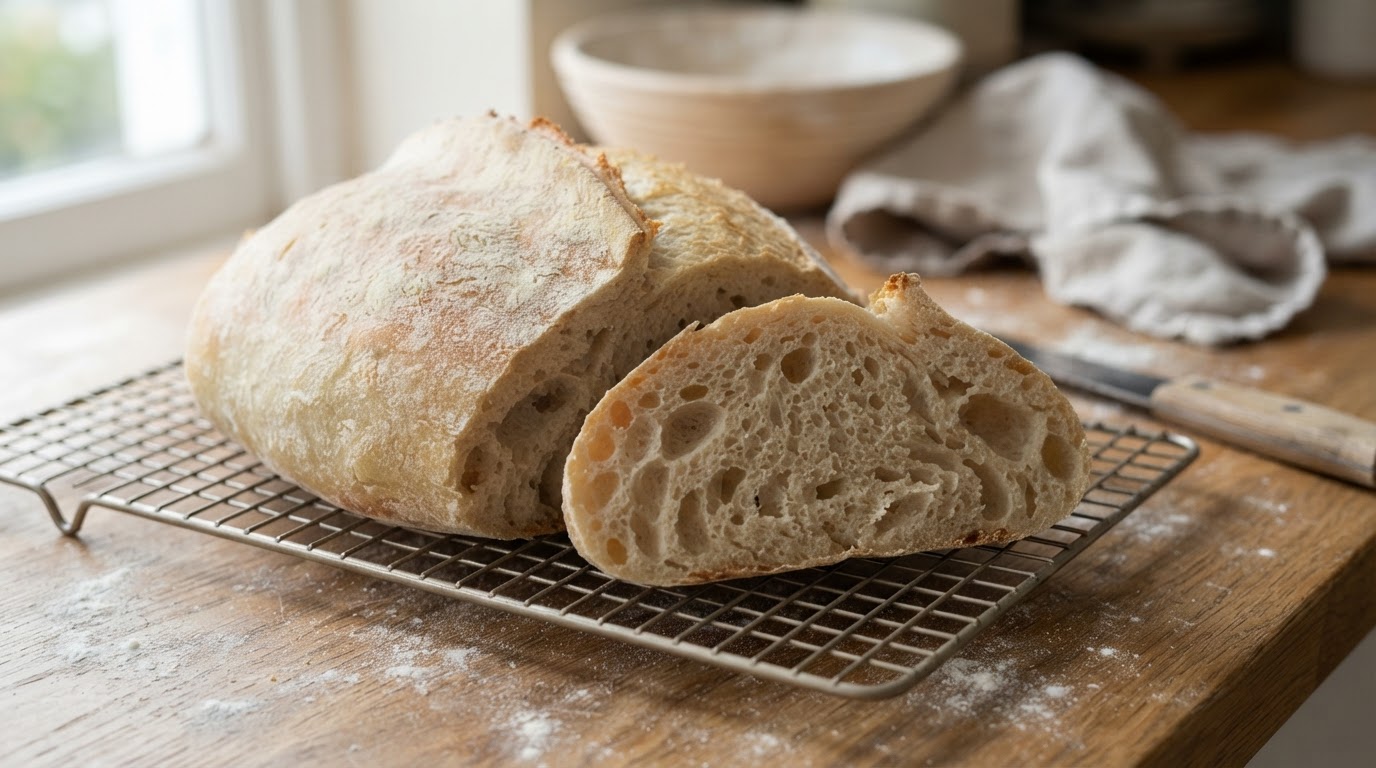
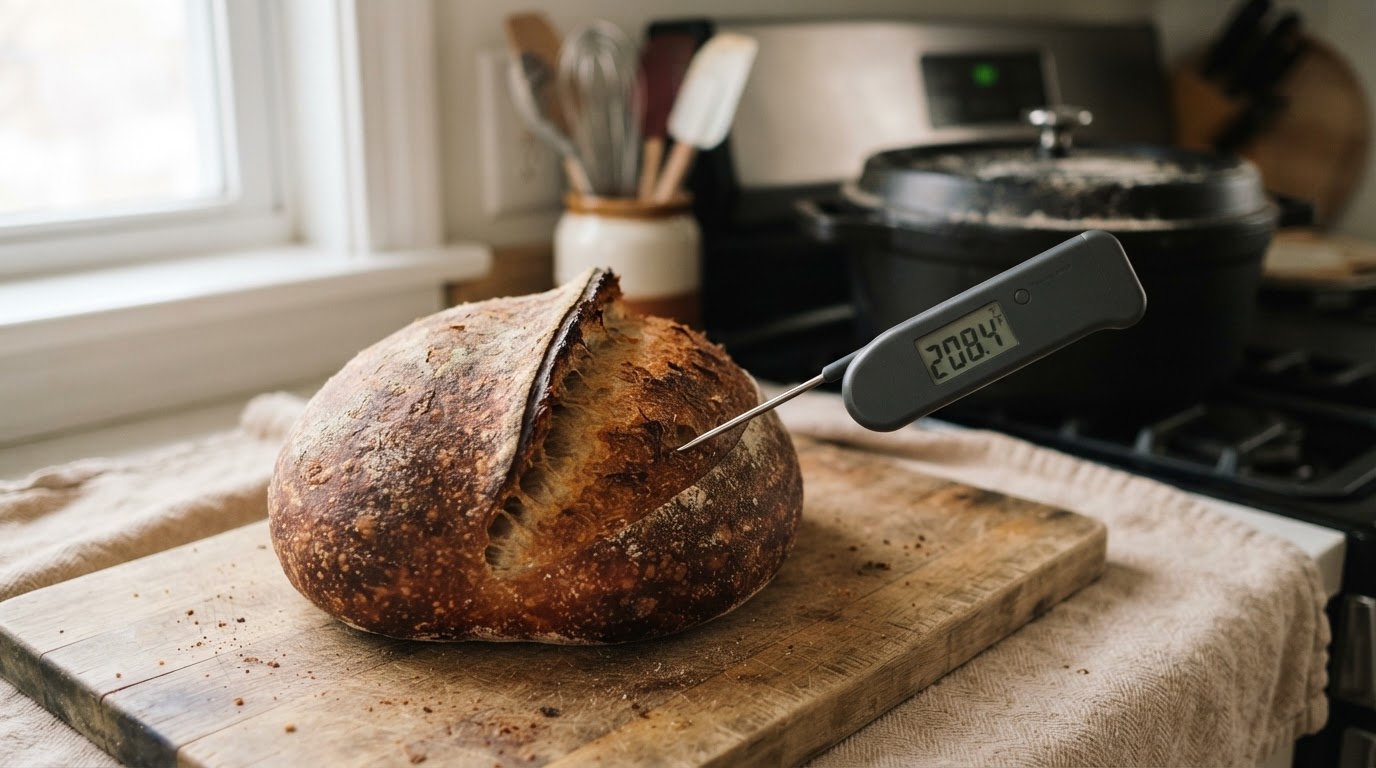
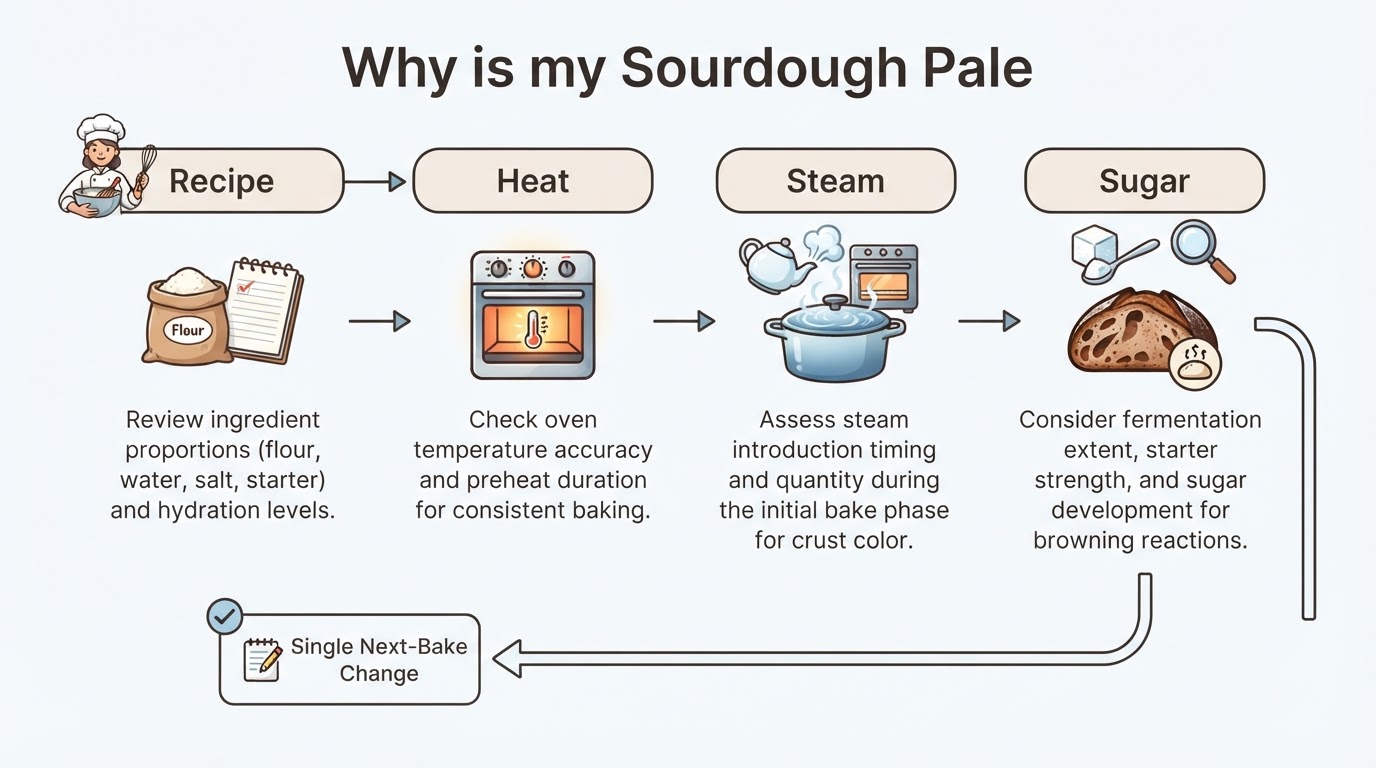
A pale sourdough loaf is not automatically underbaked. Crust color comes mainly from the Maillard reaction between amino acids and reducing sugars, plus caramelization, and both need a hot surface, a surface that can dry, and sugars still available at bake time. If any one is missing, the loaf can be fully baked and still look blond. So treat color and doneness as separate questions: neither crust color nor a single recipe cue establishes food safety by itself. Judge bake-through with a reliable recipe that gives applicable doneness instructions, then work through the browning conditions before you add time or change the formula.
Check What the Recipe Actually Promised
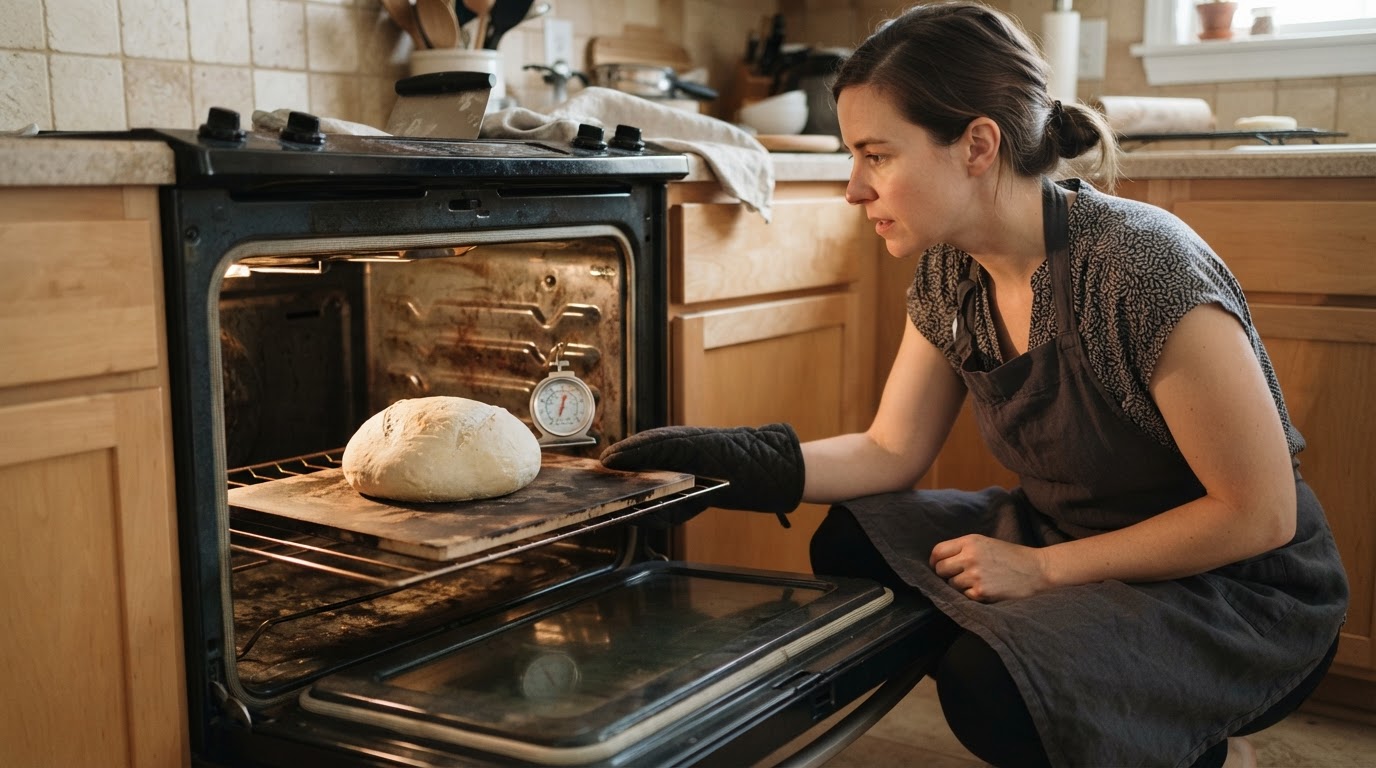
Before touching the dough, reread four lines: the salt weight, the preheat instruction, the covered-to-uncovered stage, and the crust description the recipe expects. A 75% hydration country loaf and an enriched sandwich bread do not brown alike. This step-by-step sourdough guide follows a starter-based bake through both a covered and an open-steam path; use its structure as your expectation, not an invented standard.
If your recipe never states a target color or doneness cue, do not pick an arbitrary weight or crumb test and treat it as a validated standard. Use a reliable recipe with applicable doneness instructions for your loaf, or follow the cues your recipe does give, and keep the rest of the formula unchanged while you check browning.
Work Through Heat, Steam, and Sugar
Heat: was the oven ready?
An oven that has not fully soaked at temperature, or a stone or pot that went in cold, delivers less browning even at the same dial setting. Check the actual temperature with an oven thermometer, confirm the rack position the recipe specifies, and give the oven and any stone or pot the full preheat the recipe asks for. A pale top with a dark bottom is a reason to check rack position and top heat; it does not diagnose either one.
Steam: what does the reference actually say?
King Arthur's water reference describes steam in a steam-injected oven as affecting early crust formation: moisture keeps the surface cooler while surface enzymes convert starch to sugars, and those sugars brown through the Maillard reaction; steam also gelatinizes surface starch for shine. The same reference places steam's benefit in the first third or so of its baking cycle and finishes the bake in a dry oven. That is guidance for that method, not a universal steam schedule for every sourdough recipe. Note your own covered and uncovered times, then compare them with the recipe you are following.
Sugar: is salt or fermentation eating the color?
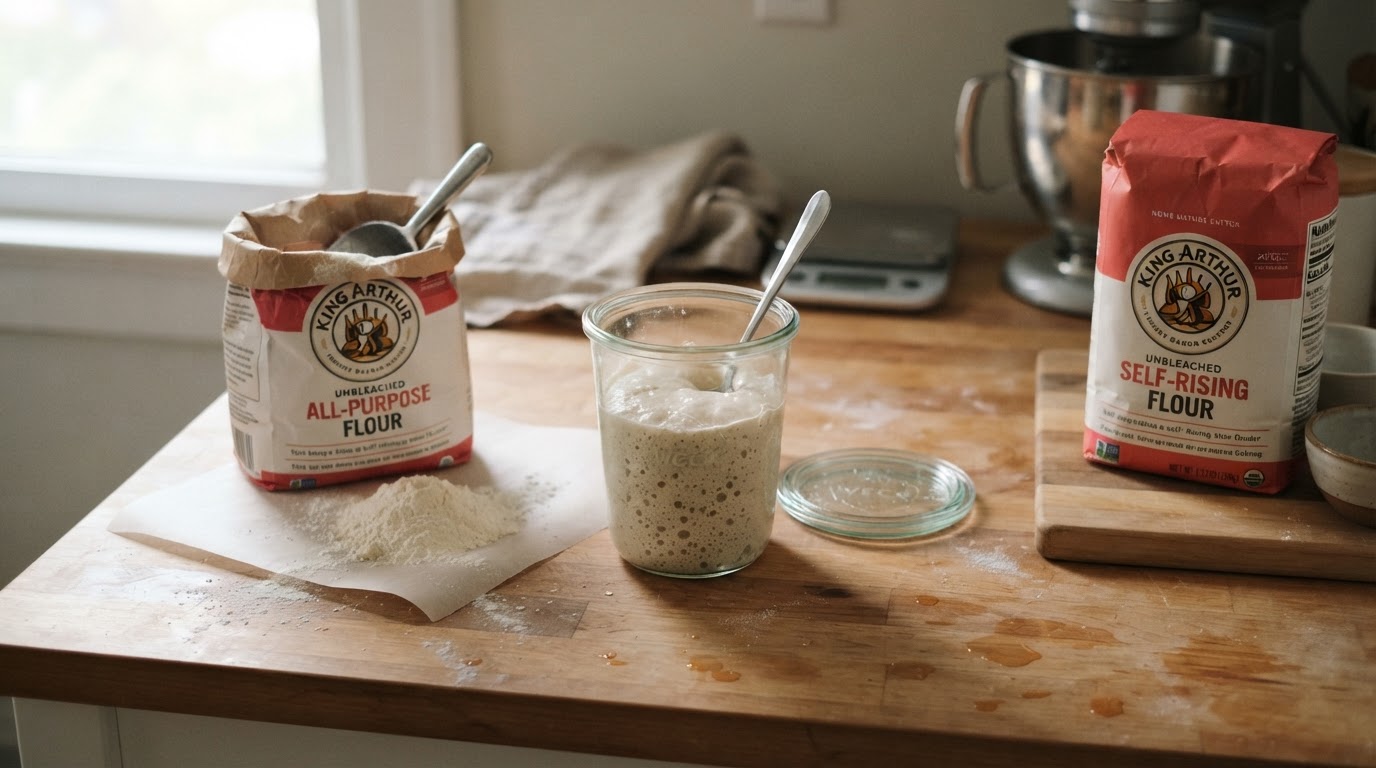
King Arthur's salt reference explains that salt slows fermentation, so more residual sugar remains at bake time; without salt, yeast consumes the available sugars quickly and the crust bakes pale and dull. That is one mechanism, not a diagnosis: do not add salt or sugar on a hunch. Weigh the salt the recipe lists, and check whether your bulk fermentation ran much longer or warmer than planned, which can also use up sugars.
A Pale-Crust Audit
What you see | Possible check | What the check can show |
|---|---|---|
Pale all over, crust set | Oven thermometer reading and full preheat | Whether the oven or bakeware reached the temperature the recipe assumes |
Pale top, dark bottom | Rack position and top heat | Whether the loaf sat where the recipe expects; it does not confirm the cause |
Pale and gummy | Recipe's doneness instructions, fermentation record, flour and formula, and cooling time | Gummy crumb can follow underbaking, but fermentation, the flour or recipe, and slicing warm can contribute too |
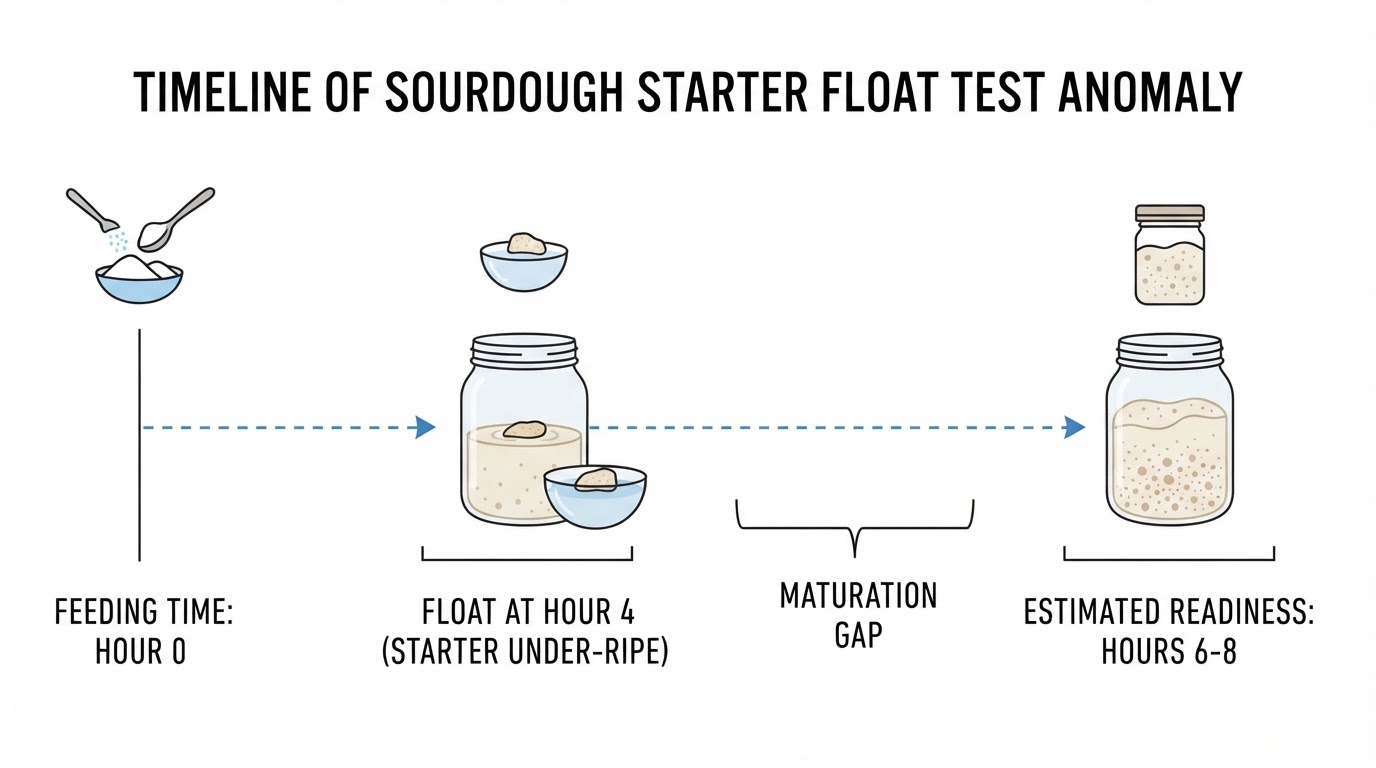
Pale and flat | Bulk and proof records, starter activity | Whether fermentation or starter strength ran outside the recipe's expectations |
Soft, glossy, rubbery crust | Your covered and uncovered times | Whether your steam timing matched the recipe |
White dusty patches | Flour dusting before baking | Whether surface flour is masking the crust color |
Change One Variable, Then Compare
Pick one check worth acting on and change only that next bake: rack position, preheat, or the moment you uncover. Keep the recipe's salt and sugar unchanged until you have repeated evidence. Record the change, the oven reading, and the result. One loaf cannot prove causation — a second bake with the same change, and one without it, tells you more than a darker photograph.
When Color Still Does Not Answer the Question
A deep crust is a preference; doneness is a separate judgment. Judge bake-through with a reliable recipe's applicable instructions, let the loaf cool before slicing so the crumb can set, and treat a photograph as a symptom, not a diagnosis. A gummy crumb with a pale crust can follow a short bake, but fermentation, the flour and formula, and cutting before the loaf cools can produce a similar impression. Check those possibilities before you assume the bake or the steam was at fault.