The short answer: a frozen portion is a backup, not a guarantee
What freezing preserves is a sample you can fall back on, not a culture you can count on every time. Keep two kinds of backup: an active culture you continue to feed, and a stored portion — dry or frozen — that does not need feeding. Judge the stored portion by what it does after feeding, not by the calendar.
Living starter, levain, raw dough and baked bread are four different things
Much of the confusion around freezing comes from using one word for four different stages.
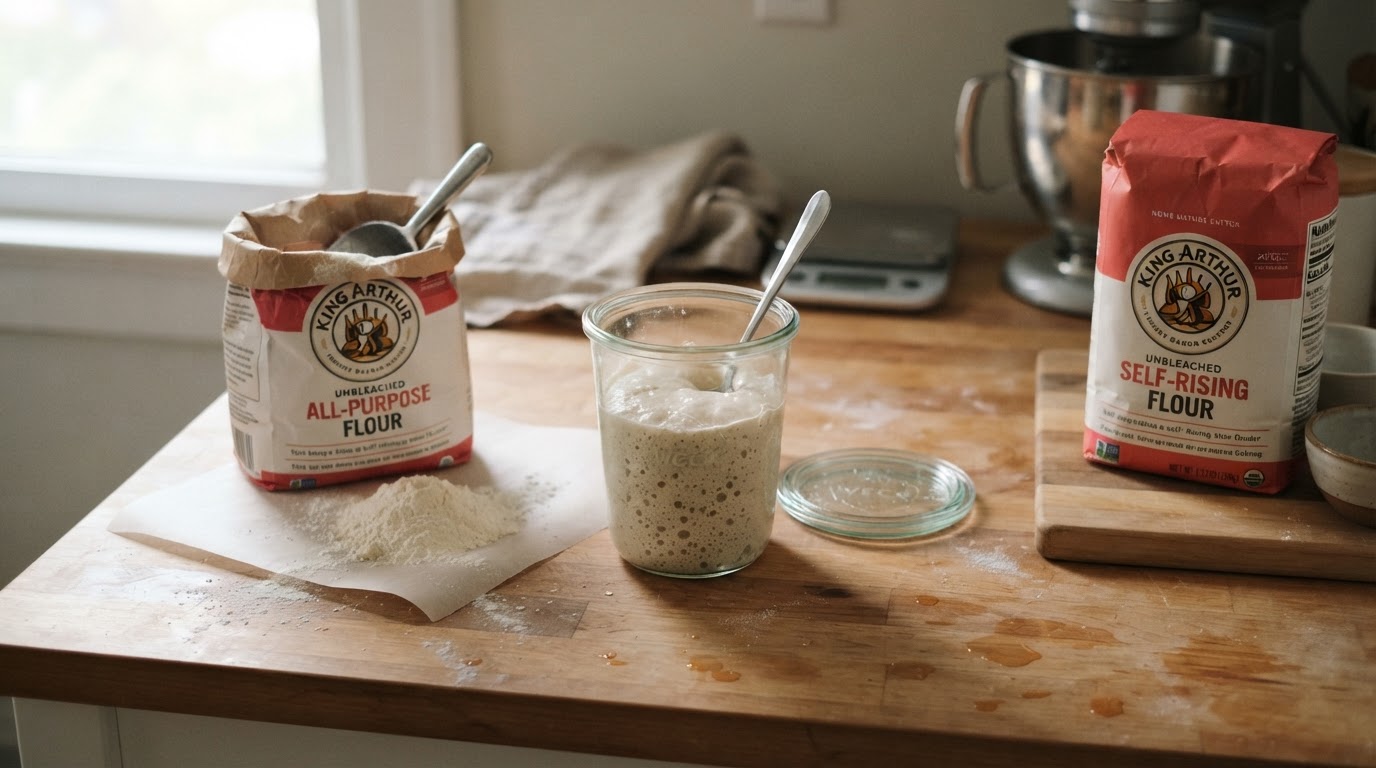
- Living starter: the jar of flour-and-water culture you maintain and feed. Freezing preserves a sample, but you still need an active culture to bake from while that sample is frozen.
- Ready-to-use levain: a preferment built for one specific bake. This is what the published freezing experiments tested, and what their timing describes.
- Raw bread dough: mixed dough waiting to be shaped or baked. Freezing dough is its own storage question, not a way to back up a culture.
- Baked bread: a finished loaf. Freezer behavior and revival steps for a loaf have nothing to do with keeping the culture alive.
Advice for one of these stages does not transfer to another — check that first when a freezing tip seems to contradict what you read elsewhere.
What the frozen-levain experiments measured — and what they did not
Modernist Cuisine has published experiments on freezing levain. In their tested protocol, a frozen levain performed well for up to two weeks; beyond that they report ice crystals growing large enough to damage the yeast and bacteria, so the portion loses leavening power. For longer-frozen levain, their method adds commercial yeast for the rise while the levain contributes flavor.
Their tips belong to that protocol:
- Freeze freshly fed levain rather than a fully ripe one, so the microbes still have food available.
- Portion it before freezing: stiff levain directly into bags, liquid levain into an ice-cube tray and then into a bag once frozen.
- Thaw only what you need, about a day ahead, at room temperature (21 °C / 70 °F).
The scope of the finding matters as much as the number. Two weeks is the tested baking-performance limit inside their experiment. It is not a universal expiry date, not a food-safety threshold, and not proof that every frozen portion is dead.
Two credible sources disagree, and that is worth saying out loud
King Arthur Baking's 2015 guidance on putting sourdough starter on hold recommends drying starter for long-term storage and carries a blanket warning that freezing will kill it. That 2015 warning sits next to narrower experiments that found usable performance for a defined window, not instant death.
These are different recommendations from different sources, and this guide will not pretend they agree. If you want a backup that lasts, dry it; if you freeze, treat the portion as short-term and verify it before you rely on it.
How to keep a separate dry backup
King Arthur's drying method needs no special equipment:
- Feed the starter as if you were about to bake, and let it become bubbly and healthy.
- Spread it thinly on parchment — as thin as you can manage.
- Let it dry at room temperature until completely brittle — a day or several days, depending on your climate.
- Break the dry sheet into chips and store them airtight in a glass jar. Label it with the date and, if you know them, the flour and hydration; keep it cool and dark — not the refrigerator, just away from heat and direct sun.
- To revive it, rehydrate the chips with a little water, then feed with flour and water as you rebuild the culture. The sourdough starter feeding calculator works out the flour and water for the amount you keep.
A recovery check that does not depend on a stopwatch
The goal is the same whether you revive a frozen portion or rebuild a dried one: find out whether it can still leaven.
- Thaw one portion only. Thawing more than you can use wastes the rest.
- Bring it to room temperature, then resume an established feeding routine rather than inventing a new one.
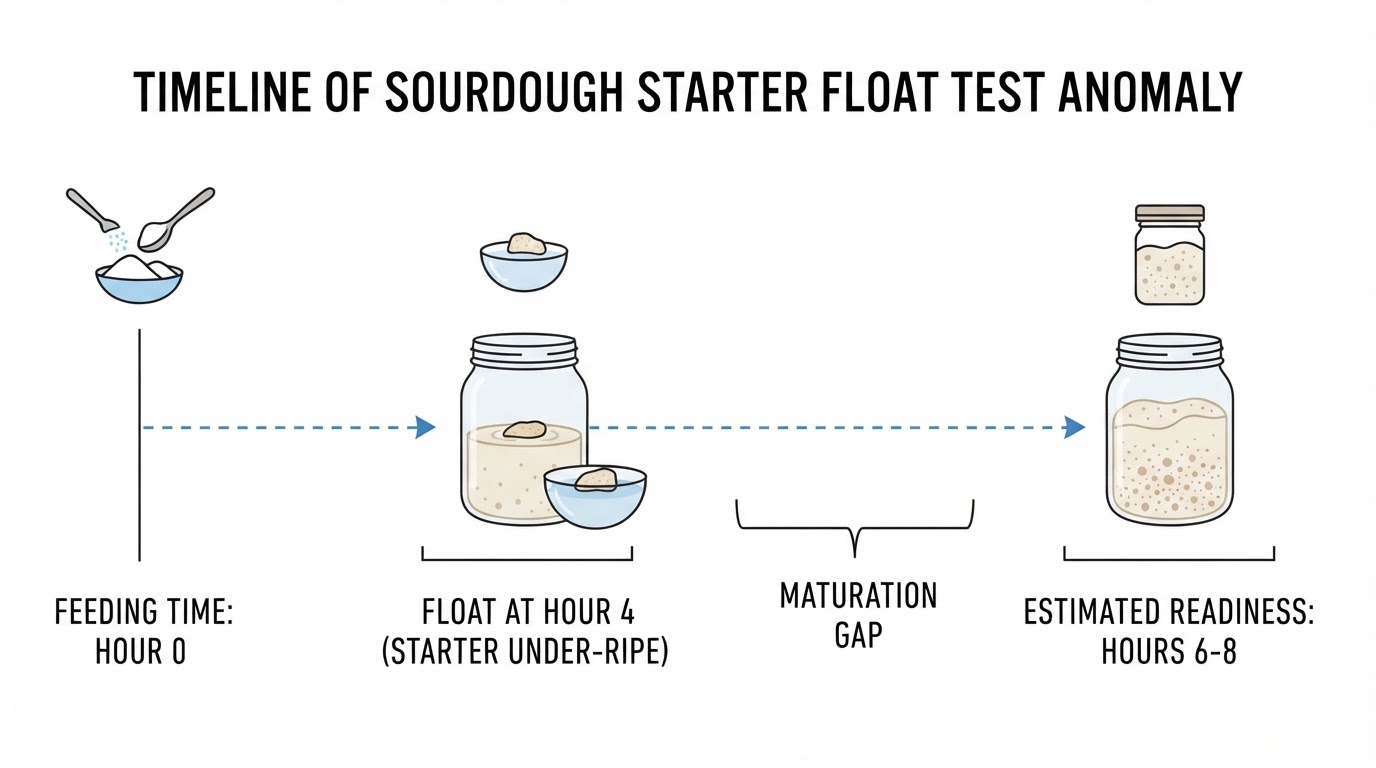
- Over a few feeds, note what happens — a suggested observation, not a validated readiness threshold: how long until it rises, how high it gets, and whether it falls back.
- Judge activity after feeding: a portion that never rises, or rises once and then stalls, is not ready to leaven a loaf — use the active culture or a dry backup.
- Resist the idea that recovery happens in a fixed number of hours. A quiet first feed is not proof of failure, and a fast first feed is not proof of readiness.
A blank log you can copy
This table is deliberately empty. Use it for your own observations during the recovery check — a record of what you see, not a readiness threshold.
Feed time | Amount fed | Room temperature | Rise | Next action |
|---|---|---|---|---|
|
|
|
|
|
|
|
|
|
|
|
|
|
|
|
|
|
|
|
|
Long-term storage options, without invented month limits
What you store | What it is good for | What it is not |
|---|---|---|
Active starter in the fridge | Regular baking and continued feeding | A backup that survives neglect |
Frozen portion | Short-term convenience inside a published tested window | A guaranteed culture or a safety reset |
Dried chips | A backup that keeps without feeding | Instant readiness — it has to be rebuilt |
Baked loaf | Eating the bread you already made — for a baked loaf, use the sourdough freezer storage calculator | Anything to do with keeping the culture alive |
sourdough freezer storage calculator
Stop signs: when not to freeze or bake
If a portion or jar shows pink, orange, or fuzzy growth, do not try to rescue it by freezing. Freezing is not a reset for a contaminated culture: discard the affected portion, clean the container, and restart from a dry backup or a healthy active culture. For those stop conditions, see mold on the sides of a sourdough starter jar.
Freezing is one tool among several: it works best alongside a separate backup and an honest recovery check, and it is risky as your only copy of a culture.