Choose crust or crumb before you cover anything
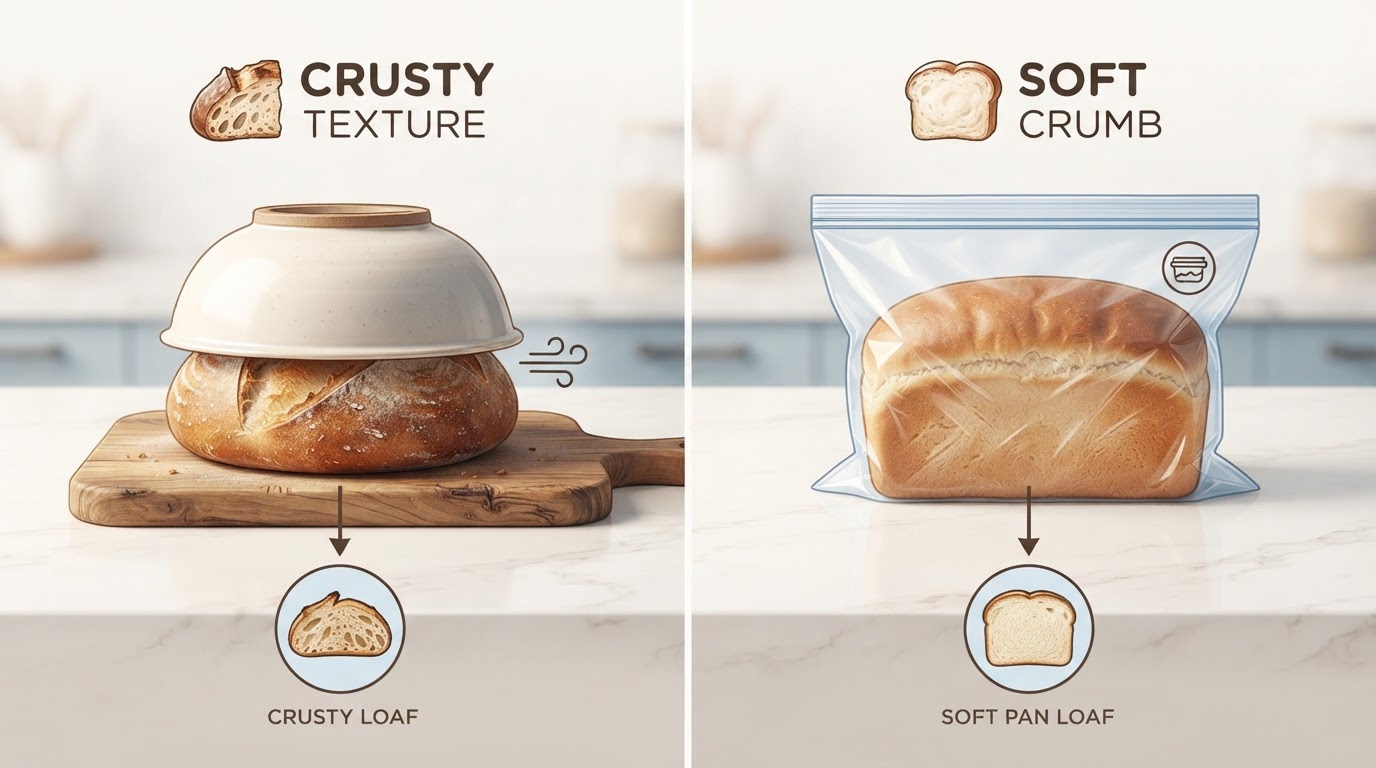
A crusty artisan loaf needs air moving around it to stay crisp, while an airtight bag or container softens that crust. A soft sandwich loaf or a pan of rolls needs the opposite: a sealed environment that holds moisture in the crumb.
Cool the loaf completely first
Neither method works on a warm loaf. Put it on a wire rack straight from the oven and leave it uncovered until the base and sides feel neither warm nor damp. Covering warm bread traps steam against the crust, and trapped moisture is one reason a crust can soften or turn chewy. If steam still rises from a cut end, wait. Our sourdough cooling guide explains how loaf size, hydration, and kitchen airflow move that window; judge by feel rather than a fixed clock.
How to store a crusty sourdough loaf overnight
Once the loaf is completely cool, set it on a cutting board or the counter. Cover it with a large inverted bowl, a cake cover, or another roomy dome that leaves space around the bread. The point is loose enclosure: the bread stays shielded while air still circulates.
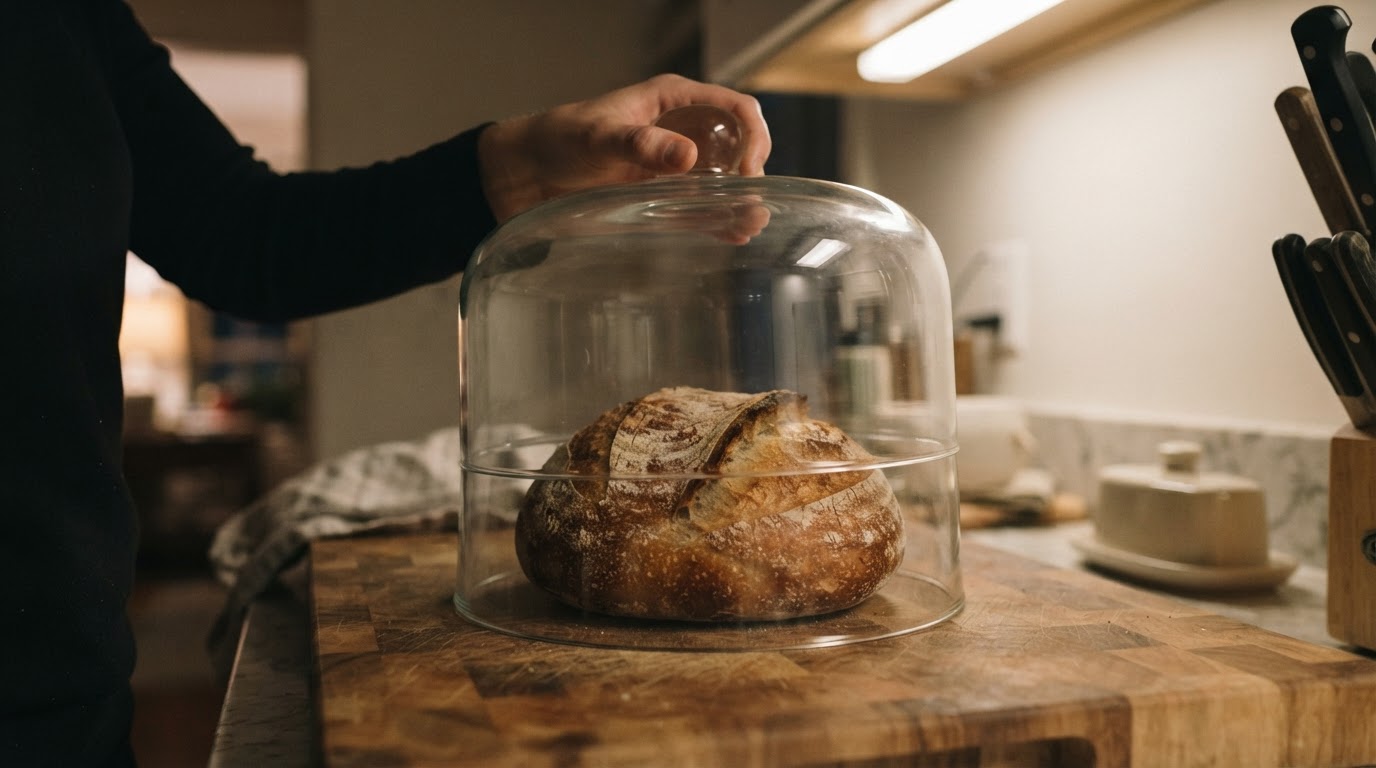
King Arthur Baking's sourdough storage guide describes this setup for a next-day crusty loaf and notes that a micro-perforated bakery bag can work as an alternative. Do not leave the loaf fully open all night or tie it into a plastic bag; both push too far in opposite directions.
How to store a soft sourdough loaf or rolls overnight
For a soft loaf, sandwich pan bread, or dinner rolls, go airtight at room temperature. A sealed plastic bag, a beeswax-lined bread bag, or a tight-lidded container holds the moisture that keeps the crumb supple. Press out excess air and leave it on the counter for the night. King Arthur Baking keeps soft sourdough airtight at room temperature, which holds the crumb soft while the crust loses some snap. It will not keep indefinitely: kitchen humidity, the recipe, and any fillings change the real window, so check the loaf instead of counting days.
This advice covers plain baked bread. If the loaf carries meat, cheese, or another perishable filling, follow that recipe's food-safety handling; it takes precedence over any counter-storage advice here.
Crust versus moisture at a glance
What you want tomorrow | Overnight setup | What to expect |
|---|---|---|
A crackly, crisp crust | Cooled loaf under a roomy bowl or cake cover, air circulating | Crust stays close to its baked texture; interior may dry slightly |
A soft, tender crumb | Cooled loaf sealed in an airtight bag or container | Crumb stays moist; the crust will soften |
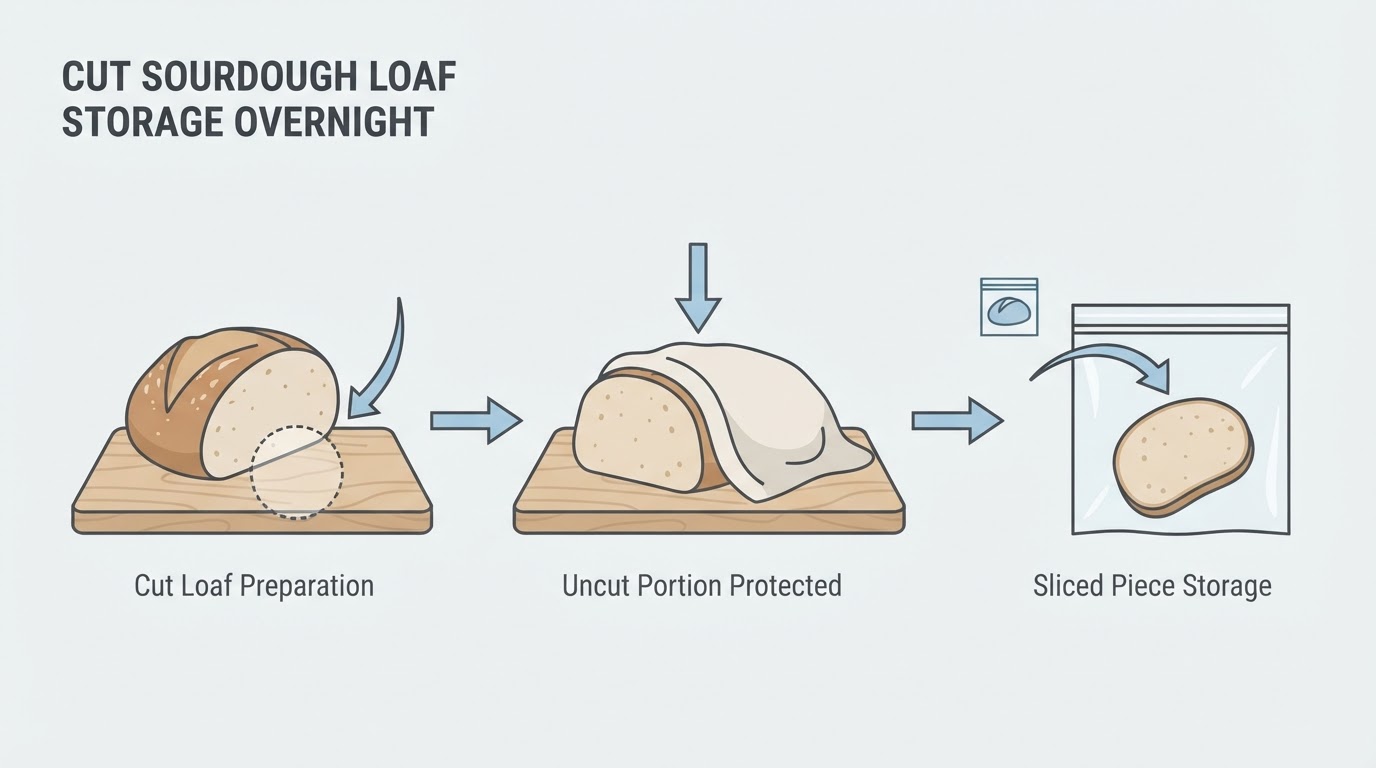
Both, from one loaf | Cut the loaf, keep the uncut portion loose, seal only the cut piece | Two textures from one bake |
How to store sourdough bread once cut
A cut loaf loses moisture through the exposed crumb, so an uncut loaf holds up better overnight than a sliced one. If you only need part of a crusty loaf, press the cut face down on a clean cutting board and cover the loaf loosely as above; the board limits how much air reaches the crumb. For a soft loaf, seal the cut portion airtight and use it first, slicing only what you plan to eat.
What changes the answer
Humidity matters: a steamy kitchen slows the crust's crispness, while a dry room pulls moisture from a loosely covered loaf. Time matters too — the longer a loaf sits, the further crust and crumb drift from their baked texture, which is why this guidance stops at the next day. A whole-grain round also holds moisture differently from a slim baguette. Fillings set their own rules: bread with meat, cheese, or other perishables follows its recipe's food-safety handling, not the counter advice above.
On safety, mold is the clearest reason to discard a loaf, and an off smell or a tacky surface is another. A clean smell on its own does not confirm that a loaf is safe, so your nose should not be the only check.
If you need more than one night
Freezing is the branch to use when the loaf will not be eaten the next day. Our guide to freezing a sourdough loaf covers whole versus sliced packaging and how to bring the crust back; the short version is to cool, wrap airtight, and freeze promptly.
The morning after
Uncover the loaf and judge it by feel. A loaf stored under a loose cover should still feel dry and firm at the surface, while one stored airtight should feel supple rather than damp or sticky. If the crust has gone leathery, humidity, storage time, and how tightly the loaf was enclosed can all contribute, so note it for the next bake rather than reading it as proof of one mistake. Slice just before serving.